India has laid out ambitious vehicle electrification plans through the National Electric Mobility Mission Plan (NEMMP) 2020, and Phase II of the FAME (Faster Adoption and Manufacturing of Electric Vehicles) scheme. This comes at an opportune time when transport-related air pollution and greenhouse gas emissions in major Indian cities are regularly hovering above dangerous levels.
Currently the transport sector accounts for nearly 23% of global energy-related greenhouse gas (GHG) emissions and this is set to rise in light of the rapid rate of urbanisation and growing prosperity across countries. In the past decade alone, India has seen a tremendous rise in vehicle usage, resulting in a sharp increase in city level air pollution. India is home to six of the top 10 most polluted cities in the world.
Following the roll out of the national mission, several Indian states and businesses proactively responded with rolling out state electric vehicle (EV) policies and programmes and announcement of corporate clean mobility ambitions.
However, converting India’s existing vehicle fleet to electric will add terawatt-hours of new demand to the grid and requires thoughtful and timely planning to minimise costs and maximise benefits, primarily for the electric utilities and electricity distribution companies known as discoms. This key pillar currently finds limited discourse across forums.
As per a joint study by business lobby Assocham and consultancy EY, overall electricity demand from electric vehicles in India is projected to reach 69.6 terawatt hours (TWh) by 2030. The existing power distribution infrastructure in the country allows for meeting most of this demand through the grid, more than half of which is fed by coal-fired power plants.
This could increase the overall transport-related emissions in the country, thereby defeating the purpose of the country’s electric mobility mission.
Clean electric mobility
This makes a compelling case for both businesses and governments to catalyse decarbonising transport in the country. It could be achieved by deploying clean-powered EV charging stations and having in place a robust EV power management interface.
A more efficient and cost-effective energy system will bring monetary benefits to the discoms. There is a need for better load management at the distribution transformer (DT) level for discoms to minimise losses and have better clarity on load profiles.
In 2019, BSES Rajdhani Power Ltd, a Delhi-based private Discom, in a representation to Central Electricity Authority (CEA), stated that DTs are loaded to 70-80% of their capacity for 5% of the time. It requested CEA to allow dynamic throttling of chargers to avoid DT overload.
A white paper by India Smart Grid Forum published in 2018 stressed the inability of existing DTs to accommodate DC Fast Charging capacity without costly grid upgrades that will be passed on to the Electric Vehicle Supply Equipment (EVSE) establishments.
Smart and managed EV charging can address these issues and be a useful means to better align and balance a power supply that is increasingly diverse, decentralised, renewable and intermittent with flexible demand.
Expressing views on this, Abhishek Ranjan, AVP System Operation & Head RE and DSM, BSES Rajdhani Power Limited, commented, “Electric vehicles offer an opportunity to the power discoms in India for alleviating some of their pain points including DER (distributed energy resources) and RE (renewable energy) integration, power purchase cost optimisation and network optimisation, thereby boosting technical loss management. Managed charging coupled with EV TOU (time of use) rates shall help achieve above objectives in an effective manner.”
Renewable energy powered charging
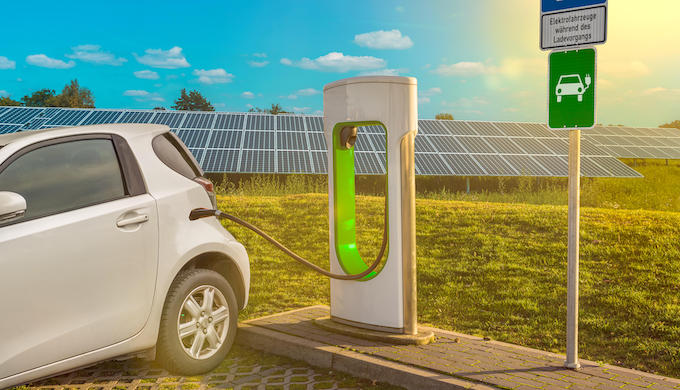
Uncontrolled charging of EVs could increase the peak demand on the grid. This could result in overloading of DTs thus calling for infrastructure augmentation at the distribution level. Renewable energy powered EV charging stations or facilities like net metering or power banking could help mitigate this challenge by absorbing some of the peak or off-peak demand.
Integration with renewable energy offers dual benefits: Achieving financial viability and greening the entire EV usage cycle to a large extent. Installing rooftop solar plants at charging stations in Nagpur reduced the average electricity expense by 28%, according to a Shakti Foundation-TERI report.
EV owners will see savings ranging from lower cost of electricity to earnings from supply of ancillary services to the grid.
Wholesale markets and transmission and distribution grid operators will have another tool to meet demand and improve efficiency.
A significant amount of off-peak capacity will absorb excess renewable energy production, thereby reducing overall emissions.
A discom readiness study by Rocky Mountain Institute India in 2019 has brought to focus the existing charging infrastructure in the county with a state level readiness example from Haryana.
The report has highlighted the need for discoms to step up and prepare early through smart and proactive demand management as planning ahead for a variety of deployment scenarios can better address a wide range of internal and external challenges.
Recognising the value of decarbonising charging, governments globally are deploying innovative models to efficiently tackle this emerging challenge. Smart Electric Power Alliance (SEPA), a group of more than 700 utilities in the US, is bringing together discoms, solution providers, regulatory bodies and NGOs to advance a clean and modern electricity grid.
Emerging policy signals
Enabling policies are key for innovations to flourish, and at the desired scale. Most of the Indian states today either have a state-wide EV policy or specific city level programmes and pilots running on EVs.
In the recent and more ambitious Delhi Electric Vehicles Policy, 2020, energy and public charging station operators are encouraged to explore renewable sources of power and facilities such as open access and power banking.
The state government of Telangana also notified a policy to promote the usage of EVs in August 2020. Though most of these policies are supportive of the transition, a stronger alignment and collaboration among policymakers, businesses and other ecosystem players will be critical to accelerate the adoption and build consumer confidence.
In the backdrop of recent developments, the time is right to build on the momentum and bring together businesses, government and other players to propel an e-mobility transition that is clean, just and economic.
source-indiaclimatedialouge.net