
Current directory: /home3/bjinbymy/public_html/indianext/wp-content/mu-plugins Study shows why India should increase renewable energy target of 2030
Indianext
No Result
View All Result
Subscribe
  • News
    • Project Watch
    • Policy
  • AI Next
  • People
    • Interviews
    • Profiles
  • Companies
  • Make In India
    • Solutions
    • State News
  • About Us
    • Editors Corner
    • Mission
    • Contact Us
    • Work Culture
  • Events
  • Guest post
  • News
    • Project Watch
    • Policy
  • AI Next
  • People
    • Interviews
    • Profiles
  • Companies
  • Make In India
    • Solutions
    • State News
  • About Us
    • Editors Corner
    • Mission
    • Contact Us
    • Work Culture
  • Events
  • Guest post
No Result
View All Result
Latest News on AI, Healthcare & Energy updates in India
No Result
View All Result
Home Energynext

Study shows why India should increase renewable energy target of 2030

March 24, 2021
Clean energy

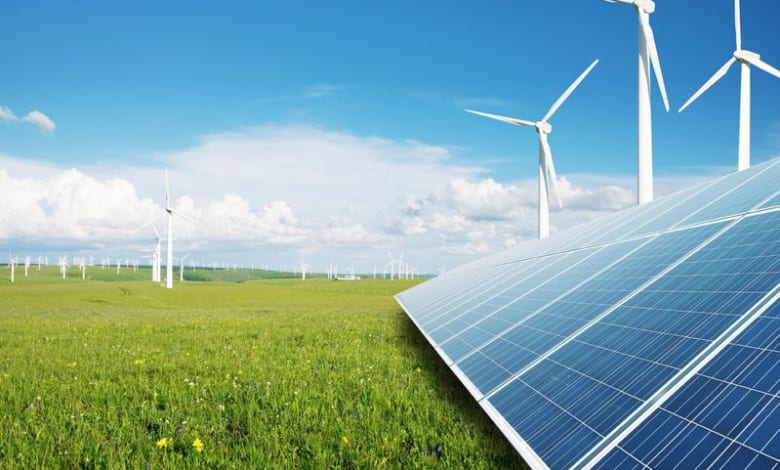
Researchers at UC Santa Barbara have just released a study that demonstrates why India should double down on renewables.

The study examines electricity and carbon mitigation costs associated with achieving aggressive renewable energy targets in India’s electricity grid in 2030, and finds that wind-majority or balanced wind-solar targets have the most cost-effective potential for power in India.

Researcher Ranjit Deshmukh, and co-authors Duncan Callaway and Amol Phadke, reveal in a paper published in the Proceedings of the National Academy of Sciences that building significant numbers of wind and solar plants (600 GW) will reduce how often fossil fuel power plants must run.

This will hold India’s 2030 electricity emissions at its 2018 level, at costs comparable to a fossil fuel-dominated grid while nearly doubling the supply of electricity.

As costs decrease, battery storage can cost-effectively avert the need for new fossil fuel power plants. These findings stem from an exhaustive analysis of India’s power usage, weather patterns and energy infrastructure.

The Indian government set a target of 450 gigawatts of renewable energy capacity by 2030. For comparison, the country’s total energy generation capacity today is about 380 gigawatts, out of which 90 gigawatts are of renewable energy, not including large hydropower stations.

According to the Council on Energy, Environment and Water (CEEW), India would need to generate at least 83 per cent of its electricity from (non-hydropower) renewable energy sources in order to reach net-zero by 2050.

However, mitigating carbon emissions is only one concern when it comes to developing countries like India.

“Most of these countries have low historical carbon emissions compared to more industrialized countries,” said Deshmukh, an assistant professor in the Environmental Studies Program who leads the Clean Energy Transformation Lab.

“So, the approach we take is that if renewable energy makes economic sense, then those countries should deploy more of it.”

Because the costs of wind and solar, as well as battery storage, are dropping so rapidly, Deshmukh explained, it’s actually cost-effective to install these technologies instead of conventional fossil fuel technologies, like coal and natural gas, regardless of environmental considerations.

Renewable energy has become cheaper than conventional energy sources simply by avoiding the cost of fuel that would otherwise need to be mined or, in the case of natural gas, imported to generate the same electricity.

Based on his simulation of a few hundred scenarios, Deshmukh and his colleagues contend that India could increase its target to 600 GW of renewable capacity by 2030 and increase the cost to its consumers by only a small amount — or in many cases actually decrease the cost.

Batteries are becoming a cost-effective tool for smoothing differences between energy supply and demand. They can store clean energy for times of peak demand, averting the need to call on conventional power plants, especially the expensive ones that will be operated infrequently.

Without this ability to store and shift energy, renewables may not be able to prevent the need for building new coal and natural gas power plants if India hopes to meet peak demand.

Fortunately, prices are already becoming so low that it will soon be less expensive to install batteries to store energy when demand is low compared to increasing power production when demand is high.

This will shift economic factors even more toward renewable energy.

Source-energy.economictimes.indiatimes.com

Leave a Reply Cancel reply

Your email address will not be published. Required fields are marked *

Editors Corner

How can Artificial Intelligence tools be a blessing for recruiters?

Will Artificial Intelligence ever match human intelligence?

Artificial Intelligence: Features of peer-to-peer networking

What not to share or ask on Chatgpt?

How can Machine Learning help in detecting and eliminating poverty?

How can Artificial Intelligence help in treating Autism?

Speech Recognition and its Wonders in your corporate life

Most groundbreaking Artificial Intelligence-based gadgets to vouch for in 2023

Recommended News

AI Next

Google: AI From All Perspectives

Alphabet subsidiary Google may have been slower than OpenAI to make its AI capabilities publicly available in the past, but...

by India Next
May 31, 2024
AI Next

US And UK Doctors Think Pfizer Is Setting The Standard For AI And Machine Learning In Drug Discovery

New research from Bryter, which involved over 200 doctors from the US and the UK, including neurologists, hematologists, and oncologists,...

by India Next
May 31, 2024
Solutions

An Agreement Is Signed By MEA, MeitY, And CSC To Offer E-Migration Services Via Shared Service Centers

Three government agencies joined forces to form a synergy in order to deliver eMigrate services through Common Services Centers (CSCs)...

by India Next
May 31, 2024
AI Next

PR Handbook For AI Startups: How To Avoid Traps And Succeed In A Crowded Field

The advent of artificial intelligence has significantly changed the landscape of entrepreneurship. The figures say it all. Global AI startups...

by India Next
May 31, 2024

Related Posts

clean energy
Clean Energy

Coal India, NTPC, Railways Can Help Meet Clean Energy Goals By 2050: Report

September 14, 2022
EV
E-Vehicles

AAI Inducts Electric Vehicles At Offices, Airports

September 14, 2022
coal based capacity
Coal Gassifications

Need 28 GW More Coal-Based Capacity By FY32: Draft National Electricity Plan

September 13, 2022
Electric highway
E-Vehicles

Nitin Gadkari Says Centre Working To Develop Electric Highways: What Are They? When Is India Likely To Get One?

September 13, 2022
Load More
Next Post
India's adoption of Alternative Fuel Vehicles to remain limited till 2026: Moody's

Use renewable sources to charge electric vehicles in India

IndiaNext Logo
IndiaNext Brings you latest news on artificial intelligence, Healthcare & Energy sector from all top sources in India and across the world.

Recent Posts

Google: AI From All Perspectives

US And UK Doctors Think Pfizer Is Setting The Standard For AI And Machine Learning In Drug Discovery

An Agreement Is Signed By MEA, MeitY, And CSC To Offer E-Migration Services Via Shared Service Centers

PR Handbook For AI Startups: How To Avoid Traps And Succeed In A Crowded Field

OpenAI Creates An AI Safety Committee Following Significant Departures

Tags

  • AI
  • EV
  • Mental WellBeing
  • Clean Energy
  • TeleMedicine
  • Healthcare
  • Electric Vehicles
  • Artificial Intelligence
  • Chatbots
  • Data Science
  • Electric Vehicles
  • Energy Storage
  • Machine Learning
  • Renewable Energy
  • Green Energy
  • Solar Energy
  • Solar Power

Follow us

  • Facebook
  • Linkedin
  • Twitter
© India Next. All Rights Reserved.     |     Privacy Policy      |      Web Design & Digital Marketing by Heeren Tanna
No Result
View All Result
  • About Us
  • Activate
  • Activity
  • Advisory Council
  • Archive
  • Career Page
  • Companies
  • Contact Us
  • cryptodemo
  • Energy next
  • Energy Next Archive
  • Home
  • Interviews
  • Make in India
  • Market
  • Members
  • Mission
  • News
  • News Update
  • People
  • Policy
  • Privacy Policy
  • Register
  • Reports
  • Subscription Page
  • Technology
  • Top 10
  • Videos
  • White Papers
  • Work Culture
  • Write For Us

Welcome Back!

Login to your account below

Forgotten Password?

Retrieve your password

Please enter your username or email address to reset your password.

Log In

Add New Playlist

IndiaNext Logo

Join Our Newsletter

Get daily access to news updates

no spam, we hate it more than you!