It is still early days and policymakers should allow various models to evolve before pushing for any particular option
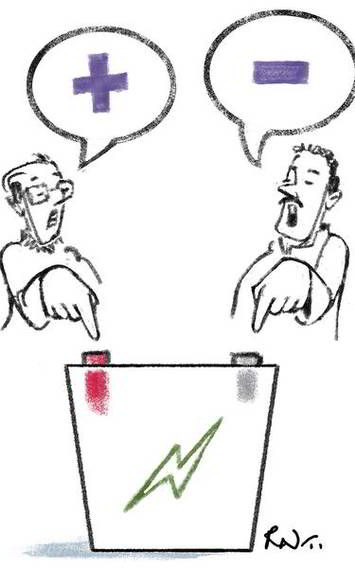
Recently, the government allowed electric vehicles to be sold and registered without batteries. The rationale behind the move, it explained, was to de-link the cost of the battery from the vehicle cost. Battery accounts for 30-40 per cent of an electric vehicle’s cost and this move would bring down the upfront cost of an electric two-wheeler or a three-wheeler at par or even lower than those powered by internal combustion engine. By doing so, the government is hoping to accelerate the adoption of electric vehicles whose penetration is still a low 1 per cent in the country.
The move received a mixed reaction. Some players called it a short-sighted decision. They warned that it would lead to reliability and accountability issues. Who will be responsible if a customer used a cheap, poor quality battery and the vehicle caught fire? They wondered loudly how selling an electric vehicle without a battery reduces the acquisition cost. After all, a battery is needed for the vehicle to run. They also pointed out that it is costlier to buy a battery separately as its GST is higher at 18 per cent as against an electric vehicle’s 5 per cent.
A section of the industry, on the other hand, welcomed the move. They pointed out that selling/registering a vehicle without a battery opens up new ownership models. Some players like Ather Energy are already experimenting such models where the cost of the vehicle does not include the battery. Customers pay for it based on the number of kilometres they run the vehicle, or on a monthly subscription basis or simply lease the battery. This works well depending on the customer’s usage pattern. Those who use the vehicle occasionally opt for a per kilometre plan while heavy users prefer lease. Technology allows the vehicle manufacturers to keep track of the usage and accordingly bill the customers.
However, even those who have welcomed the move are cautious as a lot more clarity is required from the government. Most importantly, they all would like to know what has motivated this decision. Is it to encourage new ownership models or promote third party battery swapping technology?
Hectic lobbying
There has been hectic lobbying to make India embrace battery swapping on a large scale as a way to re-charge an electric vehicle to supplement charging infrastructure which is costly and time consuming to build. Battery swapping also saves time (one does not have to spend hours charging the battery) and is productive (down-time of the vehicle when it is charged is absent). Of course, it also reduces the acquisition cost of the vehicle as the customer just pays for the energy.
But a large scale third party battery swapping model has a distinct disadvantage. It will be not be possible to implement it unless the electric vehicle batteries are standardised. That is the problem. Standardising the batteries, at this stage, when the technology is still evolving will kill innovation. It can happen only if a technology or design has matured. That is not the case with electric vehicle batteries yet. The energy density, shape, size, mounting of the battery and its communication with the battery management system are still evolving.
Each manufacturer approaches the battery differently. Some like Tesla want it to be so intelligent that its operation and efficiency can be monitored remotely for best performance. Standardisation will end all this. Also, India is still in the early stage of battery development value chain and setting standards now will be to the advantage of foreign players notably Chinese and Taiwanese manufacturers. It is they who will dictate the standards that we will have to follow. And India’s attempt to achieve ‘Aatmanirbharta’ in this space will be lost.
As mentioned earlier, battery swapping as a model has its advantages but till the battery technology matures, it makes sense for the government to promote it in a manner where respective OEMs drive it. They can set up their own swapping infrastructure and this will obviate the need for standardisation for now.
This calibrated approach to battery swapping will help for another reason. There is a belief that the potential for adoption in India could be over-rated. Unlike in the US and Europe where almost all of the electric vehicles are cars for personal mobility, India’s scenario is different. Here 80 per cent of the electric vehicles will be two-wheelers. They would run on an average 20-40 kilometres a day and can be easily charged at home, at night, for a few hours. Three-wheelers, which will account for another 5 per cent, typically average 150 km a day and they too can run on a single charge in most case. It is unclear as to what percentage of users in these two categories would prefer battery swapping.
That leaves the four-wheelers. Initially, it will be the fleet operators who will be deploying electric vehicles. FAME-II, the policy that promotes use of electric vehicles through subsidies, promotes public transport. Here again, fleet operators would be setting up charging infrastructure in their premises. Also, swapping a car battery is a laborious process as accessing it is not easy. It would require heavy investment in equipment/tools. Better Place, a start-up in Israel, tried it between 2007 and 2013 and eventually went bust. While its founder Shai Agassi may have been way ahead of time with the idea of swapping batteries, the start-up’s failure also highlights the challenges involved in the model.
Considering all these challenges, it is better if the government allows various models to evolve before promoting anyone of them. As a country India has to embrace electric vehicles. That is the only way by which it can adhere to its commitment of reducing carbon intensity by 35 per cent before 2030. Also, shifting away from fossil fuel increases India’s energy security. Any attempt to push through a particular model in a hurry and the resultant fallout, if any, could cause customers to lose faith in electric vehicles. That will be big setback not only for the government but for the country as well.