A carefully weaved technique to approach an EV policy could aid in addressing the uncertainties associated with the disruptive transformation that is taking place.
New Delhi: As the inaugural edition of the World EV Day kicked off on 9 September 2020, the buzz around the prospects of an electrified mobility future is growing globally. While consumers, businesses and governments are proactively pushing for e-mobility, EV adoption rates in many countries, including India, paint a grim picture.
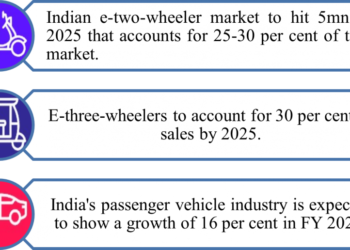
This is reflected in the fact that in financial year 2019-2020, total EV sales in India accounted for less than a fraction of 1% of the sales of conventional vehicles. However, a closer look at the segment-wise sales figures shows that the public transport vehicles, in particular E-rickshaws, contribute 13% of annual three-wheeler sales as compared to a mere 0.15% of e-4W and 0.71% of e-2W sales. This brings to light two critical paradigms. Firstly, the rate of uptake depends on the ‘purpose’ or ‘end-usage’ of the vehicle and, secondly, there are structural barriers in the supply and demand side equation of the EV ecosystem.
The Indian EV narrative is largely being shaped by various policy interventions at the national and sub-national levels which are being supplemented by multitude of regulations pertaining to EVs and charging infrastructure. In this context of frequently changing policy and regulatory landscape, where transformative ideas, often disruptive at times, are being rapidly devised and implemented for EVs and related issues, the need to retrospectively assess the same becomes crucial.
In order to ensure the effectiveness of such policies, some hindsight checks can be made before notifying and implementing an EV policy by the nodal department of the state government.
Firstly, there is a disjunction between the intent and targets set for EV adoption across states and even at the national level. The rationale for targeting a set proportion of total vehicles sold to be electric should have clear linkages with the overarching objectives of having EVs in the first place, i.e. emission reduction. Given that India has clearly laid out international climate goals in the form of Intended Nationally Determined Contributions (INDCs), these should be used as a benchmark to estimate and set realistic targets across different states, or even cities. In one such study, a similar approach has been adopted to estimate the number of vehicles required in the city of Jaipur, Rajasthan, if India has to achieve its INDC targets.
Secondly, given the price-sensitivity of Indian markets and consumers, there is a need to revisit the supply-demand matching equation. In the backdrop of Indian Motown facing one of the worst slowdowns, careful diagnosis and structural transformations in both the supply-side and demand-side factors of EV production, is required.
In the context of supply-side dynamics of EV production, an ideal policy design with elements like incentives and subsidies should account for the value-chain dynamics, especially the cost of manufacturing. The endeavor should be to reduce the different costs of production like land, raw material, labour, plant & machinery, power, in addition to administrative and regulatory costs while ensuring that certain key indicators of a healthy manufacturing ecosystem including safety and quality of vehicles, competitiveness and quality of jobs, are met.
This essentially implies that while pushing for reforms that aim to reduce cost of manufacturing, which will eventually bring down the price of vehicles, certain general aspects of economic growth, such as quality and quantum of employment, should not be compromised. In particular, for a nascent industry like EV, there is a need to foster an ecosystem where barriers to entry are minimal so that multiple players can engage in production of different types of vehicles. This, while ensuring competitiveness of the sector, also ensures that the consumers have a bouquet of products to select their vehicle from.
Thirdly, one of the key indicators of economic growth that a policy should address is the issue of jobs and livelihoods. While pushing for more EV manufacturing, the importance of having not just significant quantity of jobs but also quality of jobs becomes imperative. This came out as a key finding from an ongoing research which highlights that close to 50,000 jobs can be potentially created in Jaipur if EV adoption happens at the pace which is required for achieving climate targets. However, around one-fourth of that number of jobs would be at the risk of becoming redundant, if proper up-skilling and re-skilling activities are not undertaken.
Thus, quality of job creation becomes important for several crucial reasons. For one, it enhances the socio-political acceptability of the proposition of EV. And secondly, as Henry Ford consciously believed that a manufacturer should build a car that their workers can purchase, the need to ensure high paying jobs in the automotive sector becomes critical, given the overall economic slowdown that the sector has been reeling under for some time now.
In addition to this, another contour of demand-side dynamics that a policy should consider is the need to facilitate market intelligence inputs for different EV manufacturers. This includes information regarding consumer travel patterns, mode preferences, travel activity, vehicle preferences and different attributes of vehicles or mobility practices of consumers.
Finally, research, innovation and emerging technologies should be facilitated through the policy discourse but only after careful examination of its effectiveness and adaptability for the actual ground realities. A potential enabler in this step can be institutionalising pilots of such interventions in a controlled regulatory environment, a technique termed as regulatory sandbox.
Thus, a carefully weaved technique to approach an EV policy could aid in addressing the uncertainties associated with the disruptive transformation that is taking place, while ensuring that environmental, economic and social opportunities are adequately capitalised.
[This piece was authored by Sarthak Shukla, Assistant Policy Analyst and Aman Raj, Research Associate, at CUTS International, a public policy think tank.]