Current directory: /home3/bjinbymy/public_html/indianext/wp-content/mu-plugins Govt Allows Use Of Existing Power Connections To Charge EVs - E-Vehicles
Indianext
No Result
View All Result
Subscribe
  • News
    • Project Watch
    • Policy
  • AI Next
  • People
    • Interviews
    • Profiles
  • Companies
  • Make In India
    • Solutions
    • State News
  • About Us
    • Editors Corner
    • Mission
    • Contact Us
    • Work Culture
  • Events
  • Guest post
  • News
    • Project Watch
    • Policy
  • AI Next
  • People
    • Interviews
    • Profiles
  • Companies
  • Make In India
    • Solutions
    • State News
  • About Us
    • Editors Corner
    • Mission
    • Contact Us
    • Work Culture
  • Events
  • Guest post
No Result
View All Result
Latest News on AI, Healthcare & Energy updates in India
No Result
View All Result
Home Energynext E-Vehicles

Govt Allows Use Of Existing Power Connections To Charge EVs

January 17, 2022
ev

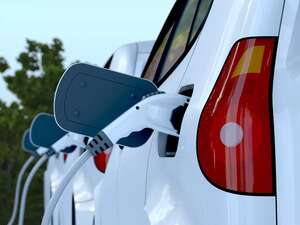
NEW DELHI: The government has revised the rules for the electric vehicle (EV) charging infrastructure and allowed their owners to charge their EVs using the existing electricity connections at homes or offices. It has also given the go ahead for the allotment of government land to private entities through bidding for setting up public charging stations (PCS).

The Union power ministry issued the revised promulgated guidelines and standards on Friday and said the government plans to roll out PCS on a large scale in two phases. The first phase will cover megacities with a population of above 4 million as per the census 2011, expressways, and important highways connected to these mega cities. Big cities such as state capitals, Union Territory headquarters, and important highways connected with these cities will be covered in the second phase.

“…owners may charge their EVs at their residence or offices using their existing electricity connections… The tariff applicable for domestic consumption shall be applicable for domestic charging,” the ministry said in a statement.

As per data with the ministry of road transport and highways, India has 947,876 registered electric vehicles. But only 1,028 PCS have been installed throughout the country so far, according to the Bureau of Energy Efficiency (BEE).

The revised guidelines are important because, by 2030, India has set a target of 30% EV sales penetration for private cars, 70% for commercial vehicles, 40% for buses, and 80% for two- and three-wheelers. At present, only about 2-3 e-car variants cost below ₹15 lakh in the country. The cost of two-wheelers and three-wheelers have almost come at par with the existing petrol ones after factoring in the subsidies. Apart from the high cost of EVs, a major cause for the sluggish sale of EVs in the country, other than Delhi, has been the lack of charging infrastructure.

The new rules mention the infrastructure requirement and prescribed standards for installing PCS. “Any individual/entity is free to set up public charging stations without the requirement of a license, provided that such stations meet the technical, safety as well as performance standards and protocols laid down under the guidelines as well as norms/ standards/ specifications laid down by power ministry, BEE and Central Electricity Authority (CEA) from time to time. An exhaustive list of compliance requirements for PCS has also been outlined. These include norms for ‘appropriate’ infrastructure for civil, electrical, and safety requirements.”

The Centre has left it to the state governments to fix the ceiling of service charges to be levied by PCS. This has been allowed because some states have rolled out their EV policies under which they offer subsidies for purchasing an EV and for setting up charging stations.

So far, 14 states have released their EV policies. They include Delhi, Andhra Pradesh, Maharashtra, Madhya Pradesh, Uttar Pradesh, Gujarat, Kerala, Punjab, Tamil Nadu, and Bihar.

Union transport minister Nitin Gadkari has told Parliament that Uttar Pradesh and Delhi account for 44% of the EVs registered in India.

To make charging stations financially viable, the government has also put in place a revenue-sharing model for the land used for public charging stations. “Land available with the government/public entities shall be provided for installation of PCS to a government/public entity on a revenue-sharing basis at a fixed rate of ₹ 1 / kWh (used for charging), which will be paid to the land-owning agency on a quarterly basis. Such revenue-sharing agreement may be initially entered by parties for a period of 10 years. This model may also be adopted by the public land-owning agency for providing the land to a private entity for installation of PCS on bidding basis with a floor price of ₹ 1/ kWh,” it said.

The BEE is preparing action plans for the installation of public charging stations for nine major cities such as Mumbai, Delhi, Bengaluru, Hyderabad, Ahmedabad, Chennai, Kolkata, Surat, and Pune. “As per the initial estimates, a total of 3263 chargers under a business-as-usual scenario, 23,524 chargers under the moderate scenario, and 46,397 under aggressive scenario are being targeted for installation of PCS in these cities by 2030,” a power ministry official said.

Source: hindustantimes.com

Leave a Reply Cancel reply

Your email address will not be published. Required fields are marked *

Editors Corner

How can Artificial Intelligence tools be a blessing for recruiters?

Will Artificial Intelligence ever match human intelligence?

Artificial Intelligence: Features of peer-to-peer networking

What not to share or ask on Chatgpt?

How can Machine Learning help in detecting and eliminating poverty?

How can Artificial Intelligence help in treating Autism?

Speech Recognition and its Wonders in your corporate life

Most groundbreaking Artificial Intelligence-based gadgets to vouch for in 2023

Recommended News

AI Next

Google: AI From All Perspectives

Alphabet subsidiary Google may have been slower than OpenAI to make its AI capabilities publicly available in the past, but...

by India Next
May 31, 2024
AI Next

US And UK Doctors Think Pfizer Is Setting The Standard For AI And Machine Learning In Drug Discovery

New research from Bryter, which involved over 200 doctors from the US and the UK, including neurologists, hematologists, and oncologists,...

by India Next
May 31, 2024
Solutions

An Agreement Is Signed By MEA, MeitY, And CSC To Offer E-Migration Services Via Shared Service Centers

Three government agencies joined forces to form a synergy in order to deliver eMigrate services through Common Services Centers (CSCs)...

by India Next
May 31, 2024
AI Next

PR Handbook For AI Startups: How To Avoid Traps And Succeed In A Crowded Field

The advent of artificial intelligence has significantly changed the landscape of entrepreneurship. The figures say it all. Global AI startups...

by India Next
May 31, 2024

Related Posts

EV
E-Vehicles

AAI Inducts Electric Vehicles At Offices, Airports

September 14, 2022
Electric highway
E-Vehicles

Nitin Gadkari Says Centre Working To Develop Electric Highways: What Are They? When Is India Likely To Get One?

September 13, 2022
BYD
E-Vehicles

BYD Atto 3 To Launch In India: What To Expect

September 9, 2022
EV
E-Vehicles

The Electric Vehicle (EV) Sector In India To Boost Both The Economy And The Environment

September 9, 2022
Load More
Next Post
Energy-Storage

PLI Scheme: 10 Companies Bid For ACC Battery Storage Programme

IndiaNext Logo
IndiaNext Brings you latest news on artificial intelligence, Healthcare & Energy sector from all top sources in India and across the world.

Recent Posts

Google: AI From All Perspectives

US And UK Doctors Think Pfizer Is Setting The Standard For AI And Machine Learning In Drug Discovery

An Agreement Is Signed By MEA, MeitY, And CSC To Offer E-Migration Services Via Shared Service Centers

PR Handbook For AI Startups: How To Avoid Traps And Succeed In A Crowded Field

OpenAI Creates An AI Safety Committee Following Significant Departures

Tags

  • AI
  • EV
  • Mental WellBeing
  • Clean Energy
  • TeleMedicine
  • Healthcare
  • Electric Vehicles
  • Artificial Intelligence
  • Chatbots
  • Data Science
  • Electric Vehicles
  • Energy Storage
  • Machine Learning
  • Renewable Energy
  • Green Energy
  • Solar Energy
  • Solar Power

Follow us

  • Facebook
  • Linkedin
  • Twitter
© India Next. All Rights Reserved.     |     Privacy Policy      |      Web Design & Digital Marketing by Heeren Tanna
No Result
View All Result
  • About Us
  • Activate
  • Activity
  • Advisory Council
  • Archive
  • Career Page
  • Companies
  • Contact Us
  • cryptodemo
  • Energy next
  • Energy Next Archive
  • Home
  • Interviews
  • Make in India
  • Market
  • Members
  • Mission
  • News
  • News Update
  • People
  • Policy
  • Privacy Policy
  • Register
  • Reports
  • Subscription Page
  • Technology
  • Top 10
  • Videos
  • White Papers
  • Work Culture
  • Write For Us

Welcome Back!

Login to your account below

Forgotten Password?

Retrieve your password

Please enter your username or email address to reset your password.

Log In

Add New Playlist

IndiaNext Logo

Join Our Newsletter

Get daily access to news updates

no spam, we hate it more than you!