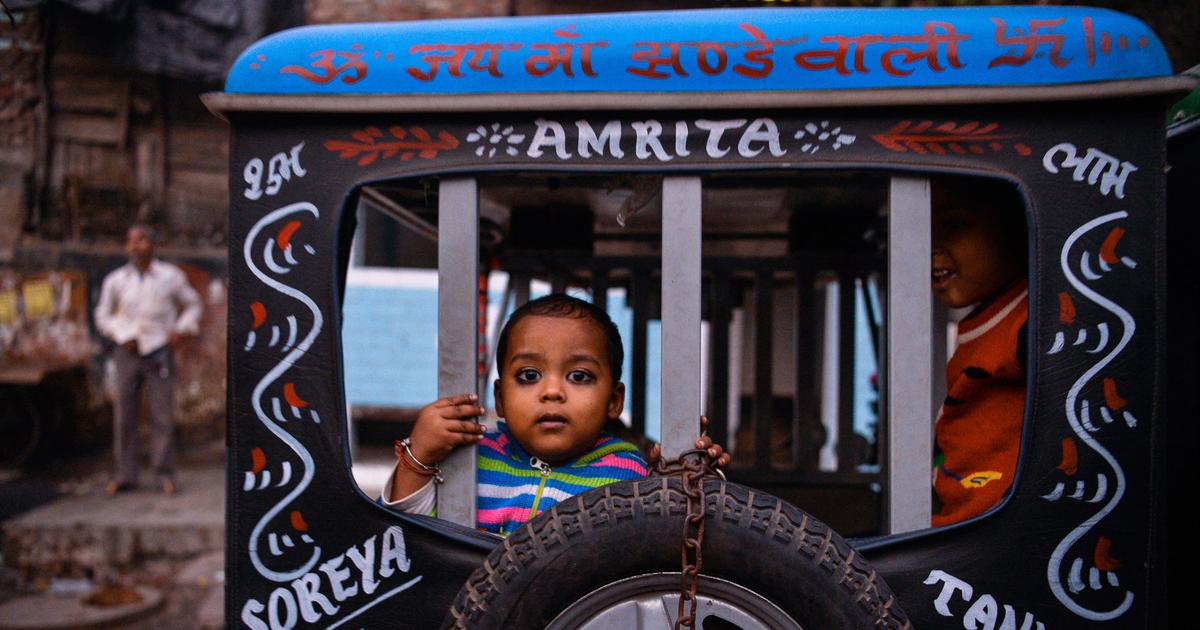
In the crowded streets surrounding Delhi’s mass transit hubs, among scores of three-wheelers with sputtering engines, one can frequently find e-rickshaws, their electric motors humming quietly. These battery-powered autos offer livelihoods to thousands of people in the capital, provide last mile connectivity to many more, deliver goods, and reduce air pollution. And yet, they are far from being ubiquitous in Delhi, or elsewhere in India.
One key barrier to the electric transition in the country is the high upfront cost for borrowers. Another hurdle is the uncertainty about the longevity and future uses of components like batteries. Moreover, much of the market in the country is informal, further complicating access to credit. If India wants to create a climate-friendly, sustainable transport ecosystem, these issues will need to be addressed.
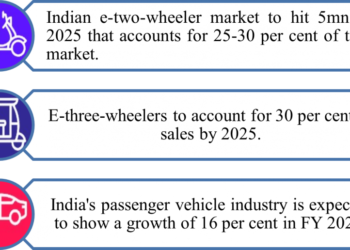
At present, for each passenger car, there are five two- and three-wheelers, according to the International Energy Agency’s India Energy Outlook 2021 report. This asymmetry could hold significance for India. Until now, electrification of road transport in the country has largely been driven by electric scooters, motorbikes, small goods carriers and rickshaws. “The number of electrified two‐ and three‐wheelers has grown by more than 60% each year on average since 2015, and there were 1.8 million such vehicles in 2019,” according to the International Energy Agency. Despite this rapid uptake, there is still massive room for growth since electric vehicles only constituted 3% of all two- and three-wheeler sales in 2019.
In terms of mobilising capital towards this transition, the annual loan market for EVs is projected to grow to Rs 3.7 lakh crore by 2030, according to a report by NITI Aayog and RMI India, a think tank. Of this, two- and three-wheelers will take up just under 10% but will play an outsized role in providing meaningful work and helping sub-national governments meet salient climate-related goals such as reducing air pollution.
Lessons from Delhi
More than anywhere else in India, green licence plates – indicating the vehicle is powered by a rechargeable battery, not an internal combustion engine – are prominent in Delhi. To some extent, this has been enabled by the state government’s concerted efforts to complement national policies that encourage adoption of EVs. India launched Faster Adoption and Manufacturing of E-Vehicle schemes in April 2015 and April 2019 to subsidise EVs, but their budgets have been under-utilised. So, with a growing ecosystem of manufacturers, the Delhi government’s revised EV policy has focused on generating demand and providing subsidies, especially to borrowers looking to buy two- and three-wheelers, with a goal that one in four of all new vehicle registrations in 2024 would be for an EV.
The typical price for an electric three-wheeler starts around Rs 1.3 lakh, with more expensive models offered by automakers like Mahindra and Piaggio priced around Rs 1.7 lakh or higher. For an average driver, even the models at the bottom of the range would require him to pay around four months’ earnings towards the cost of the vehicle.
For registered drivers, the Delhi government’s financial incentives include a Rs 30,000 purchase incentive and 5% interest subvention on loans for the purchase of an e-rickshaw, and a waiver of road tax and registration fees. These drivers also receive Rs 7,500 for scrapping and de-registering old rickshaws with internal combustion engines to limit the number of old, polluting models on the roads and prevent informal operation of rickshaws.
In addition to expanding financial support, it is this bid to limit the re-sale and operation of older rickshaws that is essential to limiting air pollution because many Indian cities have autos operating long beyond their intended lifespan. For instance, in Mumbai, a quarter of all rickshaws have inefficient two-stroke engines, according to researchers at the World Resources Institute, a non-profit research organisation.
Challenge in accessing finance
The targeted initiative to crowd in drivers from low-income backgrounds is critical because they face a range of barriers in accessing capital. In Delhi, the transition towards e-rickshaws began organically as drivers switched from cycle rickshaws, or cycle cabs, to loosely-assembled rickshaws with spare batteries and metal sheets serving as the chassis. Many drivers wanted to break free from the shackles of work in the informal sector that involved manually pedalling cycle rickshaws, often being beholden to local goons who owned the vehicles.
“Between 2010 and 2015, there were no guidelines, rules and regulations in place and these vehicles and drivers’ welfare were not addressed,” said Anuj Sharma, who is the chairman of the E-rickshaw Committee of the Ministry of Road Transport and Highways. “Many of the drivers are migrants who work as farm labour in rural areas for a third of the year and spend the rest of the time driving rickshaws in various cities,” Sharma, who is also president of the E-rickshaw Association that represents drivers’ issues in courts, told me.
The transition to EVs in this segment is coming at a difficult time. Restrictions on mobility during pandemic-induced lockdowns, reverse migration from cities to rural areas, and a slow economic recovery in the rural and informal sectors have dampened demand.
While non-banking financial corporations like microfinance institutions may offer a path for borrowers with limited access to credit, this only takes care of part of the cost of capital, particularly for first-time borrowers. To a certain extent, this stems from the total amount of bad loans in the Indian financial system, which has influenced the Reserve Bank of India’s guidelines for microfinance institutions. From November 2019, the household limits were increased from Rs 1 lakh to Rs 1.25 lakh in rural areas and from Rs 1.6 lakh to Rs 2 lakh in urban/semi urban areas. Apart from this, a borrower’s total indebtedness was raised from Rs 1 lakh to Rs 1.25 lakh. While these guidelines increased the total amount of microfinance credit in the system, they raised the loan limits for first- and second-time borrowers respectively from Rs 60,000 to Rs 75,000 and Rs 1 lakh to Rs 1.25 lakh.
Lengthy transaction times
For drivers who depend on their small goods carriers or e-rickshaws for daily wages, the wait time for a loan could be a critical factor in influencing their decision about whether to buy a vehicle that allows them to enter the formal sector. “After papers are submitted, the know-your-customer process is completed and an NBFC takes a guarantor’s cheque, drivers want loans in a few days and not a few months,” Sharma explained. “Each day of work is important to them so they can earn an income.”
Sharma gave the analogy of how traditional automotive companies like Bajaj and Mahindra in the two- and three-wheeler segment often provide their own finance, which allows a purchase to take place much more quickly. To date, only a few manufacturers of electric three-wheelers have set up financial vehicles or subsidiaries to provide credit to borrowers.
Given their profiles, “EV buyers currently face a range of financing challenges, such as high interest and insurance rates, low loan-to-value ratios, and limited specialized financing options,” according to the NITI Aayog-RMI report. In part, large commercial lenders set high interest rates to balance out potential losses, given the high probability of borrowers defaulting on loans. “We did a consultation with big banks who told us that interest rates on the cost of capital for EVs are as high as 30% because two out of three borrowers default on loans, and the banks feel they need to hedge against this,” Shijoy Varughese, a consultant at RMI India, told me.
Technology uncertainty
Even drivers who have registered vehicles find the green premium for e-rickshaws with the latest battery technology to be expensive. This is compounded by the lack of trust in financing EVs that comes from technology uncertainty. “There are limited financial products because the market hasn’t been studied enough,” Varughese said. “We don’t know enough about costs of servicing, how the batteries might fare, what their second use might be, and the re-sale price of the vehicle.”
Financial support from the government is also geared towards newer technologies instead of vehicles that have been scrapped together. “Subsidies are available only for vehicles with advanced battery chemistries, rather than lead‐acid variants that make up the majority of electric two‐/three‐wheelers sold today,” according to the International Energy Agency.
This is sensible from the perspective of both public safety and the environment – shoddily assembled batteries can be a hazard – but leaves out those in the informal sector looking to buy EVs. “In a developing country, lithium-ion batteries are very expensive and drivers need more support to buy vehicles with these,” said Sharma of the E-rickshaw Association.
These varied factors contribute to higher interest rates on the cost of capital for drivers looking to go electric. The average borrowing rate on the cost of capital for fossil-fuel powered rickshaws is just under 20%, according to a 2019 WRI study, whereas it’s above 25% for e-rickshaws, according to both Sharma and Varughese.
Climate-friendly livelihoods
To plug these gaps, three-wheeler drivers looking to borrow money to buy vehicles need a range of commercial financial products. These could include “interest-rate subvention, multi-stakeholder contracts, lease financing, joint revenue sharing agreements, and battery financing,” according to experts at NRDC India, a think tank. The Union government can also play a key role in backing the transition and signalling the importance of financing EVs. “There is an opportunity for the governments to mandate things that can bring trust into the system, such as making EVs a part of priority sector lending,” Varughese said.
Ultimately, while finance will be essential to accelerating adoption of electric vehicles, India needs a whole suite of policies for each segment of the electric mobility ecosystem, including “reliable vehicles and components (e.g. batteries), viable and profitable business models, ubiquitous charging infrastructure, public transportation, and a robust resale market,” suggest researchers at NRDC India.
“Until these issues are fixed, many drivers looking to both earn a livelihood and use good, new technologies will suffer,” Sharma said.
Source: scroll.in