
Current directory: /home3/bjinbymy/public_html/indianext/wp-content/mu-plugins AI May Help Maintain Patients' Unconsciousness During Operations In Future - AI Next
Indianext
No Result
View All Result
Subscribe
  • News
    • Project Watch
    • Policy
  • AI Next
  • People
    • Interviews
    • Profiles
  • Companies
  • Make In India
    • Solutions
    • State News
  • About Us
    • Editors Corner
    • Mission
    • Contact Us
    • Work Culture
  • Events
  • Guest post
  • News
    • Project Watch
    • Policy
  • AI Next
  • People
    • Interviews
    • Profiles
  • Companies
  • Make In India
    • Solutions
    • State News
  • About Us
    • Editors Corner
    • Mission
    • Contact Us
    • Work Culture
  • Events
  • Guest post
No Result
View All Result
Latest News on AI, Healthcare & Energy updates in India
No Result
View All Result
Home AI Next

AI May Help Maintain Patients’ Unconsciousness During Operations In Future

February 25, 2022
AI

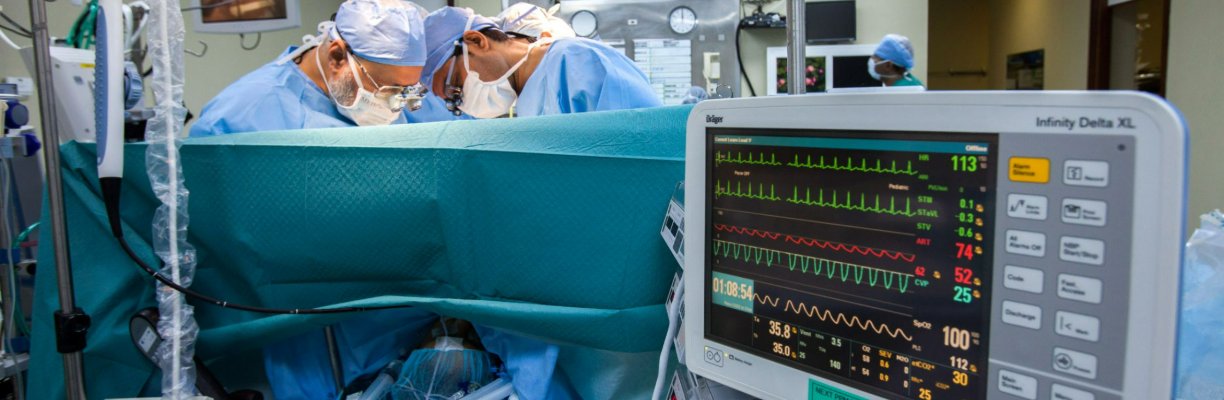
Researchers at MIT and the medical professionals at the Massachusetts General Hospital (MGH) predict that in the near future, artificial intelligence (AI) will be able to assist anesthesiologists in the operating room.

The team – made up of neuroscientists, engineers, and physicians have demonstrated a machine learning (ML) algorithm that has been able to automate propofol dosage. The algorithm has been trained using deep reinforcement learning and in many trials runs; so far it has exceeded the performances of traditional software in sophisticated, physiology-based simulations of patients using an application of deep reinforcement learning. 

The software has also matched a human anesthesiologists’ performance in the experiments where it was given data from a few procedures.

The software has two neural networks – actor and a critic – which have learned the necessary science of keeping patients unconscious while also critiquing the validity of their actions. This has allowed the computers’ ability to maintain a constant and safe dosage to keep patients unconscious while procedures are going on. This means that the anesthesiologists can be free to perform responsibilities in the operating room, such as ensuring patients remain immobile, experience no pain, remain stable, and receive adequate oxygen.

The ‘actor and ‘critic’ neural networks work simultaneously – the actor decides how much drugs to dose while the critic guides and questions the actor’s action to help it improve and maximizes “rewards” specified by the programmer. For the research, the algorithm has three different settings – one that penalized just overdose, one that questioned supplying any dose, and one that had no penalties.

The critic questioned the actor’s every dose and chastised him to limit the doses to the bare minimum necessary under the “dose penalty” approach, which was the most efficient approach. The “no penalties” approach saw the actor dose too much, while the “overdose penalty” saw the actor does too little.

Further, the algorithm was tested on real patient consciousness data, collected from operating rooms which revealed its challenges and strengths. “During most tests, the algorithm’s dosing choices closely matched those of the attending anesthesiologists after unconsciousness had been induced and before it was no longer necessary. The algorithm, however, adjusted dosing as frequently as every five seconds, while the anesthesiologists (who all had plenty of other things to do) typically did so only every 20-30 minutes,” observed co-lead author, Marcus Badgeley.

To the researchers own admission, the algorithm is not yet optimised for inducing unconsciousness therefore, the anesthesiologist has to maintain the process of inducing unconsciousness and helping patients regain consciousness back. Another challenge that co-led author Gabe Schamberg reveals is that the accuracy of patients’ data on unconsciousness has to be extremely accurate. 

To overcome this challenge, MIT researchers and MGH are working towards improving data interpretation such as brain wave signals, to improve the quality of patient monitoring data under anaesthesia.

Source: indiaai.gov.in

Leave a Reply Cancel reply

Your email address will not be published. Required fields are marked *

Editors Corner

How can Artificial Intelligence tools be a blessing for recruiters?

Will Artificial Intelligence ever match human intelligence?

Artificial Intelligence: Features of peer-to-peer networking

What not to share or ask on Chatgpt?

How can Machine Learning help in detecting and eliminating poverty?

How can Artificial Intelligence help in treating Autism?

Speech Recognition and its Wonders in your corporate life

Most groundbreaking Artificial Intelligence-based gadgets to vouch for in 2023

Recommended News

AI Next

Google: AI From All Perspectives

Alphabet subsidiary Google may have been slower than OpenAI to make its AI capabilities publicly available in the past, but...

by India Next
May 31, 2024
AI Next

US And UK Doctors Think Pfizer Is Setting The Standard For AI And Machine Learning In Drug Discovery

New research from Bryter, which involved over 200 doctors from the US and the UK, including neurologists, hematologists, and oncologists,...

by India Next
May 31, 2024
Solutions

An Agreement Is Signed By MEA, MeitY, And CSC To Offer E-Migration Services Via Shared Service Centers

Three government agencies joined forces to form a synergy in order to deliver eMigrate services through Common Services Centers (CSCs)...

by India Next
May 31, 2024
AI Next

PR Handbook For AI Startups: How To Avoid Traps And Succeed In A Crowded Field

The advent of artificial intelligence has significantly changed the landscape of entrepreneurship. The figures say it all. Global AI startups...

by India Next
May 31, 2024

Related Posts

Google
AI Next

Google: AI From All Perspectives

May 31, 2024
Pfizer
AI Next

US And UK Doctors Think Pfizer Is Setting The Standard For AI And Machine Learning In Drug Discovery

May 31, 2024
Artificial-Intelligence
AI Next

PR Handbook For AI Startups: How To Avoid Traps And Succeed In A Crowded Field

May 31, 2024
openai
AI Next

OpenAI Creates An AI Safety Committee Following Significant Departures

May 31, 2024
Load More
Next Post
Electric-Vehicle

Understanding Critical Gaps In India’s Electric Vehicle Policies – EQ Mag Pro

IndiaNext Logo
IndiaNext Brings you latest news on artificial intelligence, Healthcare & Energy sector from all top sources in India and across the world.

Recent Posts

Google: AI From All Perspectives

US And UK Doctors Think Pfizer Is Setting The Standard For AI And Machine Learning In Drug Discovery

An Agreement Is Signed By MEA, MeitY, And CSC To Offer E-Migration Services Via Shared Service Centers

PR Handbook For AI Startups: How To Avoid Traps And Succeed In A Crowded Field

OpenAI Creates An AI Safety Committee Following Significant Departures

Tags

  • AI
  • EV
  • Mental WellBeing
  • Clean Energy
  • TeleMedicine
  • Healthcare
  • Electric Vehicles
  • Artificial Intelligence
  • Chatbots
  • Data Science
  • Electric Vehicles
  • Energy Storage
  • Machine Learning
  • Renewable Energy
  • Green Energy
  • Solar Energy
  • Solar Power

Follow us

  • Facebook
  • Linkedin
  • Twitter
© India Next. All Rights Reserved.     |     Privacy Policy      |      Web Design & Digital Marketing by Heeren Tanna
No Result
View All Result
  • About Us
  • Activate
  • Activity
  • Advisory Council
  • Archive
  • Career Page
  • Companies
  • Contact Us
  • cryptodemo
  • Energy next
  • Energy Next Archive
  • Home
  • Interviews
  • Make in India
  • Market
  • Members
  • Mission
  • News
  • News Update
  • People
  • Policy
  • Privacy Policy
  • Register
  • Reports
  • Subscription Page
  • Technology
  • Top 10
  • Videos
  • White Papers
  • Work Culture
  • Write For Us

Welcome Back!

Login to your account below

Forgotten Password?

Retrieve your password

Please enter your username or email address to reset your password.

Log In

Add New Playlist

IndiaNext Logo

Join Our Newsletter

Get daily access to news updates

no spam, we hate it more than you!