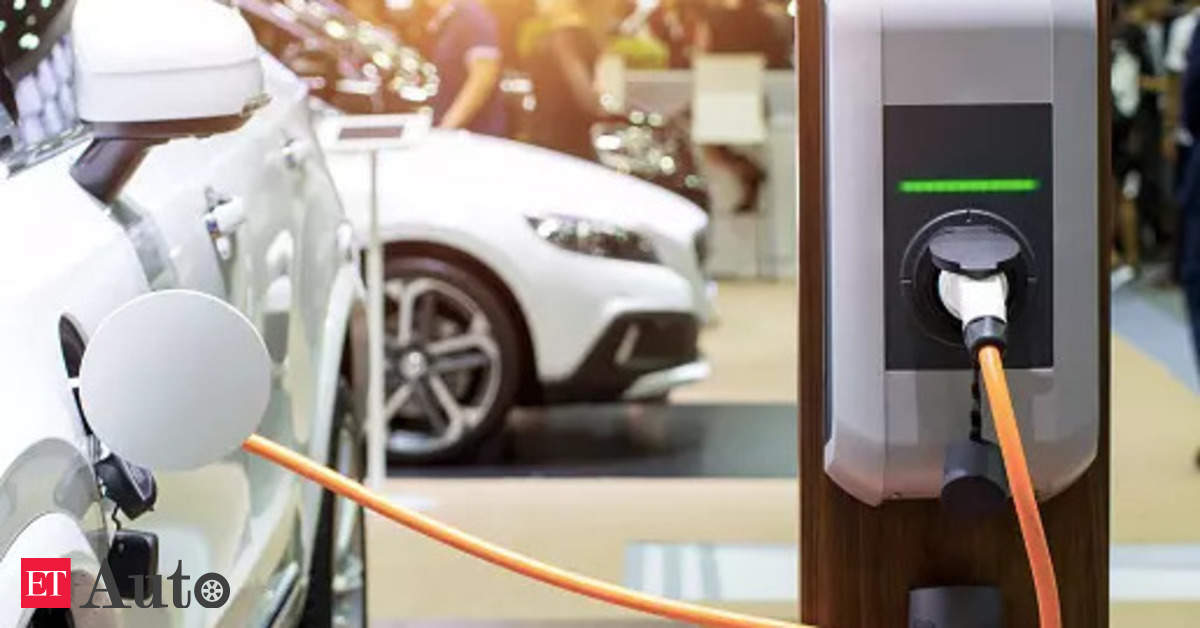
Fueled by developments such as the release of latest bikes, there is an expectation that EVs will soon become sufficiently popular to incentivise economies of scale and build charging infrastructure. This transition to clean mobility can be aided and expedited by the government, whose supportive role will be critical at both the state and national levels.
To be clear, both state governments and the national government have implemented supportive policies. The recent budget announcement of a battery swapping policy is a good example of how the government is considering how to boost the Indian EV industry.
However, there is much more that can be done. Take the Faster Adoption and Manufacturing of Hybrid and Electric Vehicles (FAME)that was adopted in 2015. The first iteration did not achieve much of an impact, so FAME-II was launched in 2019 with an initial period of 3 years that was recently extended by 2 years to conclude in March, 2024. According to the government, 1.65 lakh EVs have been supported under the scheme, with 6,315 buses and 4453 charging stations sanctioned.
While this is certainly commendable progress, only 10% of the initial outlay of 8,596 crores was spent before FAME-II was extended. Though this was due to a variety of factors such as COVID-19, it is clear that there is still scope for improvement and further work. This is just as true for many other central government policies as well as state ones, and all efforts must be made to provide EV manufacturers with an ideal platform to thrive. The growth of any industry or market is typically predicated on conducive government policies.
Leading the way
The central government has committed hard to clean energy and mobility in the coming decade and has ambitious targets for both in 2030. Financial and non-financial incentives provided by policies such as FAME-II and the Production Linked Incentive (PLI) Scheme for Advanced Battery Chemistries policy have set a strong foundation to build a progressive value chain in the country. When extending FAME-II in June, a decision was made to aggregate demand for 3 wheelers and buses through Energy Efficiency Services Ltd. (EESL), a government agency.
EESL will aggregate demand for three lakhs of electric 3 wheelers and generate demand for 9 cities with a population of over 4 million (Delhi, Mumbai, Bangalore, Hyderabad, Ahmedabad, Kolkata, Chennai, Surat and Pune). However, there is still scope to expand the programme by including low speed two-wheelers and four-wheelers as well as expanding EESL’s bus initiative to more cities.
While the national government can set a powerful example in leading the country towards electrifying mobility, it is uniquely situated to smooth out chinks and harmonise disparate state policies. It could help secure a supply chain of critical raw materials for EVs, like the rare earth elements (REE) required for crucial components like batteries.
As consumer adoption grows there will also need to be some kind of agency that ensures standardization of charging and battery technologies so that any station can be used by every car. Ideally, the government should set up a dedicated department that oversees all aspects of electric vehicles in the country and can make relevant recommendations to other relevant ministries like Power, Renewable Energy and External Affairs.
Competitive Federalism
Transport is largely a state subject, so each state approaches EVs in its own way. Some do not have a dedicated policy for EVs, while others, like Gujarat and Delhi, have robust policies with extremely attractive incentives to drive adoption. As many states continue to introduce and revise their EV policies, competitive federalism will play a central role in promoting local innovation. Similar to how states competed for the production of the Tata Nano, regional competition from a policy standpoint could lead to outcomes that benefit India at a national level.
One area that state governments can take the lead in is electrifying public transport, specifically buses. Buses are an ideal conduit to creating an EV infrastructure as they have predetermined routes that make the installation of charging points easier. Therefore, charging infrastructure for buses does not have to be as extensive as it does for private vehicles as buses already work on a hub-spoke model. It also does not have to be as expensive.
Charging points for EVs are more complicated than standard sockets found at home. They need to have a wide range of capacity to deal with differing charging needs of different vehicles and can cost as much as 2-3 crore rupees. This outlay becomes more feasible and cost-effective if there is some guarantee that stations will cater to high volumes of EVs with specific charging requirements, which is the case with buses. Electrification will be relatively easier for intra-city buses – long-distance, inter-city travel will provide significantly more challenges.
No Time to Wait
These days it is almost impossible to go a few days without seeing weather records being broken, news of atypical weather patterns or natural disasters in some part of the world. We are officially in a ‘Code Red’ scenario with the window to reverse climate change quickly narrowing. It is incumbent upon us to take all possible steps to limit the damage and transportation is one of the biggest contributors to emissions. Electrification of mobility is one such solution that can bring India closer to net zero emissions, and the government will play a crucial role in driving the charge.
Source: eqmagpro.com