
Current directory: /home3/bjinbymy/public_html/indianext/wp-content/mu-plugins The Next Domain That Machine Learning Aims To Conquer Is Hard Science - AI Next
Indianext
No Result
View All Result
Subscribe
  • News
    • Project Watch
    • Policy
  • AI Next
  • People
    • Interviews
    • Profiles
  • Companies
  • Make In India
    • Solutions
    • State News
  • About Us
    • Editors Corner
    • Mission
    • Contact Us
    • Work Culture
  • Events
  • Guest post
  • News
    • Project Watch
    • Policy
  • AI Next
  • People
    • Interviews
    • Profiles
  • Companies
  • Make In India
    • Solutions
    • State News
  • About Us
    • Editors Corner
    • Mission
    • Contact Us
    • Work Culture
  • Events
  • Guest post
No Result
View All Result
Latest News on AI, Healthcare & Energy updates in India
No Result
View All Result
Home AI Next

The Next Domain That Machine Learning Aims To Conquer Is Hard Science

October 14, 2022
machine learning

Hard sciences are also being revolutionized by machine learning

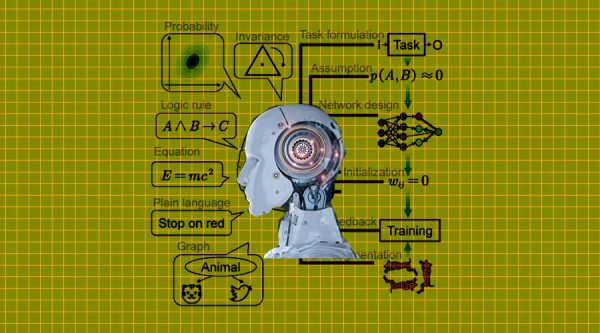
From email to the Internet, particle physicists, the hard sciences’ experts, have historically been early users of technology, if not its creators. Therefore, it is not unexpected that researchers began training computer models to tag particles in the chaotic jets produced by collisions as early as 1997. Since then, these models have plodded along, becoming increasingly more capable—although not everyone has been pleased with this development. Particle physicists have taught algorithms to solve previously unsolvable issues and take on entirely new challenges over the past ten years, concurrently with the broader deep-learning revolution.

According to Jesse Thaler, a theoretical particle physicist at the Massachusetts Institute of Technology, “I felt really scared by machine learning.” He claims that at first, he believed that it imperiled his ability to characterize particle jets using human judgment. Thaler, however, has now come to accept it and has used machine learning to solve a number of issues in particle physics. He claims that machine learning is a partner.

To begin with, the data utilized in particle physics differs greatly from the conventional data used in machine learning. Though convolutional neural networks (CNNs) have excelled at categorizing photos of commonplace items like trees, kittens, and food, they’re less good at handling particle collisions. Javier Duarte, a particle physicist at the University of California, San Diego, claims that the issue is that collision data from sources like the Large Hadron Collider isn’t by nature an image. Flashy representations of LHC collisions may deceitfully fill the entire detector. In reality, a white screen with a few black pixels represents the millions of inputs that aren’t actually registering a signal. Although this weakly supplied data produces a subpar image, it can perform well in a newer architecture called graph neural networks (GNNs).

Innovation is needed to overcome additional particle physics problems. According to Daniel Whiteson, a particle physicist at the University of California, Irvine, “We’re not merely importing hammers to smash our nails.” We need to create new hammers because there are strange new types of nails. The enormous volume of data generated at the LHC—roughly one petabyte every second—is one peculiar nail. Only a limited amount of high-quality data is saved from this large volume. Researchers seek to teach a sharp-eyed algorithm to sort better than one that is hard coded in order to develop a better trigger system, which saves as much good data as possible while getting rid of low-quality data. The intention is not to connect the device or the experiment to the network and have it publish the articles without keeping them informed, according to Whiteson. He and his colleagues are attempting to have the algorithms deliver feedback in terms of what people can comprehend, but it’s possible that other individuals have communication duties as well.

However, according to Duarte, such an algorithm would need to execute in just a few microseconds in order to be efficient. Particle physicists are pushing the boundaries of machine techniques like pruning and quantization to accelerate their algorithms in order to solve these issues. Researchers are looking for ways to compress the data because the LHC needs to store 600 petabytes during the next five years of data collecting (equal to about 660,000 movies at 4K resolution or the data equivalent of 30 Libraries of Congresses).

As some particle physicists go deeper into machine learning it seems imperative to ask, “Are they doing physics or computer science?” This is a troubling topic. There is already a stigma surrounding coding, which is occasionally dismissed as “not real physics,” and similar worries abound over machine learning. One concern is that machine learning will muddle the physics, making analysis a black box of automated operations that are difficult for humans to comprehend. On the one hand, Thaler argues, “We’d like to have a machine learn to think more like a physicist, on the other hand, we only need to learn how to think a little bit more like a computer.” “We must learn to communicate in each other’s languages.

Source: analyticsinsight.net

Leave a Reply Cancel reply

Your email address will not be published. Required fields are marked *

Editors Corner

How can Artificial Intelligence tools be a blessing for recruiters?

Will Artificial Intelligence ever match human intelligence?

Artificial Intelligence: Features of peer-to-peer networking

What not to share or ask on Chatgpt?

How can Machine Learning help in detecting and eliminating poverty?

How can Artificial Intelligence help in treating Autism?

Speech Recognition and its Wonders in your corporate life

Most groundbreaking Artificial Intelligence-based gadgets to vouch for in 2023

Recommended News

AI Next

Google: AI From All Perspectives

Alphabet subsidiary Google may have been slower than OpenAI to make its AI capabilities publicly available in the past, but...

by India Next
May 31, 2024
AI Next

US And UK Doctors Think Pfizer Is Setting The Standard For AI And Machine Learning In Drug Discovery

New research from Bryter, which involved over 200 doctors from the US and the UK, including neurologists, hematologists, and oncologists,...

by India Next
May 31, 2024
Solutions

An Agreement Is Signed By MEA, MeitY, And CSC To Offer E-Migration Services Via Shared Service Centers

Three government agencies joined forces to form a synergy in order to deliver eMigrate services through Common Services Centers (CSCs)...

by India Next
May 31, 2024
AI Next

PR Handbook For AI Startups: How To Avoid Traps And Succeed In A Crowded Field

The advent of artificial intelligence has significantly changed the landscape of entrepreneurship. The figures say it all. Global AI startups...

by India Next
May 31, 2024

Related Posts

Google
AI Next

Google: AI From All Perspectives

May 31, 2024
Pfizer
AI Next

US And UK Doctors Think Pfizer Is Setting The Standard For AI And Machine Learning In Drug Discovery

May 31, 2024
Artificial-Intelligence
AI Next

PR Handbook For AI Startups: How To Avoid Traps And Succeed In A Crowded Field

May 31, 2024
openai
AI Next

OpenAI Creates An AI Safety Committee Following Significant Departures

May 31, 2024
Load More
Next Post
google

Google Tensor G2 Is ‘60% Faster,’ More Secure, And More Power Efficient

IndiaNext Logo
IndiaNext Brings you latest news on artificial intelligence, Healthcare & Energy sector from all top sources in India and across the world.

Recent Posts

Google: AI From All Perspectives

US And UK Doctors Think Pfizer Is Setting The Standard For AI And Machine Learning In Drug Discovery

An Agreement Is Signed By MEA, MeitY, And CSC To Offer E-Migration Services Via Shared Service Centers

PR Handbook For AI Startups: How To Avoid Traps And Succeed In A Crowded Field

OpenAI Creates An AI Safety Committee Following Significant Departures

Tags

  • AI
  • EV
  • Mental WellBeing
  • Clean Energy
  • TeleMedicine
  • Healthcare
  • Electric Vehicles
  • Artificial Intelligence
  • Chatbots
  • Data Science
  • Electric Vehicles
  • Energy Storage
  • Machine Learning
  • Renewable Energy
  • Green Energy
  • Solar Energy
  • Solar Power

Follow us

  • Facebook
  • Linkedin
  • Twitter
© India Next. All Rights Reserved.     |     Privacy Policy      |      Web Design & Digital Marketing by Heeren Tanna
No Result
View All Result
  • About Us
  • Activate
  • Activity
  • Advisory Council
  • Archive
  • Career Page
  • Companies
  • Contact Us
  • cryptodemo
  • Energy next
  • Energy Next Archive
  • Home
  • Interviews
  • Make in India
  • Market
  • Members
  • Mission
  • News
  • News Update
  • People
  • Policy
  • Privacy Policy
  • Register
  • Reports
  • Subscription Page
  • Technology
  • Top 10
  • Videos
  • White Papers
  • Work Culture
  • Write For Us

Welcome Back!

Login to your account below

Forgotten Password?

Retrieve your password

Please enter your username or email address to reset your password.

Log In

Add New Playlist

IndiaNext Logo

Join Our Newsletter

Get daily access to news updates

no spam, we hate it more than you!