
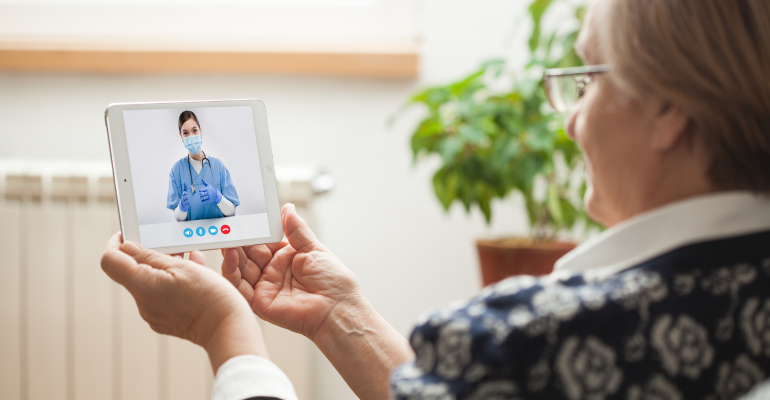
The pandemic has brought many changes this year impacting all industries across the board. But within healthcare, the changes have been significant especially in telehealth. Telemedicine has been around for several decades but with the speed with which it has been pushed forward during the pandemic, probably makes it a universal and extremely positive change to happen in a long time.
We can safely say that telemedicine is the future of healthcare for years to come. During the past two years, we witnessed it being one of the greatest solutions to access to care issues during this global pandemic by reducing the spread of the virus through decreased person to person interactions.
Amidst the pandemic, telemedicine has also become a means of ‘forward triage,’ which is when patients are triaged before they visit an emergency department.
According to the Centers for Disease Control and Prevention (CDC), telehealth utilisation spiked by more than 154 per cent in late March of 2020 compared to the same period in 2019. Additionally, the market is expected to rise to over $397 billion by 2027 following current predictions made by Fortune Business Insight. To illustrate the impact the pandemic has had on the industry, in 2019 the market was only worth $42 billion. While usage over time has subsided since the peak of the pandemic, it has become clear that telehealth is now an instrumental part of the future of healthcare delivery.
Telehealth has also enabled the transition to consumer-centric care paradigms because there was a need to create social distancing in a safe environment. It re-invented virtual visits and became an important communication and treatment tool during the pandemic.
So how does it work?
Telehealth involves the use of communication systems and networks to enable sessions between the patient and the provider with a broader scope of clinical and work-flow processes, remote monitoring, and several providers over time. However, there remains a difference between telehealth and telemedicine even though both complement each other. Telemedicine generally refers to the remote delivery of medical or clinical services, while telehealth is a larger platform that includes telemedicine along with other remote non-clinical services.
Connecting patients and providers
In the future, telemedicine’s range will continue to expand, connecting patients and providers internationally as providers look to expand globally. This will not only help improve the physician shortage and mitigate the uneven distribution of physicians, but may also provide patients with rare diseases alternative avenues to seek highly specialised care.
The advantages of telemedicine moving forward include its cost-effectiveness, ability to extend access to specialty services and its potential to help mitigate the looming physician shortage. Disadvantages include lack of available technological resources in certain countries, issues with security of patient data and challenges in performing the traditional patient examination.
However, if we talk about the UAE alone, approximately 90 per cent of doctors use smartphones and medical apps to provide healthcare and the UAE government too, supports establishment of an infrastructure and telemedicine applications with the aim of providing healthcare services through various initiatives.
Since the UAE boasts of a population which is younger – 85 per cent of the total population is below the age of 45 years, the use of mobile technology, laptops and tablets have a huge penetration in the region which makes it very easy for the UAE to implement telehealth.
Key trends
If we take a look at the key trends, we can see that there has been an increase in chronic care management recently which shows that telehealth has the potential to not only reduce the cost of a care plan, but also improve patient engagement and adherence to it.
There has also been a greater focus on mental health. In order to continue to treat patients many therapists, counselors and doctors quickly turned to video conferencing to continue to support their patients. Hence, the development of tele-therapy and tele-psychiatry began and moving forward, this will likely become a widely accepted form of treatment.
Patient demand has been the greatest driving force when it comes to the growth in telehealth, therefore there has been considerable improvement in user experience.
Wearable technology and remote patient monitoring, integrated data sharing, convenient remote pediatric care as well as investments in technology are some other trends that have been seen recently. The use of digital health tools is ever-evolving which means that technology is here to stay.
Market size and revenues
The telehealth market in UAE is forecast to reach over $536.5 million by 2025. According to statistics, the total UAE mHealth market is forecast to grow from $86.8 million in 2020 to $222.4 million by 2025.
On the other hand, virtual clinics and hospitals will have to strengthen telehealth system for efficient remote care but they have to keep in mind that digital replacement is not digital transformation because patient experience and engagement remains critical across different care settings.
However, adoption of telehealth regulations and insurance reimbursement for telemedicine have been slow, at best worldwide. Access to telehealth has broken a major barrier of adoption with an increase in reimbursement due to COVID-19 outbreak. Mandatory health insurance and rise in penetration of private health insurance players covering telemedicine services are driving the adoption.
Whether the quick and widespread adoption of telehealth and associated regulations is here to stay or will be scaled back post- pandemic is being debated, the indicators appear to be positive. As the current environment has pushed both regulators, and patients alike to become more comfortable with remote care delivery models, we expect it to become a standard offering. We also expect to see further regulatory developments in the way of: data localisation laws and providing for necessary exemptions; more robust data privacy regulations; and further guidance on the use of artificial intelligence and cloud storage in the healthcare industry.
The connected future
Over the past several decades, we have been hit with numerous pandemics, including H1N1, Ebola, SARS-CoV, MERS-CoV, and currently, COVID-19. In the future, it is probable that more novel pandemics will arise. Prior to the current pandemic, issues with regulation and reimbursement have prevented telemedicine from being fully immersed into the healthcare landscape. The development and utilisation of telemedicine services is important as these services allow us to continue to provide high-quality healthcare while maintaining the practice of physical distancing to prevent the spread of these viruses.
The benefits of telemedicine include convenience, increased access to care from a distance, especially for patients living in rural areas, and decreased healthcare costs. Studies have shown that telemedicine appointments can be equal to in-patient visits in a variety of specialties. Continued research should be done to improve aspects of the physical examination for telemedicine visits, especially for specialties in which intimate patient contact is an important aspect of the physical exam. Now is the time for us to implement these services and make the usage of telemedicine mainstream. If we do this, we will be prepared for the next pandemic and the future of healthcare.
Last but not the least, telehealth provides the healthcare industry with so many advantages that although we are starting to see the end of this pandemic, the utilization of this revolutionary technology will continue far into the future.
Source: insights.omnia-health.com