Telemedicine has been gaining traction after the Government of India and the Medical Council of India released their new guidelines for the use of telemedicine during the Covid-19 pandemic.
The Covid-19 pandemic has been a harsh reality-check and has exposed the gaps of overall healthcare system across the world. The virus has shown the world that there is an urgent need for a paradigm shift in the provision of healthcare. Instead of a patient visiting a doctor, the need of the hour is to reach out to vulnerable sections of society. From March 2020 onwards, the healthcare system has focused on Covid-19 and all other health priorities have been put on the back burner. In India, marginalized groups such as pregnant women and women in general have been adversely impacted and civil society, self-help groups (SHGs), the development sector, and the central and state governments have struggled to managed the healthcare for vulnerable.
As of end October 2020 there were 7,305,070 confirmed cases of Covid-19 in India with 812,172 being active, and the cumulative death total was 111,311; making India the country with second highest number of Covid-19 cases in the world. The unlocking of the country has been done in five phases till date, and this along with the upcoming festive season has led to a spurt in the number of cases, thereby leading to an urgent need for testing at the grassroot level. To address the urgency at the grassroot level, the entire healthcare system is now focusing on the prevention, diagnosis, treatment and containment of the Covid-19 infection. This is leading to the possibility of missing opportunities for the timely diagnosis and treatment of other diseases. Patients with mild and moderate complaints or diseases are encountering difficulties while seeking quality healthcare services, and are ending up with chronic conditions. The situation is even more critical in backward districts, which have minimal health services and limited means of conveyance to reach healthcare facilities.
India has historically underspent on healthcare, and the Covid-19 pandemic has highlighted the damage that this can do to the healthcare system. Sujatha Rao, former Union Health Secretary says “we need to have a constant vigil and it is very important to keep investing in basic healthcare, surveillance systems, and in public health functions”.
The Government of India’s spend on healthcare has been a meagre 0.9% to 1.2% of GDP and India is one of only 15 countries in the world which has spent less than 1.2% of their GDP on healthcare. As a result of the low government investment in basic healthcare, people incur out-of-pocket expenses and this often sends them further into poverty.
The Problem
India has a clear healthcare divide with the urban population being in a position to seek medical attention both during the lockdown and subsequently, as well. In contrast, rural and peri-urban populations have faced grave limitations with respect to accessing healthcare because of the lack of services and access to services, especially for women. Limited services have increased the risk of pregnant women having miscarriages or complications due to home deliveries. Additionally, seasonal infections like malaria and dengue could not be treated, leading to complications.
Even before the Covid-19 pandemic, women faced challenges with accessing family planning methods due to societal pressures and the paucity of services, and the Covid-19 pandemic has further hampered India’s effort to curb maternal and infant mortality. On-the-ground reports highlight the lack of services sometimes leading to the death of pregnant women, and emphasize the need for sexual and reproductive health to be embedded into the country’s disaster management plan.
India has been able to achieve groundbreaking results in reducing the maternal mortality rate (MMR), and there is an urgent need to ensure that the numbers continue to decline. The number of women and girls who die each year due to issues related to pregnancy and childbirth has dropped by 55 percent, from 103,000 in 2000 to 35,000 in 2017, but needs to improve further.
India also has a high infant mortality rate (IMR) due to the lack of quality healthcare and access to healthcare, as well as low education and literacy. Neonatal deaths could be significantly reduced if a simple condition like anemia is detected and treated on time.
The solution – A new approach to healthcare
Healthcare providers, civil society and the government can work together to address identified need gaps, by bringing healthcare to the patient, through the use of telemedicine and mobile services.
Telemedicine has been gaining traction after the Government of India and the Medical Council of India released their new guidelines for the use of telemedicine during the Covid-19 pandemic. Even in normal circumstances, providing in-person healthcare in India is challenging, because of vast geographical distances and limited resources. Telemedicine can save cost and effort, especially for rural patients, as they will not need to travel long distances for medical consultation and treatment. Telemedicine, integrated with existing healthcare centres, can provide timely access and last mile connectivity for peri-urban and rural populations.
A broad range of pregnancy-related services can be offered via telemedicine. Telemedicine can enable vulnerable pregnant women to access medical consultations remotely and thus avoid contracting an infection. It can be used for non-emergency consultations for gynaecological disorders. Gynaecologists and obstetricians can interact with patients, gather their medical history, educate them regarding the warning signs in pregnancy, give advice and instruct them to come for a physical consultation, only if needed.
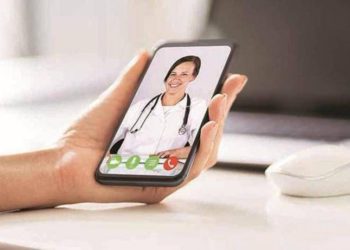
Telemedicine used as an innovative approach to prenatal and postpartum care, such as at-home monitoring of conditions like diabetes and hypertension, and for audio video consultation with specialists I.E. high-risk obstetricians, lactation consultants and mental healthcare providers, amongst others. Traditional prenatal care models recommend upwards of 14 in-person visits throughout a pregnancy. This requires significant travel time and time away from work or family responsibilities. Only some prenatal visits truly require in-person care, like those for ultrasounds, lab testing and vaccinations. Many visits are scheduled to provide patient education, answer questions and monitor maternal and fetal vitals. These vitals could be monitored at home if the patient is provided with the required instruments. Research suggests that fewer prenatal visits are safe for low-risk pregnancies. In response, some medical centres have started to use telemedicine ‘virtual visits’ via videoconference or phone to replace some in-person visits. Patients are given instructions and instruments to monitor blood pressure, weight, fetal heart rate and fundal height, at home.
Women with high-risk pregnancies can also benefit from telemedicine, through at-home self-monitoring of high blood pressure and blood sugar, and thereafter transmitting the readings to their providers. Studies show patients value at-home monitoring, as it allows for active participation in their care and promotes self-efficacy. For patients with diabetes, at-home monitoring of blood sugar may allow for fewer visits to diabetes specialists, and improved health-related quality of life. A review of seven studies found that the use of telemedicine for blood sugar monitoring was as effective as standard care in achieving glucose control during pregnancy. Multiple studies of women with gestational diabetes showed similar pregnancy outcomes, when treated through telemedicine or traditional care.
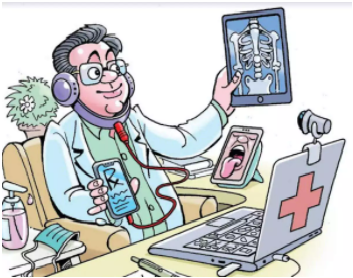
Many rural areas lack access to specialists, in particular maternal-fetal medicine doctors (MFMs) and high-risk obstetricians. With telemedicine, patients and their local prenatal care providers can videoconference with a MFM or another specialist, rather than traveling to see them in-person. Specialists can not only evaluate patients remotely and recommend management plans using this technology, but can even review ultrasound imaging as a remote technician conducts the exam. Telemedicine can also connect patients to genetic counsellors, fetal cardiologists, and diabetes educators.
For this new approach to succeed, there is a need for the effective collaboration of stakeholders viz. healthcare providers, civil society and the government to form public private partnerships (PPPs) and a roll out a robust policy to influence the shift in the healthcare sector.
Smile Foundation’s Experience
Smile Foundation has been a part of this change and has worked with the government and private sector organizations to ensure that telemedicine centres are strategically located and provide healthcare services to the most underserved sections of society. Our experience has been varied and we have seen success integrating the telemedicine model with our mobile healthcare units named ‘Smile on Wheels’, to enhance access and also provide specialized services, including tele- consultation, through the mobile medical unit.
In places where patients can afford marginal out of pocket expenses, we are implementing a model where a patient pays less than INR 200/- for a doctor consultation, medicine and the diagnostic service. This is being implemented in the Bhilwara district of Rajasthan. We have created a hub and spoke model, wherein a doctor caters to six centers through teleconferencing. Our vans situated in the area transport patients to and from the village to the center, and also take remedial action as and where needed. We plan to launch another 100 centers in the coming year and look at telemedicine as the next frontier in providing healthcare for all.
To increase the reach of government labs testing for the Covid-19 infection, we have integrated our mobile vans into the government system for collecting the samples from locations whose addresses are provided by the government control room. This service is helping to increase the number of tests conducted every day. Database management and tracking is being done online.
Smile Foundation has also introduced a new concept in which instead of a patient going to a doctor, a nurse with her laptop goes to the patient’s house for tele-consultation and providing medicine based on the online prescription generated by the doctor who is consulting remotely. This service is of great help to geriatric patients, pregnant women and children, who are most vulnerable to the Covid-19 infection.
Source: Economic Times