Even before the Covid-19 outbreak caused a massive uptick in the use of telehealth services in the general population, health providers, and patients, the field of telehealth in the 21st century had already demonstrated tremendous promise in improving access to care, reducing inefficiencies in health care systems, leading to positive patient outcomes. Examples of this are reported in rehabilitation of various neurological disorders resulting in not just physical but cognitive impairments as well. The role of telehealth in improving healthy lifestyles (diet and exercises), prevention of certain diseases has been well-recognised for many years. However, focussed, tailor-made treatment plans with a scope of remote monitoring and continued supervision are immensely crucial in delivering rehabilitation for those with neurological disorders. In fact, two systematic reviews in the past have reported that rehabilitation through telehealth may be equivalent or even superior to providing in-person therapy, although additional trials with larger sample sizes are needed.
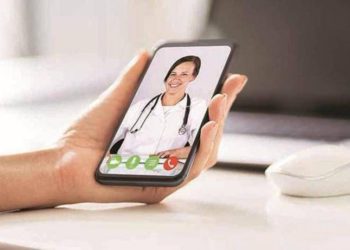
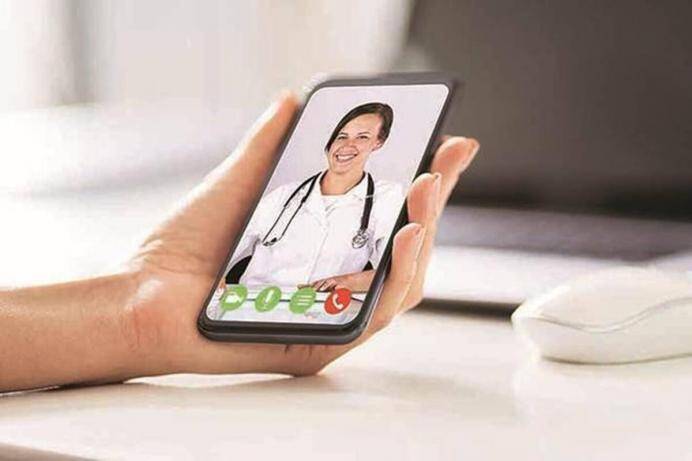
The pandemic has furthered the need for remote health care delivery systems. Many neurological conditions require emergency and continued medical and rehabilitative interventions under the supervision of health professionals. Christian Medical College and Hospital Ludhiana, Punjab, has initiated an online telehealth portal (www.telemedicine.cmcludhiana.in) where interactions between patients and health care providers could happen from the comfort of patient-homes with availability of specialist care, prescription of necessary investigations, provision of customised therapy regimes and timely follow-up. We have catered to more than 350 neurologically ill patients through this portal during the pandemic.
Rehabilitation for those with stroke and Parkinson’s continued during and after the pandemic-related lockdowns via digital platforms like the telemedicine portal mentioned above, WhatsApp-based interactions and via zoom-calls. Most of the patients had at least a single in-person session at the hospital where detailed assessments of their impairments and functions were performed. Based on these findings, therapy regimes were advised to the patient and their caregivers to be performed at home. Remote supervision and periodic progression of these exercise regimes were carried out to allow recovery and enable the patient to become functionally independent at the earliest.
We have also developed a central repository of impairment- and function-specific exercises that can be accessed by health professionals, from which exercises regime can be customized as per patient needs. Such repositories have proven to be effective in prescribing evidence-based therapy plans specific to each patient and his/her condition when used by a professional in contrast to the various exercise apps or exercises videos available on the internet. Designing exercises targeting specific impairment and function is one of the keys for improved outcomes. Adherence to such exercise regimes for the prescribed period of time with adequate intensity and repetitions are other crucial factors that determine recovery and rehabilitation due to neuroplasticity.
A team of doctors is now developing a smart-phone app-based rehabilitation delivery system using which rehabilitation for those with stroke can be customised, delivered, progressed periodically and supervised with the advantage of trained and professional rehabilitation providers overseeing the whole process. This allows active involvement from the patient side (which is a necessity in such interventions), economic and easy accessibility to qualified rehabilitation professionals (a huge lacunae in many low- and middle-income countries) for the appropriate care.
Application of adherence strategies to improve patient motivation to follow therapy regimes at homes has also been explored and proven to be beneficial in countries like India.
The other forms of technology-based rehabilitation strategies used at our institution, computer-game-based rehabilitation, Robotics for rehabilitating upper extremities along with the use of interactive non-immersive virtual reality have their own advantages. However, unless such modes of therapies are modified to be economical enough to be set-up and used in a home-environment, its usage in Covid-19 times or other such pandemics will be limited.
Future needs:
Health care systems should now focus on developing and implementing specific Clinical Practice Guidelines (CPGs) that will serve as a framework for rehabilitation professionals. To begin with it is essential to clearly define terminologies related to.
CPGs for telehealth should also focus on matters of patient and data privacy, minimum space requirement for conducting remote sessions, involvement of formal or informal caregivers during sessions to avoid adverse events like falls etc.
There is a need for adequately powered trials in this field to explore the effectiveness of telehealth in specific conditions and variable delivery-styles (standalone or as an adjunct) in differing socio-cultural settings. Rehabilitation relies majorly on behavioural modifications as well, thus the need to incorporate a good representative sample in such studies is ideal.
The need to develop and use robust implementation frameworks or packages of exercises and assess their effectiveness, reach etc via implementation studies is crucial.
It is essential to educate and create awareness on telehealth not just among the patient population but also among healthcare providers. Such capacity-building will equip health care systems to comfortably navigate to newer systems of care while maintaining, rather improving patient outcomes.
Such a venture is currently underway at our institution in collaboration with the World Health Organization (Southeast Asia Region-SEAR) in training health care professionals in six Southeast Asian Countries (Bhutan, Maldives, Myanmar, Timor-Leste, Sri Lanka, and Nepal) to improve stroke care services including acute to chronic care in the communities. We used online training methods with peer-reviewed educational materials to discuss and demonstrate evidence-based practices in stroke care to the health care professionals. Consults for patients, their medical and rehabilitative care are ongoing with numerous success stories.
The question of whether telehealth is the new mode of delivery system is still difficult to answer. However, it is crucial to acknowledge its merits in the field of neurorehabilitation and use at least as an adjunct to in-person care. Its role in multiple neurological conditions, ease of use, improved accessibility, reducing cost of care in addition to many other factors is certainly important
Dr Dorcas BC Gandhi is an associate professor at the Christian Medical College and Hospital, Ludhiana, and researcher at the Lancet Citizen’s Commission on Reimagining India’s Health System
Source: hindustantimes.com