Current directory: /home3/bjinbymy/public_html/indianext/wp-content/mu-plugins Solar Make-In-India Needs A Long-Term Strategy - Clean Energy
Indianext
No Result
View All Result
Subscribe
  • News
    • Project Watch
    • Policy
  • AI Next
  • People
    • Interviews
    • Profiles
  • Companies
  • Make In India
    • Solutions
    • State News
  • About Us
    • Editors Corner
    • Mission
    • Contact Us
    • Work Culture
  • Events
  • Guest post
  • News
    • Project Watch
    • Policy
  • AI Next
  • People
    • Interviews
    • Profiles
  • Companies
  • Make In India
    • Solutions
    • State News
  • About Us
    • Editors Corner
    • Mission
    • Contact Us
    • Work Culture
  • Events
  • Guest post
No Result
View All Result
Latest News on AI, Healthcare & Energy updates in India
No Result
View All Result
Home Energynext Clean Energy

Solar Make-In-India Needs A Long-Term Strategy

May 27, 2021
Make-In-India

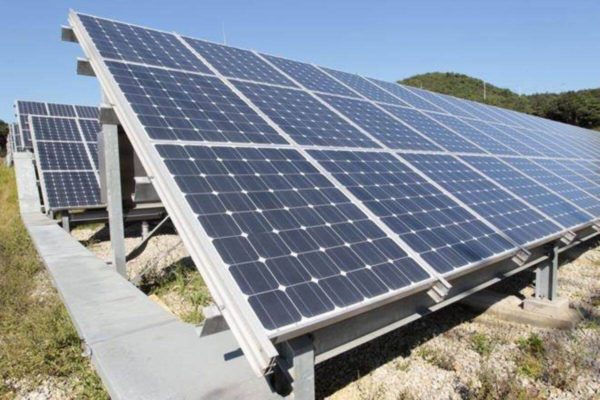
To bolster Make-in-India for the solar sector, the Centre recently announced a production-linked incentive (PLI) scheme for solar manufacturing with a budget of Rs 4,500 crore over five years. Basic customs duty of 25% on cells and 40% on panels will also be levied on imported panels starting April 2022. These measures follow a slew of efforts over the past decade to establish domestic solar panel manufacturing. However, several issues remain, including a volatile domestic market and weak industrial innovation capabilities.

Solar panels are mass-produced, where low-costs are achieved through economies of scale, high capacity utilisation factors, and optimisation of manufacturing processes. Leading Chinese manufacturers such as Jinko Solar and Trina Solar have manufacturing facilities with capacities over 10 GW. Indian manufacturers will require time to achieve scale, develop their manufacturing know-how, and become globally competitive. To catch up, they will have to depend on a large and stable domestic market for the next few years.

However, the Indian solar-panel market has been facing headwinds. Annual solar PV deployment peaked in 2017, at more than 9GW, and has stalled since, falling to 3 GW in 2020, thanks to the pandemic. In the short-term, domestic market risks will need to be addressed, including counterparty risk, renegotiation of power purchase agreements, and difficulties with land acquisition. Solar panel manufacturing is a rapidly evolving industry. Manufacturing equipment can become outdated in 2-5 years. To ensure that the Indian power sector benefits from ongoing panel performance and cost improvements, a long-term roadmap to reach the global technological frontier is necessary.

China’s dominance has resulted from several public policy measures. First, the Chinese government provided subsidised manufacturing inputs such as electricity and debt, gradually targeting its subsidies towards manufacturers who were able to achieve scale and efficiency. Second, the aggressive pricing of solar panels at razor-thin profit margins was enabled by gradual vertical integration of the value chain. Third, manufacturers developed their know-how related to manufacturing processes through in-house R&D and learning-by-interacting with production equipment suppliers from Germany, Switzerland and the US.

Policymakers can draw three major lessons from the Chinese experience. First, periodic targets should be set for plant capacity, capacity utilisation factor, module efficiency, price, and R&D investments. Subsidy allocation should be made contingent on meeting these targets, creating pressure on firms to continuously innovate. Second, incentives for cell and module manufacturing should be complemented with measures to develop a manufacturing ecosystem for the entire value chain. This should be done in a phased manner, starting with cell and module manufacturing, and gradually incentivising local manufacturing of wafers, ingots, and polysilicon. Third, manufacturing incentives should be complemented with incentives for both industrial R&D and international collaborative R&D, enabling firms to reach the technology frontier. Historically, solar panel manufacturing has been highly competitive. No single firm—and, until recently, no single country—has been able to capture a high market share over an extended period. While its relatively easy to import turnkey production equipment and set up a manufacturing plant, developing and maintaining a competitive edge will be a slow and uncertain process requiring enormous long-term public subsidies and entailing serious risks.

Addressing the risks requires us to have clarity about the policy goals. If the goal is clean, abundant and cheap electricity, solar panels should simply be purchased from where they are the cheapest (i.e., China). If the goal is job-creation, deployment of decentralised and rooftop solar PV installations should be prioritised, since downstream jobs account for nearly 75% of the employment in the industry. If the priority is strategic localisation of supply chains, manufacturing incentives should be made contingent on periodic, time-bound, realistic and long-term targets that aim to make the domestic industry globally competitive. Additionally, investments should be made into a diversified portfolio of technologies such as lithium-ion batteries, electrolysers for green hydrogen, and energy efficiency technologies as part of India’s green industrial strategy.

Source: financialexpress.com

Leave a Reply Cancel reply

Your email address will not be published. Required fields are marked *

Editors Corner

How can Artificial Intelligence tools be a blessing for recruiters?

Will Artificial Intelligence ever match human intelligence?

Artificial Intelligence: Features of peer-to-peer networking

What not to share or ask on Chatgpt?

How can Machine Learning help in detecting and eliminating poverty?

How can Artificial Intelligence help in treating Autism?

Speech Recognition and its Wonders in your corporate life

Most groundbreaking Artificial Intelligence-based gadgets to vouch for in 2023

Recommended News

AI Next

Google: AI From All Perspectives

Alphabet subsidiary Google may have been slower than OpenAI to make its AI capabilities publicly available in the past, but...

by India Next
May 31, 2024
AI Next

US And UK Doctors Think Pfizer Is Setting The Standard For AI And Machine Learning In Drug Discovery

New research from Bryter, which involved over 200 doctors from the US and the UK, including neurologists, hematologists, and oncologists,...

by India Next
May 31, 2024
Solutions

An Agreement Is Signed By MEA, MeitY, And CSC To Offer E-Migration Services Via Shared Service Centers

Three government agencies joined forces to form a synergy in order to deliver eMigrate services through Common Services Centers (CSCs)...

by India Next
May 31, 2024
AI Next

PR Handbook For AI Startups: How To Avoid Traps And Succeed In A Crowded Field

The advent of artificial intelligence has significantly changed the landscape of entrepreneurship. The figures say it all. Global AI startups...

by India Next
May 31, 2024

Related Posts

clean energy
Clean Energy

Coal India, NTPC, Railways Can Help Meet Clean Energy Goals By 2050: Report

September 14, 2022
coal based capacity
Coal Gassifications

Need 28 GW More Coal-Based Capacity By FY32: Draft National Electricity Plan

September 13, 2022
green Hydrogen
Clean Energy

India Plans To Become Green Hydrogen Giant To Cut Energy Imports

September 3, 2022
wind energy
Clean Energy

Policy Support ‘Could Help India Add 23.7GW Of Wind Energy By 2026’

August 26, 2022
Load More
Next Post
SeHAT-OPD

Rajnath Singh Launches SeHAT-OPD Portal To Help Forces In Providing Tele-medicine Services

IndiaNext Logo
IndiaNext Brings you latest news on artificial intelligence, Healthcare & Energy sector from all top sources in India and across the world.

Recent Posts

Google: AI From All Perspectives

US And UK Doctors Think Pfizer Is Setting The Standard For AI And Machine Learning In Drug Discovery

An Agreement Is Signed By MEA, MeitY, And CSC To Offer E-Migration Services Via Shared Service Centers

PR Handbook For AI Startups: How To Avoid Traps And Succeed In A Crowded Field

OpenAI Creates An AI Safety Committee Following Significant Departures

Tags

  • AI
  • EV
  • Mental WellBeing
  • Clean Energy
  • TeleMedicine
  • Healthcare
  • Electric Vehicles
  • Artificial Intelligence
  • Chatbots
  • Data Science
  • Electric Vehicles
  • Energy Storage
  • Machine Learning
  • Renewable Energy
  • Green Energy
  • Solar Energy
  • Solar Power

Follow us

  • Facebook
  • Linkedin
  • Twitter
© India Next. All Rights Reserved.     |     Privacy Policy      |      Web Design & Digital Marketing by Heeren Tanna
No Result
View All Result
  • About Us
  • Activate
  • Activity
  • Advisory Council
  • Archive
  • Career Page
  • Companies
  • Contact Us
  • cryptodemo
  • Energy next
  • Energy Next Archive
  • Home
  • Interviews
  • Make in India
  • Market
  • Members
  • Mission
  • News
  • News Update
  • People
  • Policy
  • Privacy Policy
  • Register
  • Reports
  • Subscription Page
  • Technology
  • Top 10
  • Videos
  • White Papers
  • Work Culture
  • Write For Us

Welcome Back!

Login to your account below

Forgotten Password?

Retrieve your password

Please enter your username or email address to reset your password.

Log In

Add New Playlist

IndiaNext Logo

Join Our Newsletter

Get daily access to news updates

no spam, we hate it more than you!