Current directory: /home3/bjinbymy/public_html/indianext/wp-content/mu-plugins ‘Sleeping On It’ Helps You Better Manage Your Emotions And Mental Health — Here’s Why - Mental Wellbeing
Indianext
No Result
View All Result
Subscribe
  • News
    • Project Watch
    • Policy
  • AI Next
  • People
    • Interviews
    • Profiles
  • Companies
  • Make In India
    • Solutions
    • State News
  • About Us
    • Editors Corner
    • Mission
    • Contact Us
    • Work Culture
  • Events
  • Guest post
  • News
    • Project Watch
    • Policy
  • AI Next
  • People
    • Interviews
    • Profiles
  • Companies
  • Make In India
    • Solutions
    • State News
  • About Us
    • Editors Corner
    • Mission
    • Contact Us
    • Work Culture
  • Events
  • Guest post
No Result
View All Result
Latest News on AI, Healthcare & Energy updates in India
No Result
View All Result
Home Health Next Mental Wellbeing

‘Sleeping On It’ Helps You Better Manage Your Emotions And Mental Health — Here’s Why

March 23, 2022
sleeping-sleep-mask

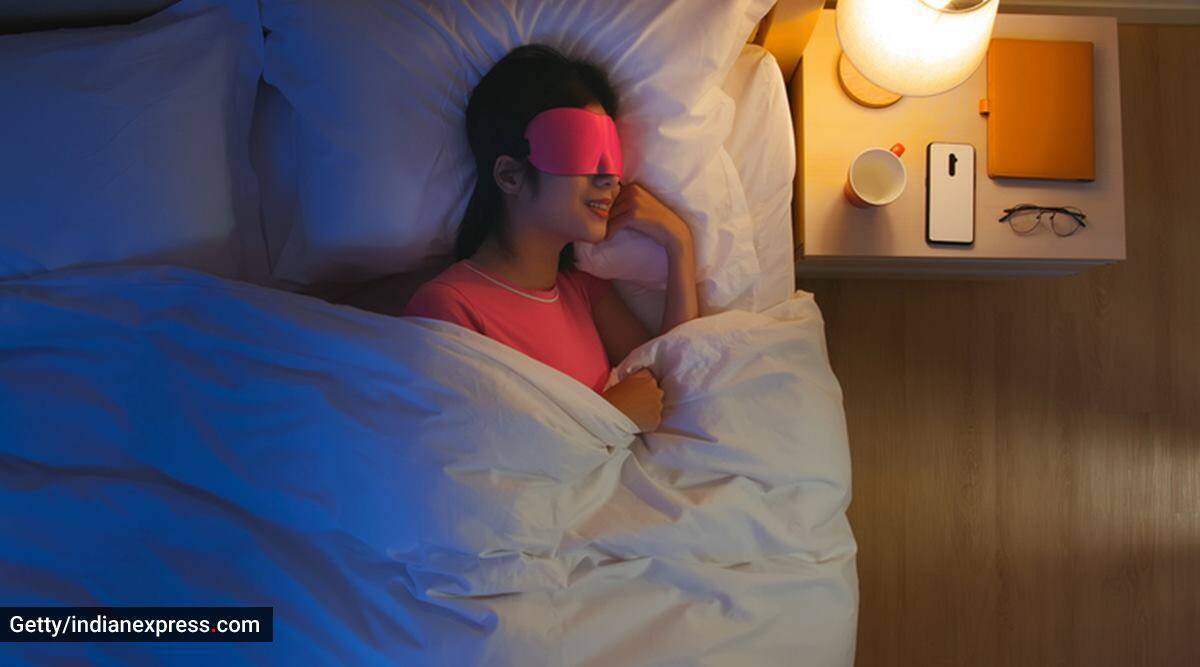
Instead of lying awake worrying, we’re often told to “sleep on it” when making decisions both big and small. And there’s actually a scientific basis for this advice. Sleep can influence our response to emotional situations, and helps us to manage our mental health.

To understand why sleep and emotions are so connected, it’s important to first understand what happens in the brain when we encounter something emotive.

Two main brain regions interact to create emotional responses. The first is the limbic system, which is located deep in our brain.

This acts as our emotion centre, quickly evaluating a situation and helping us to decide how to react. Historically, this region may have been important for humanity’s survival, as it helps us react quickly in certain situations — if we encounter a dangerous predator, for example.

But most of the time we need to adjust our initial emotional response. This is where the second region — the prefrontal cortex — comes in. Located just behind our forehead, the prefrontal cortex helps us to increase or decrease our emotional responses as necessary. So if we see a predator (such as a bear) in the zoo, the prefrontal cortex tells us we don’t need to panic because it’s in an enclosure.

These regions need to be well-connected in order to effectively generate and adjust our emotional responses. This is where sleep comes in. When we’re sleep deprived, the connections between these areas weaken, making the reaction in the limbic system stronger.

Sleep loss not only increases our reaction to stressful events during the day, it also makes these reactions harder to change. This may be particularly pronounced if you lose REM (rapid eye movement) sleep.

Studies show that getting poor sleep makes us more likely to choose less effective ways of managing our emotions which could have a knock-on effect for our mental health. Imagine you’re experiencing a difficult work problem.

If you’re well-rested, you are more likely to be able to effectively problem solve, fixing the issue. But if you’re sleep-deprived, you might avoid dealing with the problem. Over time, this could have a negative effect on well-being.

Sleep is also crucial for processing and consolidating memories from our day. When we have emotional experiences, sleep both helps us remember these events and remove the associated feelings.

This happens in REM sleep, when activity in most brain regions is similar to when we’re awake. By reactivating memories during REM sleep, the associated feelings can be removed from the content of the memory. This is why “sleeping on it” really can help you feel better in the morning. Indeed, studies have shown that, over time, improving sleep can lead to less anxiety, depression, and stress, and increased life satisfaction.

A good night’s sleep

If you want to keep your emotions and mental health in check, here are the best ways to get a good night’s sleep:

1. Maintain a consistent bedtime and wake time — even on your days off. This helps your body clock get into a routine, improving your sleep. Having a big shift in sleep time between your work and free days is known as “social jetlag”, which can be associated with increased anxiety.

2. Seek out natural light in the morning and avoid blue light in the evening. Our body clock is strongly affected by light. It impacts a part of the brain called the supra-chiasmatic nucleus, which releases a sleep hormone called melatonin.

Getting natural light in the morning helps us to suppress melatonin, which improves our mood and makes us feel more alert. The blue light found in electronic devices also minimises melatonin. This means that using electronics in the evening can result in it taking longer for us to feel sleepy. So we recommend that you turn them off or set them to “night time mode” an hour before you go to bed.

3. Avoid certain substances — such as alcohol, caffeine and nicotine. Caffeine and nicotine are stimulants, which can interfere with our body’s drive to sleep. It’s best to avoid these, particularly in the afternoon and evening as our body gets ready for sleep.

Alcohol also changes the structure of our sleep, making us more likely to wake up during the night. Studies also show using alcohol daily can decrease sleep quality, especially for people with anxiety.

4. Allow yourself time to wind down before bed. Make sure your bedroom is comfortable, cool, quiet and dark to minimise chances of being disturbed. Before bed, try using relaxation or mindfulness techniques, which have been linked with both better sleep quality and better overall mental health.

Getting a good night’s sleep can work wonders for improving our mental health. But it doesn’t stop there.

Sleeping well can also improve our memory, attention and other thought processes. It also benefits several aspects of our physical health, including our weight and heart, making sleep an important priority for all aspects of our wellbeing.

Source: https://indianexpress.com/article/lifestyle/health/sleeping-on-it-helps-you-better-manage-your-emotions-and-mental-health-heres-why-7829090/

Leave a Reply Cancel reply

Your email address will not be published. Required fields are marked *

Editors Corner

How can Artificial Intelligence tools be a blessing for recruiters?

Will Artificial Intelligence ever match human intelligence?

Artificial Intelligence: Features of peer-to-peer networking

What not to share or ask on Chatgpt?

How can Machine Learning help in detecting and eliminating poverty?

How can Artificial Intelligence help in treating Autism?

Speech Recognition and its Wonders in your corporate life

Most groundbreaking Artificial Intelligence-based gadgets to vouch for in 2023

Recommended News

AI Next

Google: AI From All Perspectives

Alphabet subsidiary Google may have been slower than OpenAI to make its AI capabilities publicly available in the past, but...

by India Next
May 31, 2024
AI Next

US And UK Doctors Think Pfizer Is Setting The Standard For AI And Machine Learning In Drug Discovery

New research from Bryter, which involved over 200 doctors from the US and the UK, including neurologists, hematologists, and oncologists,...

by India Next
May 31, 2024
Solutions

An Agreement Is Signed By MEA, MeitY, And CSC To Offer E-Migration Services Via Shared Service Centers

Three government agencies joined forces to form a synergy in order to deliver eMigrate services through Common Services Centers (CSCs)...

by India Next
May 31, 2024
AI Next

PR Handbook For AI Startups: How To Avoid Traps And Succeed In A Crowded Field

The advent of artificial intelligence has significantly changed the landscape of entrepreneurship. The figures say it all. Global AI startups...

by India Next
May 31, 2024

Related Posts

climate change and metal health
Mental Wellbeing

Climate Change Can Pose Serious Threat To Humans’ Mental Health: WHO Report

September 19, 2022
mental-health
Mental Wellbeing

Researchers Find Wearable Devices Predict Outcomes For Depression Treatment

September 15, 2022
mental health
Mental Wellbeing

NCERT Wants Schools To Identify Mental Health Issues Early On In Students

September 15, 2022
mental health
Mental Wellbeing

NCERT Issues Guidelines Regarding Early Identification Of Mental Health Problems In Students

September 13, 2022
Load More
Next Post
Machine-Learning

10 Best Countries For Machine Learning Engineers In 2022

IndiaNext Logo
IndiaNext Brings you latest news on artificial intelligence, Healthcare & Energy sector from all top sources in India and across the world.

Recent Posts

Google: AI From All Perspectives

US And UK Doctors Think Pfizer Is Setting The Standard For AI And Machine Learning In Drug Discovery

An Agreement Is Signed By MEA, MeitY, And CSC To Offer E-Migration Services Via Shared Service Centers

PR Handbook For AI Startups: How To Avoid Traps And Succeed In A Crowded Field

OpenAI Creates An AI Safety Committee Following Significant Departures

Tags

  • AI
  • EV
  • Mental WellBeing
  • Clean Energy
  • TeleMedicine
  • Healthcare
  • Electric Vehicles
  • Artificial Intelligence
  • Chatbots
  • Data Science
  • Electric Vehicles
  • Energy Storage
  • Machine Learning
  • Renewable Energy
  • Green Energy
  • Solar Energy
  • Solar Power

Follow us

  • Facebook
  • Linkedin
  • Twitter
© India Next. All Rights Reserved.     |     Privacy Policy      |      Web Design & Digital Marketing by Heeren Tanna
No Result
View All Result
  • About Us
  • Activate
  • Activity
  • Advisory Council
  • Archive
  • Career Page
  • Companies
  • Contact Us
  • cryptodemo
  • Energy next
  • Energy Next Archive
  • Home
  • Interviews
  • Make in India
  • Market
  • Members
  • Mission
  • News
  • News Update
  • People
  • Policy
  • Privacy Policy
  • Register
  • Reports
  • Subscription Page
  • Technology
  • Top 10
  • Videos
  • White Papers
  • Work Culture
  • Write For Us

Welcome Back!

Login to your account below

Forgotten Password?

Retrieve your password

Please enter your username or email address to reset your password.

Log In

Add New Playlist

IndiaNext Logo

Join Our Newsletter

Get daily access to news updates

no spam, we hate it more than you!