
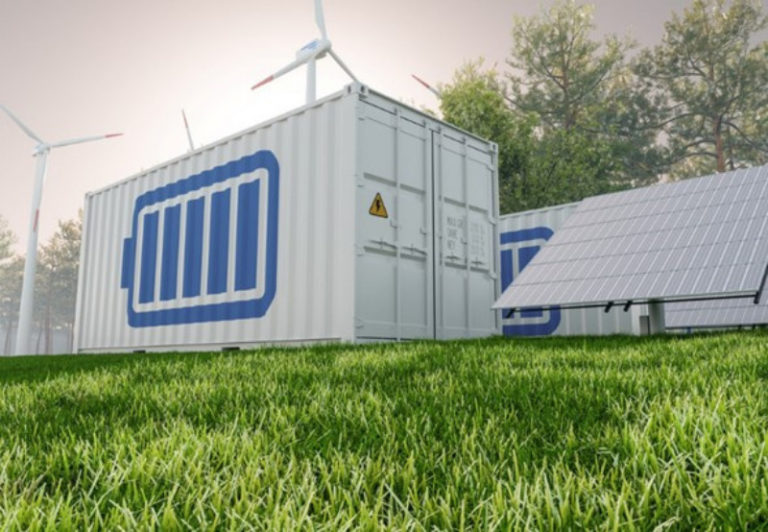
The Middle East and North African (MENA) countries must rapidly scale up and integrate variable renewable energy (VRE) – such as solar photovoltaic (PV) and onshore wind – into their respective power grids if they are to meet their national renewable energy targets in the medium term, Arab Petroleum Investments Corporation (APICORP) said in a report ‘Leveraging Energy Storage Systems In MENA.
Morocco and Jordan are currently at the forefront of renewable energy deployment in MENA. While Morocco has reached 37% of its installed capacity from renewable energy in 2020 against a target of 42%, Jordan has achieved nearly 20% of generation capacity against a target of 21%.
Other countries such as the United Arab Emirates, Egypt, Saudi Arabia, and Oman have relatively low renewable energy generation. Still, the share is expected to grow significantly with large capacities planned and committed in the project pipeline.
Key policy support actions are recommended to integrate energy storage
The report lays out ten key policy support actions needed to help the MENA region reduce the barriers that limit the deployment of energy storage solutions and enhance further integration of VRE into the grid. The financial, regulatory, and market barriers in MENA require strong policy support to create the necessary ecosystem for the scaling up and activation of energy storage markets
APICROP suggests that energy storage should be defined as a distinct asset category separate from generation, transmission, and distribution value chains. This is essential in implementing any future regulation governing energy storage. This way, developers focused on generation can build, own, and operate energy storage systems, whereas distribution companies can enhance demand-side response through behind-the-meter applications.
It highlights the need to adopt a comprehensive regulatory framework with specific energy storage targets in national energy policies by setting achievable targets and timelines to drive energy storage deployment. The report suggests that energy and electricity laws and regulations should account for the deployment of energy storage and be amended accordingly
The report also highlights the need to amend the net-metering arrangement when the share of renewables in the power mix becomes significant to ensure barriers are not created to energy storage while maintaining incentives for distributed renewable energy.
It also suggests that utilities, developers, operators, and regulators’ ownership mandates must be defined due to the cross-functional nature of energy storage and value created across different segments of the power value chain.
APICORP suggests creating a MENA Energy Storage Alliance, an organization supported by governments and the private sector to foster regional energy storage development through public-private partnerships.
The report also suggests creating incentives to attract private sector investments, endorsing utility-scale energy storage within green financing frameworks, and adopting a time-of-use tariff to ensure the economic viability of energy storage systems and incentivize reduced consumption at peak demand.
“With abundant land and low-cost solar and wind generation capacities, MENA countries have real competitive advantages that enable it to take the lead in energy storage and successfully navigate the energy transition,” said Ahmed Ali Attiga, CEO at APICORP.
Opportunities for deploying energy storage systems in MENA
There are 30 ESS projects planned in MENA between 2021 and 2025 with a total capacity/energy of 653 MW/3,382 MWh – out of which 24 projects are for VRE integration and grid firming. The share of batteries out of MENA’s total energy storage landscape is expected to jump from the current 7% to 45% by 2025.
Additionally, front-of-the-meter applications are expected to dominate over behind-the-meter applications, as front-of-the-meter constitutes 96% of the planned on-grid energy storage capacities.
Although the energy storage market in MENA is bound to grow, several barriers hinder the integration of energy storage systems and the ramping up of investments. Financial, regulatory, and market barriers must be addressed via policy tools to lay the foundations for an evolved power market to integrate deployed energy storage systems.

In the economic modeling of a standard front-of-the-meter battery solution, the revenue streams include capacity payment and stacked revenues from various services. Service revenues are based on international fees and amended for the deployment percentage to cater to MENA applications. Operation and maintenance costs account for augmentation costs as of year three. The system also accounts for one replacement over the project lifetime of 20 years.
Initial capital costs make up 59% of the total system cost, charging costs 24%, financing costs 11%, operation and maintenance cost 4%, and taxes account for less than 2%. These costs and revenues are theoretical and actual costs will vary by country depending on the technology, risks, and cost of financing.
The total unit cost is estimated at around $276/MWh compared to a stacked revenue stream of $322/MWh with tax credits and partial charging repayments. This shows that fiscal incentives are needed to make a business case for energy storage systems deployment in MENA. In addition to revenue stacking, early adoption of energy storage systems will require financial incentives, such as tax refunds and exemptions, charging repayments, waivers, government subsidies, government equity provision, and accelerated depreciation measures.
APICORP had announced that it would provide a $50 million (~₹3.6 billion) revolving construction facility to Yellow Door Energy Limited to finance solar projects in Jordan, where the company operates and develops 79 MW of solar projects.
In July 2020, APICORP announced that it would provide a $50 million (~₹3.7 billion) credit facility to SirajPower, a UAE-based distributed solar developer, to expand its portfolio in the Middle East.
Source: mercomindia.com