
Current directory: /home3/bjinbymy/public_html/indianext/wp-content/mu-plugins Robots Are Better Than Parents In Detecting Children’s Mental Wellbeing - Mental Wellbeing
Indianext
No Result
View All Result
Subscribe
  • News
    • Project Watch
    • Policy
  • AI Next
  • People
    • Interviews
    • Profiles
  • Companies
  • Make In India
    • Solutions
    • State News
  • About Us
    • Editors Corner
    • Mission
    • Contact Us
    • Work Culture
  • Events
  • Guest post
  • News
    • Project Watch
    • Policy
  • AI Next
  • People
    • Interviews
    • Profiles
  • Companies
  • Make In India
    • Solutions
    • State News
  • About Us
    • Editors Corner
    • Mission
    • Contact Us
    • Work Culture
  • Events
  • Guest post
No Result
View All Result
Latest News on AI, Healthcare & Energy updates in India
No Result
View All Result
Home Health Next Mental Wellbeing

Robots Are Better Than Parents In Detecting Children’s Mental Wellbeing

September 6, 2022
robot

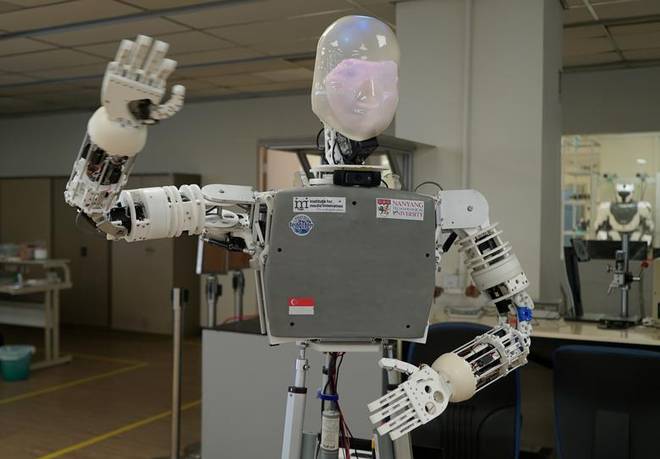
Researchers have come up with robots that can detect children’s mental well-being, even better than the parents.

A team of roboticists, computer scientists, and psychiatrists from the University of Cambridge conducted a study with 28 children between the ages of eight and 13 and had a child-sized humanoid robot administer a series of standard psychological questionnaires to assess the mental well-being of each participant. The children were willing to confide in the robot, sometimes sharing information with the robot that they had not yet shared via the standard assessment method of online or in-person questionnaires. This is the first time that robots have been used to assess the mental well-being of children.

The researchers say that robots could be a useful addition to traditional methods of mental health assessment, although they are not intended to be a substitute for professional mental health support. The results will be presented today at the 31st IEEE International Conference on Robot & Human Interactive Communication (RO-MAN) in Naples, Italy. During the COVID-19 pandemic, homeschooling, financial pressures, and isolation from peers and friends impacted the mental health of many children. Even before the pandemic, however, anxiety and depression among children in the UK have been on the rise, but the resources and support to address mental well-being are severely limited.

Professor Hatice Gunes, who leads the Affective Intelligence and Robotics Laboratory in Cambridge’s Department of Computer Science and Technology, has been studying how socially-assistive robots (SARs) can be used as mental well-being ‘coaches’ for adults, but in recent years has also been studying how they may be beneficial to children. “After I became a mother, I was much more interested in how children express themselves as they grow, and how that might overlap with my work in robotics,” said Gunes. “Children are quite tactile, and they’re drawn to technology. If they’re using a screen-based tool, they’re withdrawn from the physical world. But robots are perfect because they’re in the physical world – they’re more interactive, so the children are more engaged.”

For the study, 28 participants between the ages of eight and 13 each took part in a one-to-one 45-minute session with a Nao robot – a humanoid robot about 60 centimeters tall. A parent or guardian, along with members of the research team, observed from an adjacent room. Prior to each session, children and their parents or guardian completed a standard online questionnaire to assess each child’s mental well-being. During each session, the robot performed four different tasks: 1) asked open-ended questions about happy and sad memories over the last week; 2) administered the Short Mood and Feelings Questionnaire (SMFQ); 3) administered a picture task inspired by the Children’s Apperception Test (CAT), where children are asked to answer questions related to pictures shown; and 4) administered the Revised Children’s Anxiety and Depression Scale (RCADS) for generalized anxiety, panic disorder, and low mood.

The researchers found that children with varying levels of well-being concerns interacted differently with the robot. For children that might not be experiencing mental wellbeing-related problems, the researchers found that interacting with the robot led to more positive response ratings to the questionnaires. However, for children that might be experiencing well-being-related concerns, the robot may have enabled them to divulge their true feelings and experiences, leading to more negative response ratings to the questionnaire.

“Since the robot we use is child-sized and completely non-threatening, children might see the robot as a confidante – they feel like they won’t get into trouble if they share secrets with it,” said Abbasi. “Other researchers have found that children are more likely to divulge private information – like that they’re being bullied, for example – to a robot than they would be to an adult.” The researchers say that while their results show that robots could be a useful tool for the psychological assessment of children, they are not a substitute for human interaction.

The researchers say that they hope to expand their survey in the future, by including more participants and following them over time. They are also investigating whether similar results could be achieved if children interact with the robot via video chat. The research was supported in part by the Engineering and Physical Sciences Research Council (EPSRC), part of UK Research and Innovation (UKRI), and NIHR Cambridge Biomedical Research Centre. Hatice Gunes is a Fellow of Trinity Hall, Cambridge.

Source: analyticsinsight.net

Leave a Reply Cancel reply

Your email address will not be published. Required fields are marked *

Editors Corner

How can Artificial Intelligence tools be a blessing for recruiters?

Will Artificial Intelligence ever match human intelligence?

Artificial Intelligence: Features of peer-to-peer networking

What not to share or ask on Chatgpt?

How can Machine Learning help in detecting and eliminating poverty?

How can Artificial Intelligence help in treating Autism?

Speech Recognition and its Wonders in your corporate life

Most groundbreaking Artificial Intelligence-based gadgets to vouch for in 2023

Recommended News

AI Next

Google: AI From All Perspectives

Alphabet subsidiary Google may have been slower than OpenAI to make its AI capabilities publicly available in the past, but...

by India Next
May 31, 2024
AI Next

US And UK Doctors Think Pfizer Is Setting The Standard For AI And Machine Learning In Drug Discovery

New research from Bryter, which involved over 200 doctors from the US and the UK, including neurologists, hematologists, and oncologists,...

by India Next
May 31, 2024
Solutions

An Agreement Is Signed By MEA, MeitY, And CSC To Offer E-Migration Services Via Shared Service Centers

Three government agencies joined forces to form a synergy in order to deliver eMigrate services through Common Services Centers (CSCs)...

by India Next
May 31, 2024
AI Next

PR Handbook For AI Startups: How To Avoid Traps And Succeed In A Crowded Field

The advent of artificial intelligence has significantly changed the landscape of entrepreneurship. The figures say it all. Global AI startups...

by India Next
May 31, 2024

Related Posts

climate change and metal health
Mental Wellbeing

Climate Change Can Pose Serious Threat To Humans’ Mental Health: WHO Report

September 19, 2022
mental-health
Mental Wellbeing

Researchers Find Wearable Devices Predict Outcomes For Depression Treatment

September 15, 2022
mental health
Mental Wellbeing

NCERT Wants Schools To Identify Mental Health Issues Early On In Students

September 15, 2022
mental health
Mental Wellbeing

NCERT Issues Guidelines Regarding Early Identification Of Mental Health Problems In Students

September 13, 2022
Load More
Next Post
drone

India To Have Drone Prototype For Organ Transportation Soon

IndiaNext Logo
IndiaNext Brings you latest news on artificial intelligence, Healthcare & Energy sector from all top sources in India and across the world.

Recent Posts

Google: AI From All Perspectives

US And UK Doctors Think Pfizer Is Setting The Standard For AI And Machine Learning In Drug Discovery

An Agreement Is Signed By MEA, MeitY, And CSC To Offer E-Migration Services Via Shared Service Centers

PR Handbook For AI Startups: How To Avoid Traps And Succeed In A Crowded Field

OpenAI Creates An AI Safety Committee Following Significant Departures

Tags

  • AI
  • EV
  • Mental WellBeing
  • Clean Energy
  • TeleMedicine
  • Healthcare
  • Electric Vehicles
  • Artificial Intelligence
  • Chatbots
  • Data Science
  • Electric Vehicles
  • Energy Storage
  • Machine Learning
  • Renewable Energy
  • Green Energy
  • Solar Energy
  • Solar Power

Follow us

  • Facebook
  • Linkedin
  • Twitter
© India Next. All Rights Reserved.     |     Privacy Policy      |      Web Design & Digital Marketing by Heeren Tanna
No Result
View All Result
  • About Us
  • Activate
  • Activity
  • Advisory Council
  • Archive
  • Career Page
  • Companies
  • Contact Us
  • cryptodemo
  • Energy next
  • Energy Next Archive
  • Home
  • Interviews
  • Make in India
  • Market
  • Members
  • Mission
  • News
  • News Update
  • People
  • Policy
  • Privacy Policy
  • Register
  • Reports
  • Subscription Page
  • Technology
  • Top 10
  • Videos
  • White Papers
  • Work Culture
  • Write For Us

Welcome Back!

Login to your account below

Forgotten Password?

Retrieve your password

Please enter your username or email address to reset your password.

Log In

Add New Playlist

IndiaNext Logo

Join Our Newsletter

Get daily access to news updates

no spam, we hate it more than you!