Reliance New Energy Solar (RNSEL) a wholly-owned subsidiary of Reliance Industries (RIL), has announced that it will invest $50 million in US-based energy storage company Ambri. The investment comes riding in on the coattails of Reliance’s plans to build a Giga factory in Jamnagar, one of four gigafactories being dedicated to producing lithium-ion batteries, renewable hydrogen and in Jamnagar: energy storage.
In what marks the brand’s first major clean energy deal, shortly after it announced a Rs 75,000 crore investment in clean energy, the deal has put the spotlight on energy storage, particularly low-cost energy storage and why it plays a vital role in powering the future.
The US-based Ambri is one of the leading companies in energy storage – an endeavour that aims to lower electricity costs, enable easy access and widespread usage of renewable energy systems, among other things. It is doing this by working on alternatives to lithium-ion technology such as liquid metal batteries and antimony electrode-based cells that are more resilient, long-lasting and eco-friendly. At present Ambri can cater to projects that require energy storage systems from 10 MWh to 2 GWh.
Why energy storage holds the key to the future
Energy storage is vital not just for the business of mobility but for reducing the overall cost of electricity and, more importantly, mitigating climate change. It plays an integral role in the development and integration of renewable energy technologies—a technological space that is seeing rapid development. Energy storage is the bridge between intermittent renewable power and a constant, glitch-free supply of electric energy.
In order to ensure the smooth flow of energy, be it in a car’s battery or for much larger applications, effective energy storage is essential. Most renewable energy sources remain intermittent and are, therefore, heavily dependent on energy storage. By storing power that exceeds the current demand energy storage is seen as vital to the effective and equitable transfer of energy across the world.
Every major player including chemical companies, battery cell makers, solar companies etc will be vying for a major slice of the energy storage business and according to financial firm UBS, the energy market in the US alone could grow to as much as $426 billion.
The various small and large-scale storage systems, devices and terminology that define the energy storage business.
Battery energy storage
Lithium-ion batteries have become the most prevalent form of energy storage for battery electric cars, having replaced lead-acid batteries almost completely in the high-performance automotive space. While lead-acid batteries continue to remain prevalent as a form of energy storage, lithium-ion batteries have proven to be more power dense and therefore are commonly found in consumer electronics and cars.
The rampant production of lithium-ion batteries over the last decade has seen an 85% decline in prices and has made electric vehicles commercially viable, in terms of both cost and performance, according to an article in CNBC.
However, lithium-ion batteries are not necessarily the best energy storage device, as they are prone to fire and require extensive non-renewable resource extraction from the earth which may not be sustainable in the longer run.
Gigafactories
If lithium-ion batteries can effectively store electrical energy, gigafactories are designed to not only manufacture but store large amounts of lithium-ion batteries. Tesla, having coined the term ‘gigafactory’ is one of the leading players in energy storage.
According to Tesla, the gigafactory in Nevada produces not only the battery packs and electric motors for the Model 3 but also two of Tesla’s main energy storage products: Powerwall and Powerpack.
With gigafactories being designed to produce batteries collectively producing tens of GWh of power, they will serve as a lifeline without which a local automotive industry cannot be sustained.
Apart from the central government’s plans to localise battery production RIL has also announced that one of its four planned gigafactories will cater to lithium-ion battery production, while another will cater to large-scale renewable hydrogen production.
Stationary batteries and grid-scale energy storage
Stationary energy storage is essentially a large-scale energy management and storage system. The most famous examples include the likes of the Tesla Megapack and the Tesla Powerwall – the two pillars on which Tesla’s renewable energy empire – Tesla Energy Inc stands. According to BloombergNEF’s Energy Storage Outlook 2019, the stationary battery sector will from 9GW in 2018 to a staggering 1,100GW.
According to Tesla, the Megapack is “the largest, densest battery system in the world”. Launched in 2019, each Megapack can store up to 3 megawatt-hours of electricity in a shipping-container sized device. Essentially a very large battery designed to cater to large-scale energy needs, a Megapack can be ordered, plugged into an AC socket following which it can meet heavy-duty energy requirements.
According to Tesla, the collective power of their 1GWh project can “power every home in San Francisco for 6 hours.” The Powerwall and the Powerpack are similar integrated battery systems, storing electricity for domestic usage and businesses, respectively.
As of July 2021, the National Thermal Power Corporation (NTPC) has floated a global tender for setting up a 1,000 MWh grid-scale battery storage system in India. While finding investors for grid energy systems has proven challenging globally, partly due to a lack of awareness, large-scale battery storage is expected to help make India’s electricity supply more efficient.
They store energy from renewable sources such as wind and solar. According to the Central Electricity Authority (CEA) by 2030, the country’s power requirement would be 817GW, more than half of which is expected to be through clean energy. At present, Reliance is in talks with Ambri to set up a large-scale liquid metal grid battery manufacturing facility in India.
Electrochemical energy storage
In a statement released by RIL, Chairman Mukesh Ambani stated that “We are exploring new and advanced electrochemical technologies that can be used for such large-scale grid batteries to store energy that we will create.”
Essentially a method to store energy in chemical form, the technique, according to an article by the Research Network on Electrochemical Energy Storage, “benefits from the fact both electrical and chemical energy share the same carrier – the electron”.
Grid Storage
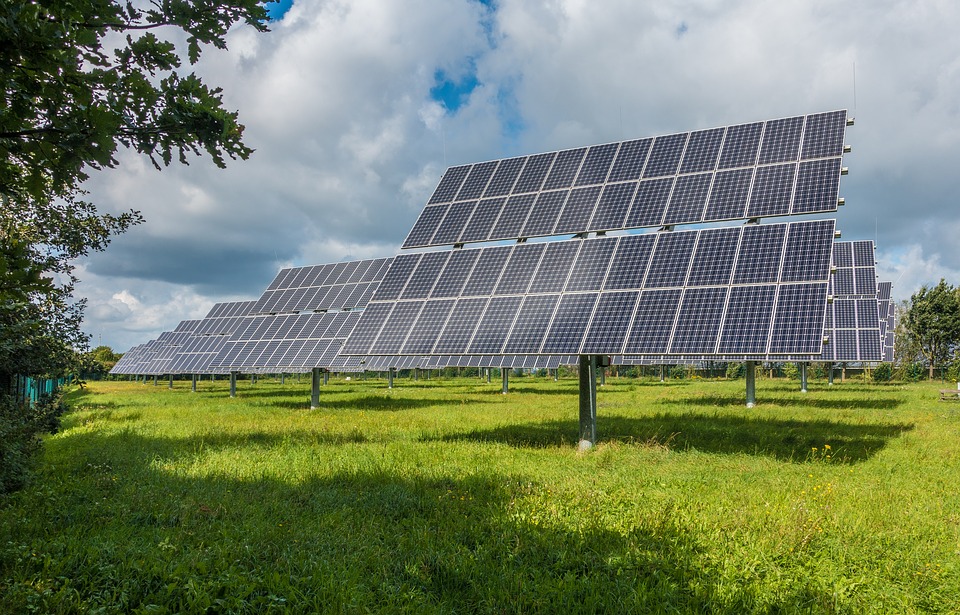
A connected grid system essentially allows you to use solar, wind and other renewable forms of energy to power your home or small businesses when the sources of renewable energy are in steady supply. It then takes the excess electricity produced and sends it into the grid system, to be saved for a time when renewable energy sources aren’t available due to seasonal or other fluctuations. A grid-connected energy storage system essentially negates the need to use a battery (often an expensive alternative) to store energy for future use.
In Conclusion
Ultimately all the individual components and gigafactories need to be integrated to serve the collective needs of the new energy ecosystem that major new energy players are trying to build. Reliance’s four-pronged gigafactory plan aims to not only have one for energy storage but also to produce solar energy, an electrolysed gigafactory to produce green hydrogen and a fuel cell gigafactory that can convert said hydrogen into mobile and stationary power. At the 44th annual general meeting, RIL Chairman Mukesh Ambani stated that Reliance will “create and offer a fully integrated, end-to-end renewables energy eco-system.”
Source: moneycontrol.com