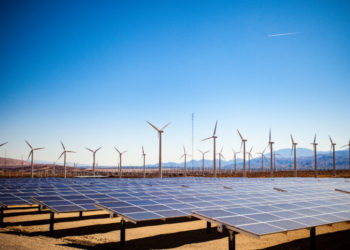
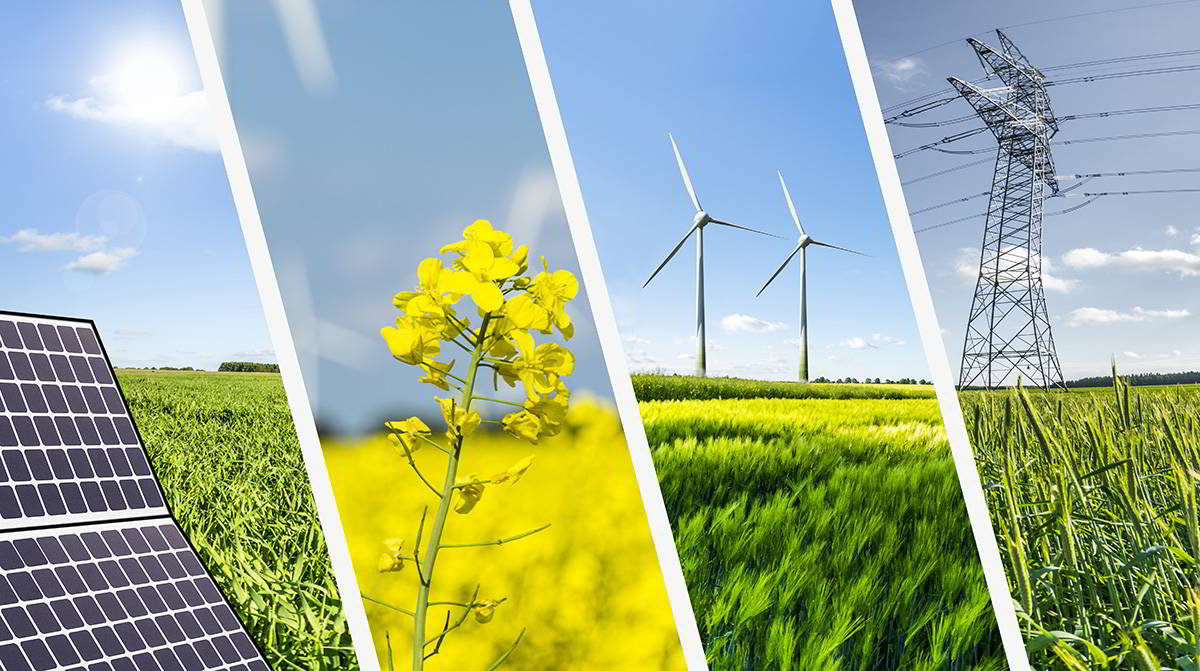
When it comes to saving the planet, the ambition of India’s reach is praiseworthy. The challenge lies in the weakness of its grasp. After emphasizing for years that a pathway to going green was more important than a deadline, India surprised delegates at the COP26 climate summit in Glasgow by announcing a net zero goal for emissions by 2070. More onerous than that longer-term commitment is the intention to use non-fossil-fuel sources for half of its energy needs by 2030.
It’s a daunting target. The share of renewables in the country’s current energy mix is only 12%. Besides, the third-largest emitter would guzzle 2.5 trillion kilowatt-hours of electricity annually by 2030, almost double what it required at the start of the decade. Still, the world’s lowest-cost solar and second-lowest-cost wind producer can deliver on its pledge, provided a ₹ 6 trillion ($80 billion) hole in the heart of the country’s power system can be filled.
That’s the quantum of accumulated financial liabilities at India’s electricity distribution companies, or discoms. This large overhang crimps their ability to pay on time, forcing them to run up operational debt to electricity suppliers and transmission firms. According to the most recent government data, discoms’ payment arrears are now nearly $14 billion, almost a fifth of which are claims of renewable power producers.
In most of India’s 28 states, these utilities are controlled by local governments. A 22.3% “technical and commercial loss” – euphemism for free electricity to farmers and power theft – means that the distribution firms never quite manage to find their footing, despite several restructuring attempts. Their shaky financial position hurts generators, including clean-energy firms. Many discoms now have outstanding dues of between six and 12 times their monthly bills. Without reforming this bankrupt industry, India will struggle to meet its bold target of raising non-fossil-fuel generation capacity – including hydroelectric and nuclear power – to 500 gigawatts by 2030, up from roughly 150 gigawatts now.
But that’s easier said than done. During last year’s Covid-19 lockdown, the government of Prime Minister Narendra Modi provided $17 billion in emergency liquidity support to discoms to prevent them from defaulting. Since New Delhi was loathe to ratchet up public debt, it relied on a couple of public-sector financiers to do the job. They borrowed and funneled the money to the utilities to pay suppliers – including the state-owned NTPC Ltd., the country’s No. 1 power producer.
However, the catch was that state governments had to guarantee the concessional loans taken by their discoms. According to ICRA Ltd., the Indian affiliate of Moody’s Investors Service, seven states extended almost $14 billion in such guarantees. Technically, these are contingent liabilities, though in practice they’re proving to be very real. Recently, when power distributors in three states couldn’t pay their arrears to NTPC, the Reserve Bank of India intervened and deducted money from their governments’ accounts at the RBI.
This is a pass-the-parcel game, where a higher branch of the government lends to entities controlled by a lower branch, and then gets bills of its own producer paid. Private-sector investors, who must do the heavy lifting for India to hit its clean-energy goals, won’t be getting these favors: They will have to run around to get paid even as state politicians threaten to renegotiate long-term power purchase agreements.
How then to reform discoms? Better software and demand-management systems may boost their ability to absorb renewables, as Sumant Sinha, chairman of ReNew Energy Global Plc, one of India’s biggest producers of clean electricity, told Bloomberg News last month. However, efficiency gains alone won’t address the problem of being stuck with older vintages of more expensive power purchase deals. “Utilities which enjoy superior contracts will have cheaper power – it has less to do with management skills,” says energy analyst Rahul Tongia at the New Delhi-based Centre for Social and Economic Progress. An overdue change may be to move wholesale demand away from long-term agreements to spot power exchanges, which today handle only about 5% of electricity consumed in India.
Giving retail consumers more choice by allowing multiple distribution companies to share the wires and poles appears attractive in theory, though as a government think tank noted recently, it’s not necessary that an open market will be more competitive. Even in Mumbai, which has a long tradition of private power supply, consumers who want to switch suppliers face heavy regulatory charges, making migration unviable.
The biggest bottleneck is perverse incentives. As long as free electricity for pumping groundwater remains a popular ploy to garner farmers’ votes, politicians won’t want to lose control of discoms, not when they know that a federal government bailout will inevitably arrive every few years. But without a modicum of political will to depoliticize power, the promise of India’s renewables industry may disappear in the country’s $80 billion distribution ditch.
Source: ndtv.com