
Current directory: /home3/bjinbymy/public_html/indianext/wp-content/mu-plugins Machine Learning And Earthquake Risk Prediction - AI Next
Indianext
No Result
View All Result
Subscribe
  • News
    • Project Watch
    • Policy
  • AI Next
  • People
    • Interviews
    • Profiles
  • Companies
  • Make In India
    • Solutions
    • State News
  • About Us
    • Editors Corner
    • Mission
    • Contact Us
    • Work Culture
  • Events
  • Guest post
  • News
    • Project Watch
    • Policy
  • AI Next
  • People
    • Interviews
    • Profiles
  • Companies
  • Make In India
    • Solutions
    • State News
  • About Us
    • Editors Corner
    • Mission
    • Contact Us
    • Work Culture
  • Events
  • Guest post
No Result
View All Result
Latest News on AI, Healthcare & Energy updates in India
No Result
View All Result
Home AI Next

Machine Learning And Earthquake Risk Prediction

July 12, 2021
ai

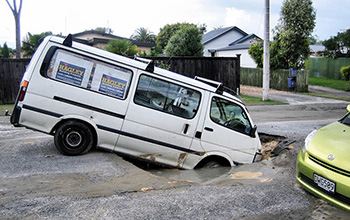
Homes and offices are only as solid as the ground beneath them. When that solid ground turns to liquid — as sometimes happens during earthquakes — it can topple buildings and bridges. The phenomenon is known as liquefaction, and it was a major feature of the 2011 earthquake in Christchurch, New Zealand, a magnitude 6.3 quake that killed 185 people and destroyed thousands of homes.

An upside of the Christchurch quake was that it was one of the most well-documented in history. Because New Zealand is seismically active, the city was instrumented with numerous sensors for monitoring earthquakes. Post-event reconnaissance provided a wealth of additional data on how the soil responded across the city.

“It’s an enormous amount of data for our field,” said researcher Maria Giovanna Durante. “We said, ‘If we have thousands of data points, maybe we can find a trend.'”

Durante works with Ellen Rathje, an engineer at The University of Texas at Austin and principal investigator of the U.S. National Science Foundation-funded DesignSafe effort, which supports research across the natural hazards community.

Rathje’s research on liquefaction led her to study the Christchurch event. She had been thinking about ways to incorporate machine learning into her research and this case seemed like a great place to start.

The researchers developed a machine learning model that predicted the amount of lateral movement that occurred when the Christchurch earthquake caused soil to lose its strength and shift relative to its surroundings. The results were published in Earthquake Spectra.

“It’s one of the first machine learning studies in our area of geotechnical engineering,” Durante said.

This new paradigm of data-sharing and collaboration is central to DesignSafe and helps the field progress more quickly, according to Joy Pauschke, a program director in NSF’s Directorate for Engineering.

“Researchers are beginning to use AI methods with natural hazards research data, with exciting results,” Pauschke said. “Adding machine learning tools to DesignSafe’s data and other resources will lead to new insights and help speed advances that can improve disaster resilience.”

The researchers used the Frontera supercomputer at the Texas Advanced Computing Center, one of the world’s fastest, to train and test the model. TACC is a key partner in the DesignSafe project, providing computing resources, software and storage to the natural hazards engineering community.

Source: nsf.gov

Leave a Reply Cancel reply

Your email address will not be published. Required fields are marked *

Editors Corner

How can Artificial Intelligence tools be a blessing for recruiters?

Will Artificial Intelligence ever match human intelligence?

Artificial Intelligence: Features of peer-to-peer networking

What not to share or ask on Chatgpt?

How can Machine Learning help in detecting and eliminating poverty?

How can Artificial Intelligence help in treating Autism?

Speech Recognition and its Wonders in your corporate life

Most groundbreaking Artificial Intelligence-based gadgets to vouch for in 2023

Recommended News

AI Next

Google: AI From All Perspectives

Alphabet subsidiary Google may have been slower than OpenAI to make its AI capabilities publicly available in the past, but...

by India Next
May 31, 2024
AI Next

US And UK Doctors Think Pfizer Is Setting The Standard For AI And Machine Learning In Drug Discovery

New research from Bryter, which involved over 200 doctors from the US and the UK, including neurologists, hematologists, and oncologists,...

by India Next
May 31, 2024
Solutions

An Agreement Is Signed By MEA, MeitY, And CSC To Offer E-Migration Services Via Shared Service Centers

Three government agencies joined forces to form a synergy in order to deliver eMigrate services through Common Services Centers (CSCs)...

by India Next
May 31, 2024
AI Next

PR Handbook For AI Startups: How To Avoid Traps And Succeed In A Crowded Field

The advent of artificial intelligence has significantly changed the landscape of entrepreneurship. The figures say it all. Global AI startups...

by India Next
May 31, 2024

Related Posts

Google
AI Next

Google: AI From All Perspectives

May 31, 2024
Pfizer
AI Next

US And UK Doctors Think Pfizer Is Setting The Standard For AI And Machine Learning In Drug Discovery

May 31, 2024
Artificial-Intelligence
AI Next

PR Handbook For AI Startups: How To Avoid Traps And Succeed In A Crowded Field

May 31, 2024
openai
AI Next

OpenAI Creates An AI Safety Committee Following Significant Departures

May 31, 2024
Load More
Next Post
koch

Koch Industries Subsidiary Invests US$100m In Zinc Battery Energy Storage Company Eos

IndiaNext Logo
IndiaNext Brings you latest news on artificial intelligence, Healthcare & Energy sector from all top sources in India and across the world.

Recent Posts

Google: AI From All Perspectives

US And UK Doctors Think Pfizer Is Setting The Standard For AI And Machine Learning In Drug Discovery

An Agreement Is Signed By MEA, MeitY, And CSC To Offer E-Migration Services Via Shared Service Centers

PR Handbook For AI Startups: How To Avoid Traps And Succeed In A Crowded Field

OpenAI Creates An AI Safety Committee Following Significant Departures

Tags

  • AI
  • EV
  • Mental WellBeing
  • Clean Energy
  • TeleMedicine
  • Healthcare
  • Electric Vehicles
  • Artificial Intelligence
  • Chatbots
  • Data Science
  • Electric Vehicles
  • Energy Storage
  • Machine Learning
  • Renewable Energy
  • Green Energy
  • Solar Energy
  • Solar Power

Follow us

  • Facebook
  • Linkedin
  • Twitter
© India Next. All Rights Reserved.     |     Privacy Policy      |      Web Design & Digital Marketing by Heeren Tanna
No Result
View All Result
  • About Us
  • Activate
  • Activity
  • Advisory Council
  • Archive
  • Career Page
  • Companies
  • Contact Us
  • cryptodemo
  • Energy next
  • Energy Next Archive
  • Home
  • Interviews
  • Make in India
  • Market
  • Members
  • Mission
  • News
  • News Update
  • People
  • Policy
  • Privacy Policy
  • Register
  • Reports
  • Subscription Page
  • Technology
  • Top 10
  • Videos
  • White Papers
  • Work Culture
  • Write For Us

Welcome Back!

Login to your account below

Forgotten Password?

Retrieve your password

Please enter your username or email address to reset your password.

Log In

Add New Playlist

IndiaNext Logo

Join Our Newsletter

Get daily access to news updates

no spam, we hate it more than you!