
‘Covid-19 revealed gaps in healthcare infrastructure across the world and not just India alone. However, India, despite its limited infrastructure and large population, saw doctors and healthcare workers put up a brave fight. ‘
During the peak of Covid-19’s second wave, health systems across the nation witnessed their critical resources rapidly getting overwhelmed by an increasing number of patients. It threatened to overwhelm medical infrastructure at the regional level, causing spikes in mortality rates. Within the medical infrastructure, there are critical technologies that are generally available, but simply do not exist in a high enough density to handle the excessive volume of patients associated with pandemics. In the 21st Century, pandemics can be dealt with differently than they have historically been with advanced medicine and technology at its side. The biggest modern weapon we now have at our disposal is technology. Smart technology when widely adopted for healthcare has the potential to bring a paradigm shift to present-day healthcare
In an exclusive conversation with Financial Express Online, CEO of Hamilton India, Devang Lakhia talked about how artificial intelligence is helping India fight the healthcare crisis. Excerpts:
Explain the concept of smart/intelligent ventilation solutions.
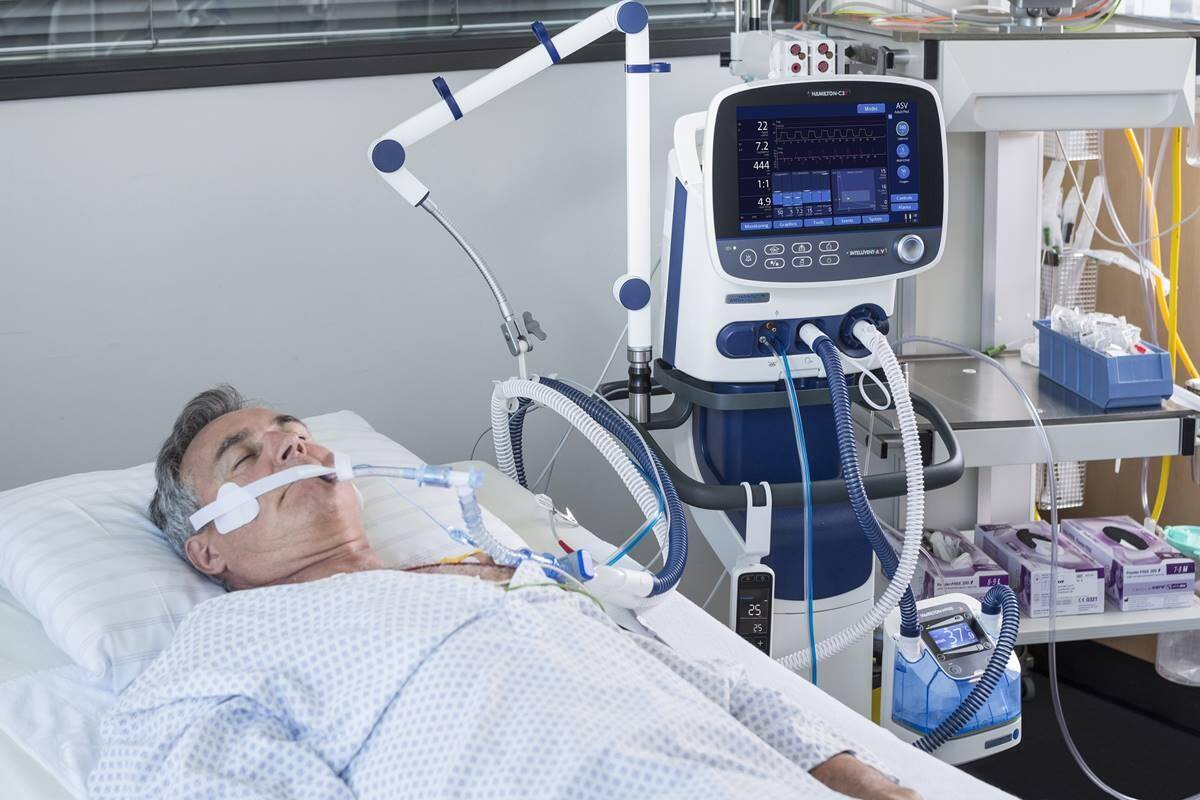
Intelligent Ventilation solutions simply put can be called bedside assistants that function using physiologic data from the patient and clinician-set targets to regulate CO2 elimination and oxygenation for both passive and active patients. It replicates the mechanism of human breathing to increase the efficacy of oxygen absorption. This increases the potency of treating mechanically ventilated patients with different conditions and levels of severity. Intelligent ventilators using selected driving pressure, mechanical power and tidal volume deliver individualized lung treatment. Using simplified settings, caregivers can control critical parameters and make a wide range of adjustments depending on the clinical condition of the patient.
An intelligent ventilator studies a patient’s condition to suggest optimal clinical targets to caregivers. This allows them to move away from the Magic Value parameters used as general settings for most patients on ventilation and instead focus on calibrating other tools employed to keep a patient alive in an intensive care unit. This individualization of lung treatment ensures lung protection of the highest grade to patients against prolonged use of artificial mechanisms to support breathing. Intelligent ventilators also serve one mode of ventilation for both passive and active patients. Healthcare workers by keeping an eye on both hypoxemia and hyperoxemia conditions of patients can adjust settings to avoid both risks.
The Hamilton Adaptive Supportive Ventilation (ASV) is highly advanced and automatically synchronizes the ventilator with the patient’s breathing mechanics, applying lung protection strategies to minimize complications. The ASV mode has been used in intensive care units since 1998 and has proven itself well. In many settings, it is used for adult and pediatric patients as a standard regimen from intubation to extubation.
How have mechanical ventilation solutions evolved over the years? What is the USP of Hamilton’s Intelligent ventilation systems?
Since 1983, Hamilton Medical has been developing intelligent ventilation solutions that improve the safety of treating critically ill patients and help them recover faster. Today, Hamilton Medical is a leading provider of ventilation solutions for critical care, suitable for a wide variety of patient populations, modes and conditions of use. As a result of research and development of the concept of an automatic ventilation control system, Adaptive Supportive Ventilation (ASV®) was created in 1997 – the new standard for all Hamilton Medical ventilators.
All Hamilton Medical ventilators, whether they are used in the ICU, MRI room, or during transport, have the same Ventilation Cockpit user interface. The benefits of which include:
- A uniform approach to ventilation in any clinical setting, including when transporting a patient.
- Reduced staff training time.
- Reducing the risk of erroneous user actions
In 2010, on its basis, a unique new generation system was created – INTELLiVENT®-ASV . These two unique ventilation modes automatically apply lung protection strategies to minimize complications and encourage spontaneous breathing in patients. This makes it possible to improve patient safety and comfort, as well as shorten ventilation times. In addition, these modes help reduce the physician workload. These technology advancements and applications reduce the length of stay at the hospital which is good for the patient and the provider.
We bring the unique proposition of universal consumables for ventilators to our customers. Most Hamilton Medical supplies can be used on all Hamilton Medical ventilators. Reusable or single-use parts are available, depending on institution’s policy. This greatly simplifies the management of ventilators and increases the economic effect throughout the entire service life of the equipment. The collective benefits are easier equipment management and reduced operating costs.
Role of Intelligent ventilators in pandemic times and how it can act as critical last mile support patient management.
It is no mean fact that its demands in the medical fraternity and institutions have grown exponentially. The pandemic was an eye-opener with regards to the gap and has created the need for advanced intelligent technology in managing and assisting case overloads in intensive care. The need for urgency at the patient critical care delivery level was never felt in this way before. Technology can augment the efforts and capabilities of doctors and nurses by assisting them in decision-making to help manage a greater number of cases in limited time and resources. Therefore, Hamilton Adaptive Supportive Ventilation (ASV) ventilators have become a crucial last mile technology in saving patient lives during the global health crisis.
Can Intelligent ventilators help in reducing burden off medical and healthcare workers?
At a time when healthcare workers across the country are overworked and overburdened, intelligent ventilators help free up their crucial time through automation by letting them focus on other clinical ICU routines. This is important as simultaneously tending to many patients can often lead to poor quality of care.
Some medical experts agree that intelligent ventilation systems can deliver safe and efficient ventilation support with minimal human supervision autonomously. This means the machine can be operated by healthcare workers even with basic knowledge due to its simplified settings. This holds true in the Indian context, where the availability of qualified and trained personnel for supervising critical devices is questionable. The adoption of intelligent ventilators will drastically reduce the burden of overworked healthcare workers and allow for optimal usage of human resources. It will also help bridge India’s wide urban-rural healthcare infrastructure gap that has restricted quality medical treatment to bubbles of the population. At the same time, reduced supervision of intelligent ventilators drastically decreases the possibility of contamination of healthcare workers from patients.
Recently there have been reports of ventilators and critical care equipment not being used optimally despite being available due to lack of training of medical staff. Since Hamilton is a pioneer how do you intend to support this requirement in India?
Any advanced technology intervention requires upskilling the end users. When building a future-forward plan, governments and hospitals also need to consider the current scarcity of skilled professionals for the management of critical care infrastructure. We need to have more experienced and skilled nurses and respiratory therapists for speedy and efficient delivery of critical care. At Hamilton we lay a great amount of emphasis on sharing and skilling. We will closely collaborate with stakeholders to bridge the skilling gap and ensure that our products are utilized optimally. Hamilton Medical College offers educational materials, training seminars and training on mechanical ventilation and ventilator use. With the resources provided by Hamilton Medical College’s distance learning platform, a wealth of knowledge on ventilation and ventilator use can be accessed by doctors, clinical experts, and nurses. Hamilton Medical frequently hosts clinical expert workshops that provide in-depth training for ventilators from around the world and will be working closely with the medical institutions in the country to support upskilling and training for better patient outcomes.
India has a large ventilator and critical care infrastructure gap; how do you plan on plugging it?
COVID-19 saw the fast installation of care facilities across the country to deal with the overwhelming numbers of cases, but the pandemic also once again surfaced the question of missing skill development in India’s healthcare industry. Now more than ever, the need for trained professionals outside doctors and nurses was needed to assist and manage critical care equipment. Hamilton Medical has installed 2000 ventilators across prominent hospitals across different states in India. We are committed to aid the government’s efforts to address this gap.
The pandemic saw ventilators become front line weapons against Covid19, do you think it is renewed importance will push governments towards upgrading their critical care infra?
COVID 19 revealed gaps in healthcare infrastructure across the world and not just India alone. However, India, despite its limited infrastructure and large population, saw doctors and healthcare workers put up a brave fight. They utilized their limited resources to a great extent to serve patients effectively. The pandemic has already resulted in a critical care infrastructure boost for India with hospitals increasing their count of ICUs, oxygenated beds etc. It is very encouraging to see the government impetus in healthcare spending by an increase of 137% increase in the 2021 Union Budget. The consistent multi-fold growth in ICU beds, number of ventilators and oxygenated beds during the pandemic shows just that. The fact that this increase was not just restricted to metros but has also happened in tier 2-3 cities shows that India is undergoing a major healthcare infrastructure transformation.
Currently, critical care across the country can be found in clusters and is mostly urban-centric. There exist vast geographical and regional disparities in the distribution of critical care. This is fueled by the need to maintain low-cost structure by medium or small-scale hospitals where critical care equipment like ICU and ventilators are often deprioritized. It will take some time for this transformation to be complete, but we are surely heading towards it at an appreciable pace. It is very much evident that with limited resources going forward with advanced technologies, AI will play a major role to boost India’s critical care infrastructure and management. Hospitals will have to adopt a new approach towards investing in technology / AI that will augment the capability of HCP to manage more patients with limited human resources and improve patient outcomes.
Source: financialexpress.com