Current directory: /home3/bjinbymy/public_html/indianext/wp-content/mu-plugins Integrating air quality, clean energy policies can cut emissions: IIT-Bombay scientists - Clean Energy
Indianext
No Result
View All Result
Subscribe
  • News
    • Project Watch
    • Policy
  • AI Next
  • People
    • Interviews
    • Profiles
  • Companies
  • Make In India
    • Solutions
    • State News
  • About Us
    • Editors Corner
    • Mission
    • Contact Us
    • Work Culture
  • Events
  • Guest post
  • News
    • Project Watch
    • Policy
  • AI Next
  • People
    • Interviews
    • Profiles
  • Companies
  • Make In India
    • Solutions
    • State News
  • About Us
    • Editors Corner
    • Mission
    • Contact Us
    • Work Culture
  • Events
  • Guest post
No Result
View All Result
Latest News on AI, Healthcare & Energy updates in India
No Result
View All Result
Home Energynext Clean Energy

Integrating air quality, clean energy policies can cut emissions: IIT-Bombay scientists

February 2, 2021
Integrating air quality, clean energy policies can cut emissions: IIT-Bombay scientists

The researchers found that policies on residential clean energy and air pollution regulation by curbing brick production and burning of agricultural residue have greater benefits than the policies on curbing emissions from industries and transportation

Integrating existing policies on air quality and clean energy in India can significantly reduce emissions of greenhouse gases (GHGs) up to 1.8 giga tonnes of equivalent carbon dioxide (GtCo2e) in 2030, researchers from the Indian Institute of Technology-Bombay (IIT-B) said.

Two researchers from the institute — PhD student Kushal Tibrewal and professor Chandra Venkataraman— set out to assess the benefits (climate co-benefits) of air quality and clean energy policies in the country using multiple metrics such as the global warming and temperature change potentials. Their paper, ‘Climate co-benefits of air quality and clean energy policy in India’, was published in the Nature Sustainability journal on December 14 last year.

“We assess climate co-benefits of policies addressing sustainable development goals, specifically air quality and residential clean energy access, to identify which of these might yield significant climate co-benefits and, therefore, be candidates to integrate into the country’s climate action plan,” said Venkataraman, co-author of the study and professor in the department of chemical engineering and associate faculty in the interdisciplinary programme in climate studies at IIT-B.

The researchers found that policies on residential clean energy and air pollution regulation by curbing brick production and burning of agricultural residue have greater benefits than the policies on curbing emissions from industries and transportation.

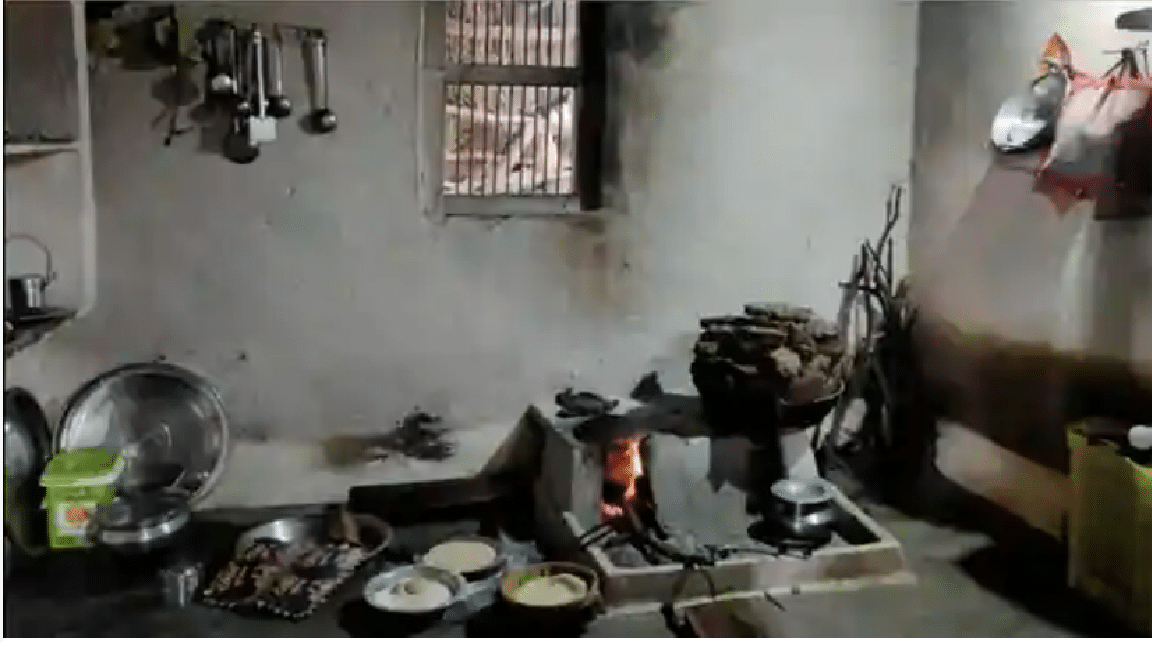
“We found residential clean energy programmes, specifically the adoption of liquefied petroleum gas cook stoves and household electrification, deliver significant reductions in emissions of warming short-lived climate forcers (wSLCFs or substances in the air that have shorter lifetime in the atmosphere than carbon dioxide) and related carbon dioxide emissions. However, only specific air quality programmes yield reduction in emissions of wSLCFs,” Venkataraman added.

For example, emissions control standards related to sulphur dioxide in electricity generation lead to reduction in sulphate particles. However, since sulphate particles are cooling agents in the atmosphere, their reduction can lead to warming. On the other hand, emission standards in sectors like fired brick production and curbs on agricultural residue burning can significantly reduce emissions of wSLCFs. Integrating these policies can improve emission control, said the researchers. Traditionally the approach towards climate policies has been to look at emissions from electricity generation, transportation and industries separately.

“The measures identified in the study are simultaneously linked to improving human health and food security, along with upgrading infrastructure and promoting sustainable cities and communities. Integrating these interventions into national climate policies can bring them under a more stringent surveillance,” she said.

“The divergence of the implications of some of the policies focusing on climate mitigation (long-term) and air quality does present a challenge for an economy like India. However, the focus of policy makers must definitely be on improving air quality in the near to medium term as the implications for health of the citizens is long-term and cumulative. The slow pace of roll out of the pollution control retrofits in power plants and the increasing prices of LPG in the post-pandemic period suggests that air quality has been accorded a lower priority,” Karthik Ganesan, fellow, Council on Energy, Environment and Water (CEEW), who was not a part of the project.

Source- Hindustan Times

Leave a Reply Cancel reply

Your email address will not be published. Required fields are marked *

Editors Corner

How can Artificial Intelligence tools be a blessing for recruiters?

Will Artificial Intelligence ever match human intelligence?

Artificial Intelligence: Features of peer-to-peer networking

What not to share or ask on Chatgpt?

How can Machine Learning help in detecting and eliminating poverty?

How can Artificial Intelligence help in treating Autism?

Speech Recognition and its Wonders in your corporate life

Most groundbreaking Artificial Intelligence-based gadgets to vouch for in 2023

Recommended News

AI Next

Google: AI From All Perspectives

Alphabet subsidiary Google may have been slower than OpenAI to make its AI capabilities publicly available in the past, but...

by India Next
May 31, 2024
AI Next

US And UK Doctors Think Pfizer Is Setting The Standard For AI And Machine Learning In Drug Discovery

New research from Bryter, which involved over 200 doctors from the US and the UK, including neurologists, hematologists, and oncologists,...

by India Next
May 31, 2024
Solutions

An Agreement Is Signed By MEA, MeitY, And CSC To Offer E-Migration Services Via Shared Service Centers

Three government agencies joined forces to form a synergy in order to deliver eMigrate services through Common Services Centers (CSCs)...

by India Next
May 31, 2024
AI Next

PR Handbook For AI Startups: How To Avoid Traps And Succeed In A Crowded Field

The advent of artificial intelligence has significantly changed the landscape of entrepreneurship. The figures say it all. Global AI startups...

by India Next
May 31, 2024

Related Posts

clean energy
Clean Energy

Coal India, NTPC, Railways Can Help Meet Clean Energy Goals By 2050: Report

September 14, 2022
coal based capacity
Coal Gassifications

Need 28 GW More Coal-Based Capacity By FY32: Draft National Electricity Plan

September 13, 2022
green Hydrogen
Clean Energy

India Plans To Become Green Hydrogen Giant To Cut Energy Imports

September 3, 2022
wind energy
Clean Energy

Policy Support ‘Could Help India Add 23.7GW Of Wind Energy By 2026’

August 26, 2022
Load More
Next Post
Budget 2021: What EV startups in India think about the new policies

Budget 2021: What EV startups in India think about the new policies

IndiaNext Logo
IndiaNext Brings you latest news on artificial intelligence, Healthcare & Energy sector from all top sources in India and across the world.

Recent Posts

Google: AI From All Perspectives

US And UK Doctors Think Pfizer Is Setting The Standard For AI And Machine Learning In Drug Discovery

An Agreement Is Signed By MEA, MeitY, And CSC To Offer E-Migration Services Via Shared Service Centers

PR Handbook For AI Startups: How To Avoid Traps And Succeed In A Crowded Field

OpenAI Creates An AI Safety Committee Following Significant Departures

Tags

  • AI
  • EV
  • Mental WellBeing
  • Clean Energy
  • TeleMedicine
  • Healthcare
  • Electric Vehicles
  • Artificial Intelligence
  • Chatbots
  • Data Science
  • Electric Vehicles
  • Energy Storage
  • Machine Learning
  • Renewable Energy
  • Green Energy
  • Solar Energy
  • Solar Power

Follow us

  • Facebook
  • Linkedin
  • Twitter
© India Next. All Rights Reserved.     |     Privacy Policy      |      Web Design & Digital Marketing by Heeren Tanna
No Result
View All Result
  • About Us
  • Activate
  • Activity
  • Advisory Council
  • Archive
  • Career Page
  • Companies
  • Contact Us
  • cryptodemo
  • Energy next
  • Energy Next Archive
  • Home
  • Interviews
  • Make in India
  • Market
  • Members
  • Mission
  • News
  • News Update
  • People
  • Policy
  • Privacy Policy
  • Register
  • Reports
  • Subscription Page
  • Technology
  • Top 10
  • Videos
  • White Papers
  • Work Culture
  • Write For Us

Welcome Back!

Login to your account below

Forgotten Password?

Retrieve your password

Please enter your username or email address to reset your password.

Log In

Add New Playlist

IndiaNext Logo

Join Our Newsletter

Get daily access to news updates

no spam, we hate it more than you!