Current directory: /home3/bjinbymy/public_html/indianext/wp-content/mu-plugins India’s News Drone Policy Cuts Red Tape And Opens The Skies - Policy
Indianext
No Result
View All Result
Subscribe
  • News
    • Project Watch
    • Policy
  • AI Next
  • People
    • Interviews
    • Profiles
  • Companies
  • Make In India
    • Solutions
    • State News
  • About Us
    • Editors Corner
    • Mission
    • Contact Us
    • Work Culture
  • Events
  • Guest post
  • News
    • Project Watch
    • Policy
  • AI Next
  • People
    • Interviews
    • Profiles
  • Companies
  • Make In India
    • Solutions
    • State News
  • About Us
    • Editors Corner
    • Mission
    • Contact Us
    • Work Culture
  • Events
  • Guest post
No Result
View All Result
Latest News on AI, Healthcare & Energy updates in India
No Result
View All Result
Home Policy

India’s News Drone Policy Cuts Red Tape And Opens The Skies

September 1, 2021
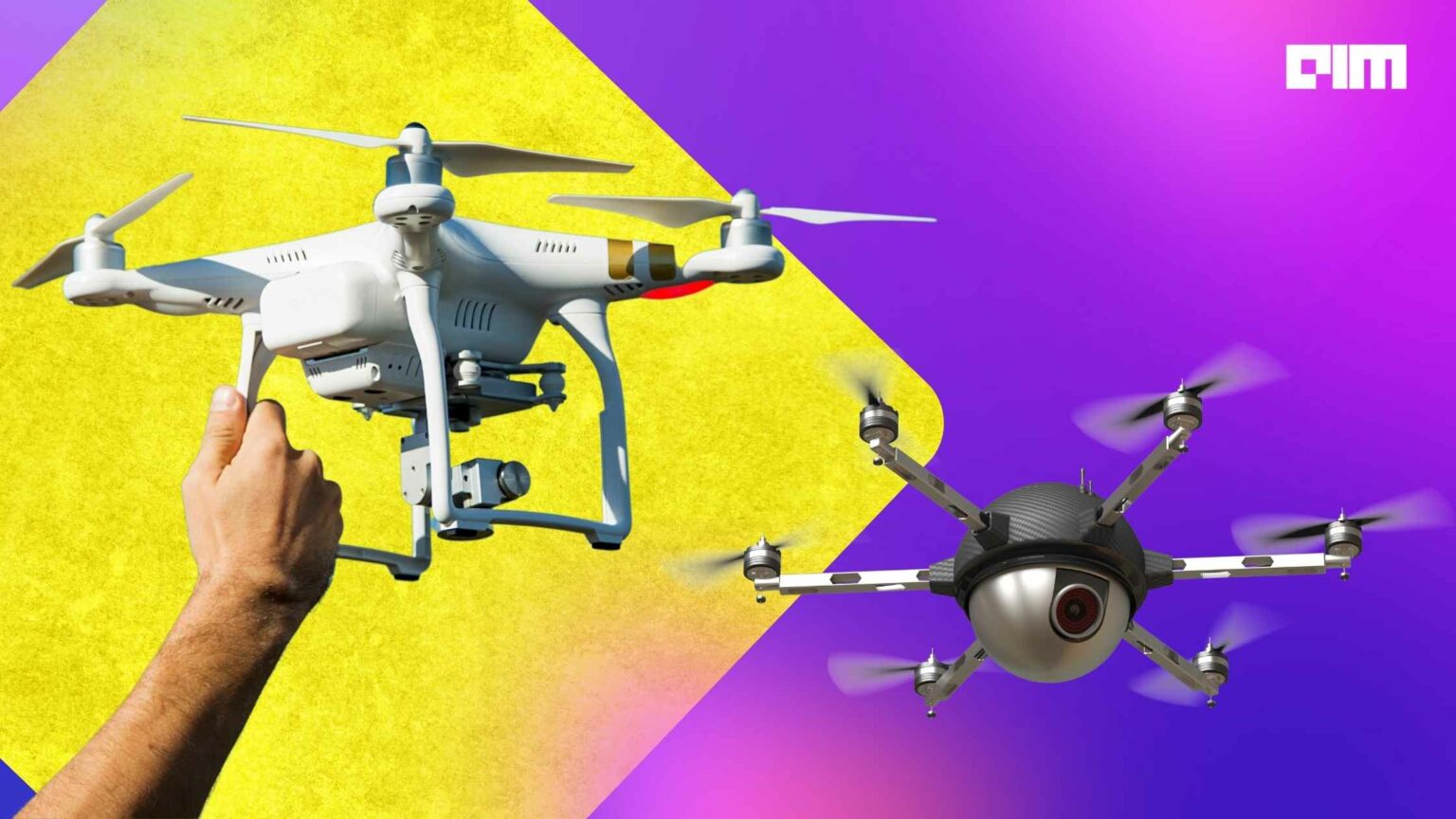
drones

The new Drone Rules 2021 announced by the government on August 26 are a shot in the arm for the nascent remotely piloted aircraft (RPA)—or drones—industry in India. The liberalised policy depends on self-regulation and non-intrusive monitoring rather than enforced regulation. It replaces the Unmanned Aircraft System Rules 2021 that the Ministry of Civil Aviation had notified five months ago to test the waters.

Under the new regulations, individuals and companies — including a number of new-age start-ups — can operate drones without being tied up in red tape at every step. Now anyone can acquire and fly drones at minimal documentation fees, provided voluntary standard operating procedures are followed. As Prime Minister Narendra Modi tweeted: “The new drone rules are based on the premise of trust and self-certification. Approvals, compliance requirements and entry barriers have been significantly reduced.”

For aero-modellers and aviation enthusiasts, the RPA have always been the next best thing to flying real airplanes. But today, drones find application in almost every sphere of human activity—civilian, commercial and military—and represent the next big thing in technology innovation. Their agility and remote control capability enable drones to reach and operate in areas inaccessible to humans and since they can fly closer to terrain, they are not hampered by limitations like cloud cover that distort satellite images and data. Their wide range of applications includes medical emergencies, disaster management, spraying pesticides over fields, monitoring forests, payload deliveries, road traffic management and crime prevention.

Yet, in spite of the big strides made by RPA technology over the last decade, drones are still an uncommon sight in Indian skies. Indeed, apart from military drones, most RPA in India belong to drone enthusiasts who fly them for fun and entertainment (besides professional photographers who use them for filming aerial shots).

Consequently, drone laws in India were expressly based on security concerns as policymakers struggled to understand a technology that at once showed so much promise and proved so hard to regulate. No wonder earlier drone laws often seemed regressive in nature. For instance, regulators haphazardly enforced the legal requirement of Visual Line of Sight (VLOS) operations—keeping the drone in line of sight throughout, which incidentally killed the potential application for drones in the delivery space. While the 2016 rules required only mini and micro drones to follow VLOS flights, a 2017 regulation imposed VLOS on all drone operations, regardless of the size of the RPA.

The new policy may have an Achilles’ heel in assuming that appropriate measures would be taken by anyone who flies the RPA to prevent misuse and that best practices in operating procedures and safety controls would be strictly followed. Voluntary compliance is always tricky, especially on issues such as privacy which require a larger legal debate before India’s aviation regulator, the Director General of Civil Aviation (DGCA), can legislate on it. The policy is vague on privacy infringement by drones and the regulator may have to tweak the rules further to ensure that privacy and legal concerns are adequately addressed.

The DGCA also faces many technical challenges such as integrating unmanned aircraft systems into India’s National Airspace System, which requires optimal utilisation of airspace capacity and augmenting the existing communication networks for effective air traffic management and surveillance. In fact, these challenges may become even more daunting as the RPA evolve with the assimilation of new technologies based on machine learning and artificial intelligence.

For the moment though, the DGCA seems content with an interactive colour-coded airspace map that geo-fences zones like restricted airspace where drone pilots cannot fly and controlled airspace that need permission to overfly. Perhaps the DGCA should also look at establishing ‘drone-ways’ along the lines of airways that airliners fly so that the RPA, with, say, algorithms helping the autopilot, could safely use them even at low altitudes to avoid collisions. This will address two of the biggest concerns about the RPA: air traffic safety and drone security (yes, potential hackers could send false Global Positioning System coordinates to an RPA’s receiver and down it or access its data).

Any new drone policy has to be necessarily a work in progress and the latest one is no exception with its many grey areas. There is no doubt, however, that the Drone Rules 2021 spell good news for the RPA industry in India which will be enthused to realise its potential and claim a slice of the global drone market, expected to top $24 billion by 2022.

Source: moneycontrol.com

Leave a Reply Cancel reply

Your email address will not be published. Required fields are marked *

Editors Corner

How can Artificial Intelligence tools be a blessing for recruiters?

Will Artificial Intelligence ever match human intelligence?

Artificial Intelligence: Features of peer-to-peer networking

What not to share or ask on Chatgpt?

How can Machine Learning help in detecting and eliminating poverty?

How can Artificial Intelligence help in treating Autism?

Speech Recognition and its Wonders in your corporate life

Most groundbreaking Artificial Intelligence-based gadgets to vouch for in 2023

Recommended News

AI Next

Google: AI From All Perspectives

Alphabet subsidiary Google may have been slower than OpenAI to make its AI capabilities publicly available in the past, but...

by India Next
May 31, 2024
AI Next

US And UK Doctors Think Pfizer Is Setting The Standard For AI And Machine Learning In Drug Discovery

New research from Bryter, which involved over 200 doctors from the US and the UK, including neurologists, hematologists, and oncologists,...

by India Next
May 31, 2024
Solutions

An Agreement Is Signed By MEA, MeitY, And CSC To Offer E-Migration Services Via Shared Service Centers

Three government agencies joined forces to form a synergy in order to deliver eMigrate services through Common Services Centers (CSCs)...

by India Next
May 31, 2024
AI Next

PR Handbook For AI Startups: How To Avoid Traps And Succeed In A Crowded Field

The advent of artificial intelligence has significantly changed the landscape of entrepreneurship. The figures say it all. Global AI startups...

by India Next
May 31, 2024

Related Posts

karnataka
Policy

Under Karnataka’s New Startup Policy, Deep Tech Ventures Will Receive A Rs 100 Crore Fund, With 25% Of That Going To Women-Led Startups

December 26, 2022
EV
Policy

Electric Vehicle Policy Draft Ready In UP, Full Discount To Be Given On Registration

September 16, 2022
evs
Policy

Ladakh Rolls Out EV Policy With Subsidies To Encourage Buyers: Report

August 22, 2022
electric cars
Policy

Why States Need To Be On Same Page On Electric Vehicle Policy

July 16, 2022
Load More
Next Post
EV

Odisha Announces EV Policy, Aims 20% Electric Vehicle Registrations By 2025

IndiaNext Logo
IndiaNext Brings you latest news on artificial intelligence, Healthcare & Energy sector from all top sources in India and across the world.

Recent Posts

Google: AI From All Perspectives

US And UK Doctors Think Pfizer Is Setting The Standard For AI And Machine Learning In Drug Discovery

An Agreement Is Signed By MEA, MeitY, And CSC To Offer E-Migration Services Via Shared Service Centers

PR Handbook For AI Startups: How To Avoid Traps And Succeed In A Crowded Field

OpenAI Creates An AI Safety Committee Following Significant Departures

Tags

  • AI
  • EV
  • Mental WellBeing
  • Clean Energy
  • TeleMedicine
  • Healthcare
  • Electric Vehicles
  • Artificial Intelligence
  • Chatbots
  • Data Science
  • Electric Vehicles
  • Energy Storage
  • Machine Learning
  • Renewable Energy
  • Green Energy
  • Solar Energy
  • Solar Power

Follow us

  • Facebook
  • Linkedin
  • Twitter
© India Next. All Rights Reserved.     |     Privacy Policy      |      Web Design & Digital Marketing by Heeren Tanna
No Result
View All Result
  • About Us
  • Activate
  • Activity
  • Advisory Council
  • Archive
  • Career Page
  • Companies
  • Contact Us
  • cryptodemo
  • Energy next
  • Energy Next Archive
  • Home
  • Interviews
  • Make in India
  • Market
  • Members
  • Mission
  • News
  • News Update
  • People
  • Policy
  • Privacy Policy
  • Register
  • Reports
  • Subscription Page
  • Technology
  • Top 10
  • Videos
  • White Papers
  • Work Culture
  • Write For Us

Welcome Back!

Login to your account below

Forgotten Password?

Retrieve your password

Please enter your username or email address to reset your password.

Log In

Add New Playlist

IndiaNext Logo

Join Our Newsletter

Get daily access to news updates

no spam, we hate it more than you!