Current directory: /home3/bjinbymy/public_html/indianext/wp-content/mu-plugins India Needs To Judiciously Use Its Land For Renewable Energy Expansion Targets - Renewables
Indianext
No Result
View All Result
Subscribe
  • News
    • Project Watch
    • Policy
  • AI Next
  • People
    • Interviews
    • Profiles
  • Companies
  • Make In India
    • Solutions
    • State News
  • About Us
    • Editors Corner
    • Mission
    • Contact Us
    • Work Culture
  • Events
  • Guest post
  • News
    • Project Watch
    • Policy
  • AI Next
  • People
    • Interviews
    • Profiles
  • Companies
  • Make In India
    • Solutions
    • State News
  • About Us
    • Editors Corner
    • Mission
    • Contact Us
    • Work Culture
  • Events
  • Guest post
No Result
View All Result
Latest News on AI, Healthcare & Energy updates in India
No Result
View All Result
Home Renewables

India Needs To Judiciously Use Its Land For Renewable Energy Expansion Targets

September 8, 2021
RENEWABLES

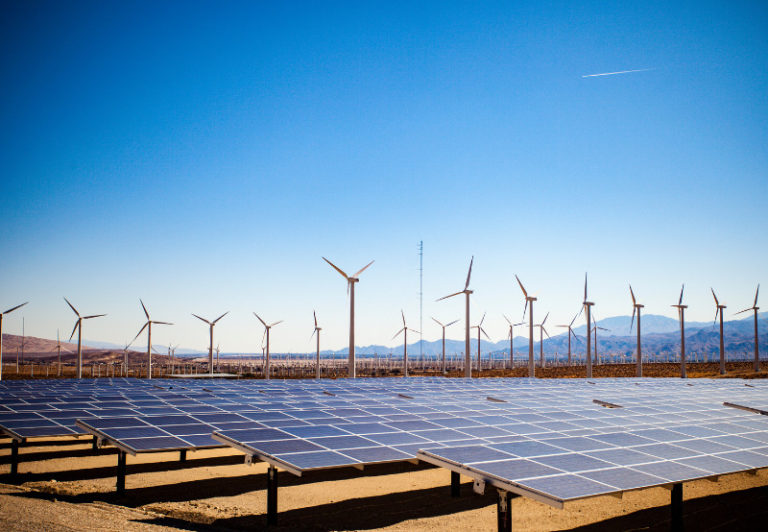
New Delhi: Whether or not India commits to net-zero emission by 2050, its huge renewable energy (RE) capacity expansion over next few decades will require large quantum of land, for which India needs to judiciously plan its solar and wind energy footprints, a report said on Monday. A maximum of 2.5 per cent of India’s total landmass would be needed for solar, it said.

Only judicious planning of land use for solar and wind generation will help India achieve its renewable energy ambitions, according to a new report by the Institute for Energy Economics and Financial Analysis’ (IEEFA) that has examined how much land could be needed for the country to reach net-zero emissions by 2050.

Net zero carbon emissions can be achieved either by removal of or as much elimination as possible of emission from a given unit, such as a city or a country. According to Intergovernmental Panel on Climate Change (IPCC), global carbon emissions should decline by about 45 per cent by 2030 to restrict the global temperature rise to 1.5 degrees Celsius (compared to the pre-industrial era temperatures). If the countries indeed cut emission, net zero is likely to be achieved around 2050.

The IEEFA report has calculated that if India were to implement a mid-century net-zero target – the Government of India is not yet ready to commit to a year – solar could occupy in the range of 50,000-75,000 sq kms of land, while wind could use a further 1,500-2,000 sq kms (for the land area directly impacted by turbine pads, sub-stations, roads and buildings) or 15,000-20,000 sq kms (the total project area including space between turbines and other infrastructure). The amount of land that could be needed for solar is equivalent to 1.7-2.5 per cent of India’s total landmass, or 2.2-3.3 per cent of non-forested land, a release said.

“This is a precautionary approach for the purposes of planning and putting in place smart land-use policies today for future renewable infrastructure,” the report’s author, researcher and IEEFA guest contributor Dr Charles Worringham said as he explained that the higher end of the land-use range is deliberately generous to allow plenty of leeway for planning.
“This is a precautionary approach for the purposes of planning and putting in place smart land-use policies today for future renewable infrastructure.” -Dr Charles Worringham
Comparing the effects of large-scale renewable expansion to those of meeting electricity requirements from additional coal-fired power, Worringham noted that the locations for renewable energy generation can be chosen using India’s preferred social and environmental criteria and can be widely distributed across the country.

“Additional coal can only come from already heavily mined districts or from new coal blocks, which are often in significant forest areas and where displacement of tribal communities is an issue. Compared to that, renewable energy does not permanently alter land and natural resources in the same way as coal.”

However, the report also notes the potential for land-use conflict to arise over renewable energy installations, even in sparsely populated areas, slowing the rollout of infrastructure. The report made recommendation to minimise the total land-use requirements through offshore wind, distributed rooftop solar, and solar on artificial water bodies and optimizing the identification and assessment of land.

It also said increasing the stock of potentially suitable geographically diverse lands by boosting the uptake of agri-voltaics where crops, soils and conditions are suitable and yields can be maintained or improved, for instance, where solar photovoltaic panels are installed in fertile land side by side the crop.

“The energy transition will also require important choices about where this infrastructure should be located. But careful planning and solutions like agri-voltaics, distributed energy systems and offshore wind can also greatly reduce the potential for renewable generation to conflict with social and environmental values whilst diversifying and strengthening India’s national grid. By bringing more power generation closer to both urban and rural loads, transmission costs could also be kept in check,” Worringham said.

Source: auto.economictimes.indiatimes.com

Leave a Reply Cancel reply

Your email address will not be published. Required fields are marked *

Editors Corner

How can Artificial Intelligence tools be a blessing for recruiters?

Will Artificial Intelligence ever match human intelligence?

Artificial Intelligence: Features of peer-to-peer networking

What not to share or ask on Chatgpt?

How can Machine Learning help in detecting and eliminating poverty?

How can Artificial Intelligence help in treating Autism?

Speech Recognition and its Wonders in your corporate life

Most groundbreaking Artificial Intelligence-based gadgets to vouch for in 2023

Recommended News

AI Next

Google: AI From All Perspectives

Alphabet subsidiary Google may have been slower than OpenAI to make its AI capabilities publicly available in the past, but...

by India Next
May 31, 2024
AI Next

US And UK Doctors Think Pfizer Is Setting The Standard For AI And Machine Learning In Drug Discovery

New research from Bryter, which involved over 200 doctors from the US and the UK, including neurologists, hematologists, and oncologists,...

by India Next
May 31, 2024
Solutions

An Agreement Is Signed By MEA, MeitY, And CSC To Offer E-Migration Services Via Shared Service Centers

Three government agencies joined forces to form a synergy in order to deliver eMigrate services through Common Services Centers (CSCs)...

by India Next
May 31, 2024
AI Next

PR Handbook For AI Startups: How To Avoid Traps And Succeed In A Crowded Field

The advent of artificial intelligence has significantly changed the landscape of entrepreneurship. The figures say it all. Global AI startups...

by India Next
May 31, 2024

Related Posts

metal
Renewables

Coal Crunch Hastens Indian Metal Makers’ Switch To Green Energy

August 31, 2022
RENEWABLES
Renewables

India Pushes For Renewable Energy Initiative With Central Asia: Invites Region To Join International Solar Alliance

August 26, 2022
renewable energy
Renewables

Hybrid Solar-Storage Technologies: Unlocking Renewable Energy’s Full Potential

August 20, 2022
renewable energy
Renewables

Only Decentralised Renewable Energy Can Help Achieve 2030 Targets: Experts

July 22, 2022
Load More
Next Post
renewable energy

IREDA Inks Pact With TANGEDCO For Renewable Energy Projects

IndiaNext Logo
IndiaNext Brings you latest news on artificial intelligence, Healthcare & Energy sector from all top sources in India and across the world.

Recent Posts

Google: AI From All Perspectives

US And UK Doctors Think Pfizer Is Setting The Standard For AI And Machine Learning In Drug Discovery

An Agreement Is Signed By MEA, MeitY, And CSC To Offer E-Migration Services Via Shared Service Centers

PR Handbook For AI Startups: How To Avoid Traps And Succeed In A Crowded Field

OpenAI Creates An AI Safety Committee Following Significant Departures

Tags

  • AI
  • EV
  • Mental WellBeing
  • Clean Energy
  • TeleMedicine
  • Healthcare
  • Electric Vehicles
  • Artificial Intelligence
  • Chatbots
  • Data Science
  • Electric Vehicles
  • Energy Storage
  • Machine Learning
  • Renewable Energy
  • Green Energy
  • Solar Energy
  • Solar Power

Follow us

  • Facebook
  • Linkedin
  • Twitter
© India Next. All Rights Reserved.     |     Privacy Policy      |      Web Design & Digital Marketing by Heeren Tanna
No Result
View All Result
  • About Us
  • Activate
  • Activity
  • Advisory Council
  • Archive
  • Career Page
  • Companies
  • Contact Us
  • cryptodemo
  • Energy next
  • Energy Next Archive
  • Home
  • Interviews
  • Make in India
  • Market
  • Members
  • Mission
  • News
  • News Update
  • People
  • Policy
  • Privacy Policy
  • Register
  • Reports
  • Subscription Page
  • Technology
  • Top 10
  • Videos
  • White Papers
  • Work Culture
  • Write For Us

Welcome Back!

Login to your account below

Forgotten Password?

Retrieve your password

Please enter your username or email address to reset your password.

Log In

Add New Playlist

IndiaNext Logo

Join Our Newsletter

Get daily access to news updates

no spam, we hate it more than you!