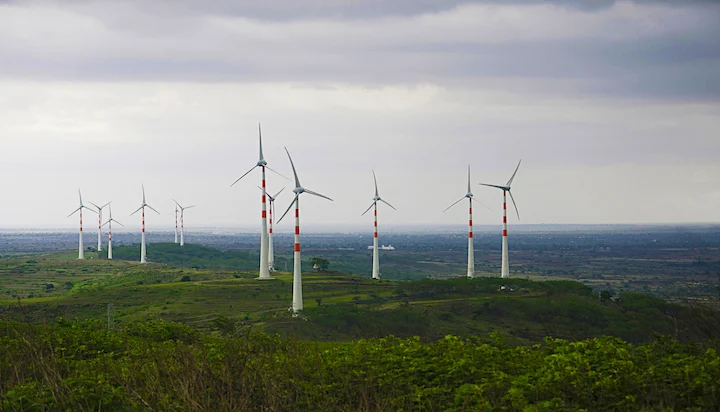
India at the first leader-level meeting on energy under the UN General Assembly in 40 years has made commitments to increase renewable energy installed capacity to 450 GW by 2030 and develop and implement a National Hydrogen Energy Mission to scale up annual green hydrogen production to 1 MT by 2030.
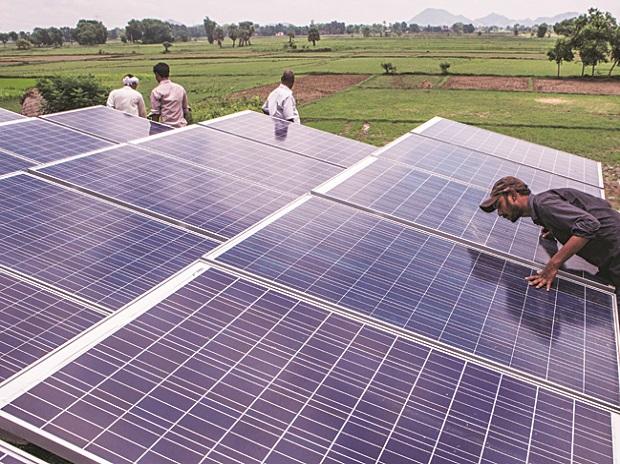
Also, it announced to begin a Production Linked Incentive Scheme to add 10 GW solar PV manufacturing capacity by 2025.
India’s announcements were among new multi-billion-dollar commitments made on Friday by countries to increase renewables and access to electricity and clean cooking technologies at the critical summit aimed at boosting efforts to reduce the ranks of nearly 800 million people living in energy poverty while setting the world on a trajectory towards net-zero-emissions by 2050.
India announced to create 15 MMT production capacity of compressed biogas by 2024, achieve 20 per cent ethanol blending in petrol by 2025-26 and enhance energy efficiency in agriculture, buildings, industry and transport sectors and promote energy-efficient appliances and equipment to reduce country’s emissions intensity of GDP by 33-35 per cent over 2005 levels by 2030.
More than $400 billion in new finance and investment was committed by governments and the private sector during the UN High-level Dialogue on Energy.
Over 35 countries — ranging from Small Island Developing States to major emerging and industrialized economies — made significant new energy commitments in the form of Energy Compacts.
Additionally, several new partnership initiatives were announced, aiming to provide and improve access to reliable electricity to over a billion people.
The new commitments would result in large increases in the installed capacity of renewable energy and significant improvements in energy efficiency around the world — leading to hundreds of new renewable energy facilities and the creation of millions of new green jobs.
The energy summit took place as world leaders grapple with the critical urgency to keep the 1.5 degrees temperature target of the Paris Agreement within reach, and cut emissions by 45 per cent by 2030, while closing the energy access gap and providing more than one billion people who currently rely on harmful fuels with clean cooking solutions.
The new commitments showcase the bold actions needed to meet the targets of Sustainable Development Goal 7 (SDG 7).
In addition to the announcements of commitments, the Dialogue will also produce a global roadmap for action and timelines needed through 2030 to meet the targets for clean, affordable energy for all set out in SDG 7, towards net-zero emissions by 2050 in line with the Paris Agreement on Climate Change.
The roadmap, which will be presented in the summary of the Dialogue by the Secretary-General, will call on governments, businesses and civil society organizations to close the energy access gap by 2030, and accelerate the clean energy transition by tripling investments in clean energy and energy efficiency by 2030.
It also calls for phasing out coal by 2030 for OECD countries and 2040 for all others, and shifting fossil fuel subsidies to renewable energy investments, while creating new decent and healthy jobs and ensuring a just, inclusive transition.
The roadmap draws on inputs from expert working groups and was discussed at Ministerial-level forums in June.
Recent reports from the IPCC and UNFCCC have shown that countries are not moving fast enough on climate action to avert disastrous consequences, and that even if countries met all their NDC commitments under the Paris Agreement, the collective impact would be only a fraction of what is needed to limit warming to 1.5 degrees Celsius.
In addition to mobilizing voluntary commitments, the Energy Compacts can help by encouraging countries to outline the detailed set of energy actions that they have planned to meet their targets and providing an avenue to build partnerships and resources.
By engaging business, foundations, civil society organizations and other key players, the Compacts are advancing concrete multi-stakeholder solutions and partnerships needed to achieve greater impact.
More than 150 Energy Compacts from national and local governments, businesses, foundations and international, civil society and youth organizations from every region were submitted for the Dialogue, reflecting actions and finance commitments through 2030.
Clean energy funding committed by national governments and the private sector in these Compacts amounted to more than $400 billion for access and transition.
On top of this, several foundations and industry associations aimed to leverage large amounts of additional finance for SDG 7.
On energy access, national governments committed to provide reliable electricity to over 166 million people worldwide; private companies pledged to reach just over 200 million people; and a number of foundations and business associations promised to pursue partnerships to reach hundreds of millions of additional people.
Presently, close to 760 million people still lack access to electricity and some 2.6 billion people lack access to clean cooking solutions.
It is estimated that the cost of closing the energy access gap is about $35 billion a year for electricity access and $25 billion a year for clean cooking.
The annual investment in clean energy and energy efficiency required to achieve net-zero emissions by 2050 is estimated to be $4.4 trillion.
Responding to the commitments, UN Secretary-General Antonio Guterres said, “The commitments coming through this process led by UN-Energy are a real signal of what is possible. I am pleased to see several of the major emitters — countries and sectors — demonstrating leadership through the High-Level Dialogue process along with bold commitments to act.”
Source: business-standard.com