
COVID pandemic has been a wake-up call for humanity as millions lost their lives and livelihood, besides suffering irreversible healthcare apocalypse.
The world could not have anticipated a healthcare crisis of such scale or proportions. We realised the inadequacy of healthcare infrastructure globally, not only in developing countries like India. The US, one of the most advanced healthcare infrastructures, suffered the most in the initial stages. They are still grappling with the pandemic.
The impact on healthcare
Most healthcare systems lack critical care facilities that handle patients at such a massive scale. Moreover, acute shortage of beds, oxygen concentrators, medicines and critical care staff proved fatal. Life-saving surgeries and transplants had to be postponed, as patients decided to stay away from hospitals and other healthcare facilities due to the fear of COVID-19 infection.
Surgeries and transplants are the chief revenue drivers in hospitals, with OTs, ICUs, diagnostics, pharmacies and other value-added services acting as the prime revenue centers in hospitals. Lack of OPD patients with reduced elective surgeries led to significant revenue losses to most hospitals in the initial stages of the pandemic. Most organisations had to, therefore, resort to cost optimisation initiatives to stay afloat. These initiatives included optimizing the workforce (clinical & non-clinical), salaries, consumables, and other administrative services.
The need to stay away from the hospitals drove providers to adopt digital technology to stay in business and continue to provide healthcare services to patients, especially those not willing to visit their facilities to seek treatment.
Technological advancements and digitization of healthcare
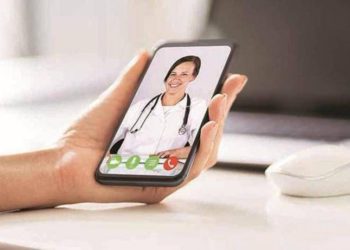
Care is slowly moving away from the healthcare facilities, focused mainly towards patient convenience (home) and technology is driving this transition. Fear of COVID-19 infection reduced physical OPDs, but this inadequacy also gave the much-needed fillip to virtual consultations through telemedicine. Teleconsultations have gone up manifold during the COVID pandemic, as there was a newfound acceptance among the clinicians, patients, insurance firms and other stakeholders in the treatment value chain.
Last year the Ministry of Health and Family Welfare (MoHFW), NITI Aayog, and the Board of Governors (BoG) Medical Council of India (MCI) released the initial formal guidelines to regulate practices across the nation. This regulation democratized healthcare delivery, especially telemedicine, in the country.
Telemedicine has also helped bridge the urban-rural healthcare divide by bringing super-specialty support to tier 2/3 cities and rural areas. Disruptive startups are driving this new health-tech revolution in smaller towns and rural areas across India.
The emergence of remote healthcare
Another area wherein technology plays an important role is remote care. Because of the acute shortage of critical care staff in hospitals during the pandemic, many providers created remote or smart ICUs. This facility allowed them to look after more patients simultaneously. Smaller towns and rural areas still suffer from a total lack of such a facility, but this technology has the answer to address this prevailing gap during future healthcare crises.
Internet of Medical Things (IoMT) devices that are Bluetooth enabled can beam all-important clinical data to the consulting doctor in a realistic timeframe. This setup quite closely mimics the face-to-face consultation and helps the treating doctor take an appropriate clinical decision on the line of treatment. Many of these IoMT devices are backed by artificial intelligence and predictive analytics that help predict the likely future condition of the patient based on the longitudinal (periodical) data. These devices prove helpful in preventive medicine and wellness, especially in the hitherto underserved areas with abysmal healthcare delivery.
Scope for remote healthcare in India
The latest McKinsey report projected telehealth as a quarter trillion-dollar industry post-Covid. As per this report, telehealth use has increased 38 times from the pre-COVID-19 baseline. The industry is projected to reach a size of $10.6 billion by 2025 in India. The scope in India is substantial since it is a relatively virgin terrain with hardly any serious players and healthcare delivery in the last mile is appalling, needing a significant overhaul.
What is contributing to the growth is the integration of telehealth with other virtual health solutions and hybrid virtual/in-person care (phygital) models. These systems have the potential to improve the consumer experience, quality, access, affordability and outcomes. Doing so has drastically reduced the costs of treatment while making delivery more precise.
The hospital industry, by definition, is capital intensive. The cost of each bed could be anything between 1-2 crores, depending on the type of the city and location. Breakeven periods are therefore longer. So, providers need to reach out to new territories to garner more business. Digital technology facilitates it.
Remote healthcare for rural India
In smaller cities, virtual consultations alone are not enough. These need to be beefed up by physical consultations/OPDs so that patients can develop more confidence in the care provided. This phygital model also facilitates post-operative care and second opinion for patients in smaller cities, thus preventing the need to travel to bigger cities for treatment, saving them time, money and lost productivity. Remote care also protects them against any hospital-acquired infections.
Close to 65 per cent of the people in India still live in rural areas. Today one of the sizable gaps in healthcare delivery is in rural areas, wherein the healthcare infrastructure and delivery are still lacking. Most of the Primary Health Centre (PHCs) and Community Health Centres (CHCs) lack the required equipment and clinical expertise that the growing population needs.
Technology can bridge this gap. Innovative startups are offering services through mobile medical teams equipped with telemedicine equipment enabled by IoMT devices. The presence of a doctor, nurse and essential medicines facilitates large scale screening of patients suffering from non-communicable diseases (NCDs). Clinical data of each patient can then be screened and stored on the cloud through these IoMT devices with the help of EMR/EHR.
Suitable analysis of patient data can then be carried out to predict prevailing or future medical complications. Predictive analytics can be a huge step in giving a fillip to preventive health and improving wellness, one of the prime objectives of the Ministry of Health and Family Welfare (MoHFW), in line with the objectives of Ayushman Bharat and the Sustainable Development Goals (SDG) by the United Nations.
Bridging the healthcare gap for rural areas
Government hospitals alone are currently not enough to ensure high quality and safe delivery to rural areas. Moreover, our healthcare systems need viable platforms that could enable doctors, nurses, clinics, pharmacies and corporations to transform their services into a systematic, replicable, and sustainable way to improve the quality of life. We need to slowly move towards a patient-centric value-based model from the current provider-centric volume-based model.
Tele-consultations, e-pharmacies and remote monitoring have gained confidence among all stakeholders and will continue to grow. The private sector contribution will make an immense difference to help meet the ends of Universal Health Coverage and ensure India’s march to a $5 trillion economy with a healthy population.
Source: bwhealthcareworld.businessworld.in