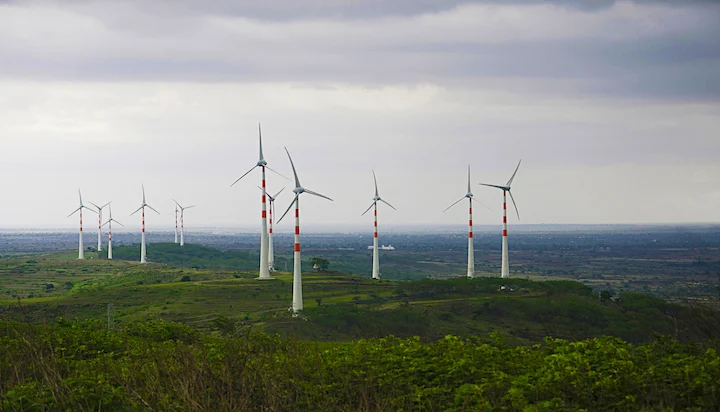
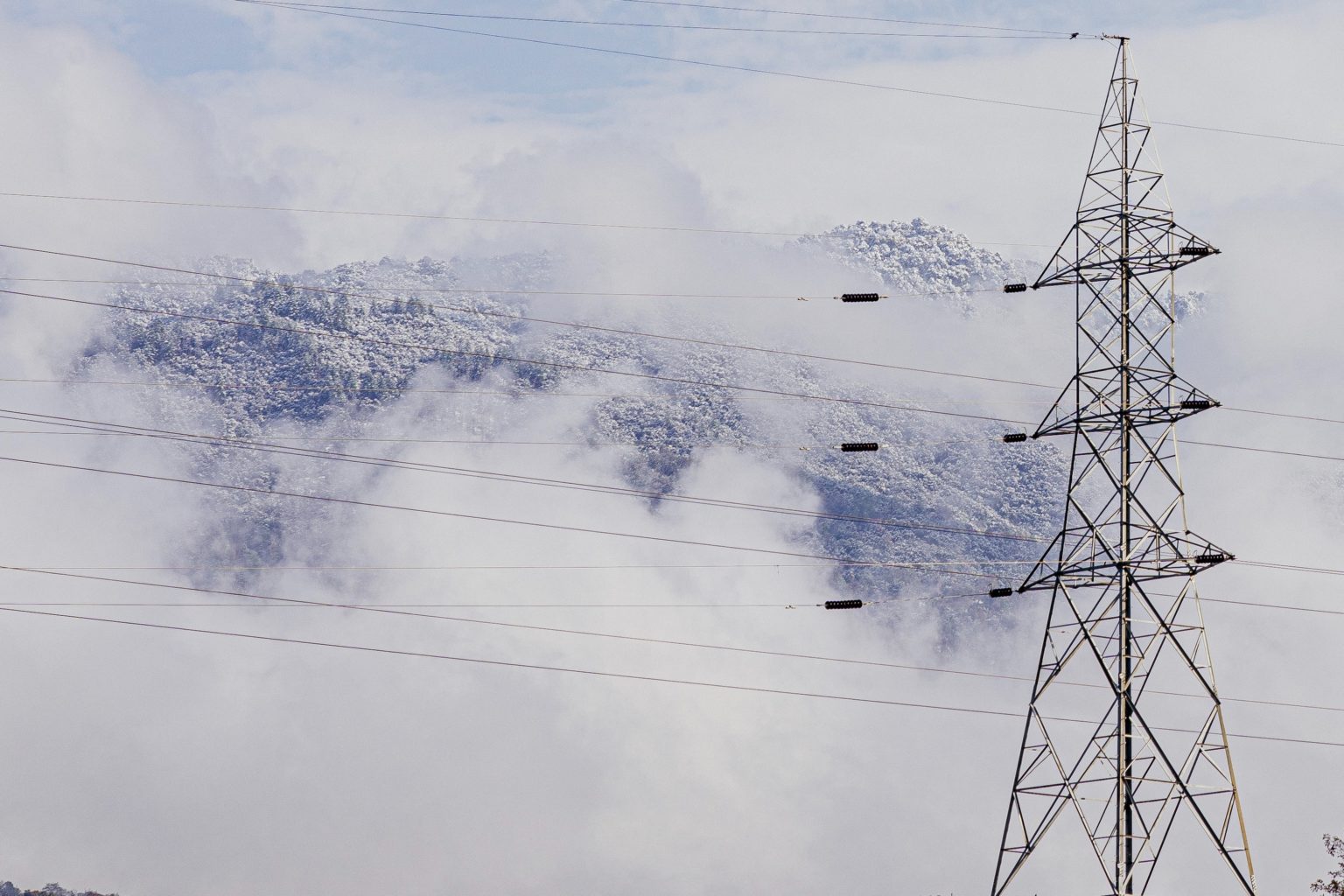
- In all countries, the clean energy transition comes with the problem of grid-balancing: matching the supply of power with its demand, owing to the intermittence of renewable energy.
- At the COP26 climate talks, India launched the ‘Green Grids Initiative – One Sun One World One Grid’, the first international network of a global solar power grid – with the UK.
- Under the GGI-OSOWOG initiative, the Indian grid can initially be connected to Africa, which accounts for 40% of total global horizontal irradiance.
- The India-Africa international grid connectivity plan can be implemented via the West-Asian country of Oman, which is the shortest route to Africa.
An early summer amidst a post-pandemic recovery period has India staring at a power crisis, with grid demand touching 207 GW in April.
It’s a difficult time for India’s power sector also because it is in a transitional phase – with a marked shift from conventional generation to non-fossil-fuel-based generation – driven by escalating global warming and incessant fossil-fuel depletion. Such a transition, though, is happening globally, as countries try to balance their energy security and sustainable development goals.
Switzerland, Sweden, Spain, and the UK are trying to meet 100% of their energy needs through non-fossil-fuel-based generation by 2050, while India is aiming to source 50% of its energy requirements from renewables by 2030, by installing 500 GW of non-fossil-fuel-based generation capacity. It has also committed to attaining net-zero emissions by 2070.
However, for all countries, clean energy transition brings along the formidable task of grid balancing – i.e. matching the supply of power with its demand – owing to the intermittent nature of renewable energy sources. An arrangement that enables need-based exchange of electricity between countries can help deal with this issue.
Additionally, such provision can enable optimal utilisation of power generated by renewable energy sources – especially solar power that can be produced almost all the time (as globally the Sun never sets!). Countries in regions where it is day time can generate solar electricity, which can be transferred to countries in regions where it is evening or night. This would help reduce the dependency on conventional generation, and also bring down the need for renewable energy curtailment (deliberate reduction in energy output below the levels that could otherwise have been produced) during light-load conditions. Thus, solar power can be harnessed most efficiently and its use the world over can be optimised as well.
At the COP26 climate talks in November 2021, India launched the ‘Green Grids Initiative – One Sun One World One Grid’ (GGI-OSOWOG) – the first international network of global interconnected solar power grids – jointly with the UK. Notably, India had first proposed the idea of ‘One Sun One World One Grid’ in October 2018 at the International Solar Alliance meeting, with the aim of connecting the Indian power grid with the international grid to exchange power with other countries, which was endorsed by all 83 alliance nations.
The current initiative, which merges India’s proposal and the Green Grids Initiative, proposed by the UK, aims to provide momentum for investments on low-carbon solar power generation, and create a multiple new green jobs.
The Indian power grid is already connected with the neighbouring countries of Nepal, Bangladesh, Bhutan, and Myanmar, and steps for setting up a 400 kV high-voltage direct current transmission line between India and Sri Lanka were initiated in 2011. Last month, a MoU on transmission interconnection between India and Maldives was also proposed.
Under the GGI-OSOWOG initiative, the Indian grid can initially be connected to Africa, which accounts for 40% of total global horizontal irradiance, the total light energy from the Sun falling on a horizontal surface. The continent has a potential to generate around 660 PWh of solar energy, as it receives a global solar horizontal irradiance of over 2,000 units per sq. meter in a year. African countries have an average solar power generation potential of around 4.76-5.74 units per day, versus India’s potential of 3.39-5.24 units per day.
But Africa’s economic conditions do not allow installation of solar and other renewable energy generation plants at the required scale, keeping it from actualising its solar potential. With proper investment in the international power grid, the solar resources in Africa can be tapped easily, and, based on the availability and requirement, power can be transferred to India. On the other hand, when Africa experiences low irradiance, power can be exported from India.
The grid can thus help supply reliable power to over 579 million people of Africa who do not have reliable access to good-quality electricity.
The India-Africa international grid connectivity plan can be implemented via the West-Asian country of Oman, which is the shortest route to Africa. A high-voltage direct current submarine cable with an approximate length of 1,000 km can connect the Indian grid with Oman, and overhead lines can be used to further connect Oman with the African countries.
The international power grid, by facilitating appropriate exchange of solar power across countries, can thus help reduce our carbon footprint and limit climate change. It would also reduce energy costs, while providing green investment opportunities for private players, which can catalyse economic development in the associated countries.
Source: science.thewire.in