
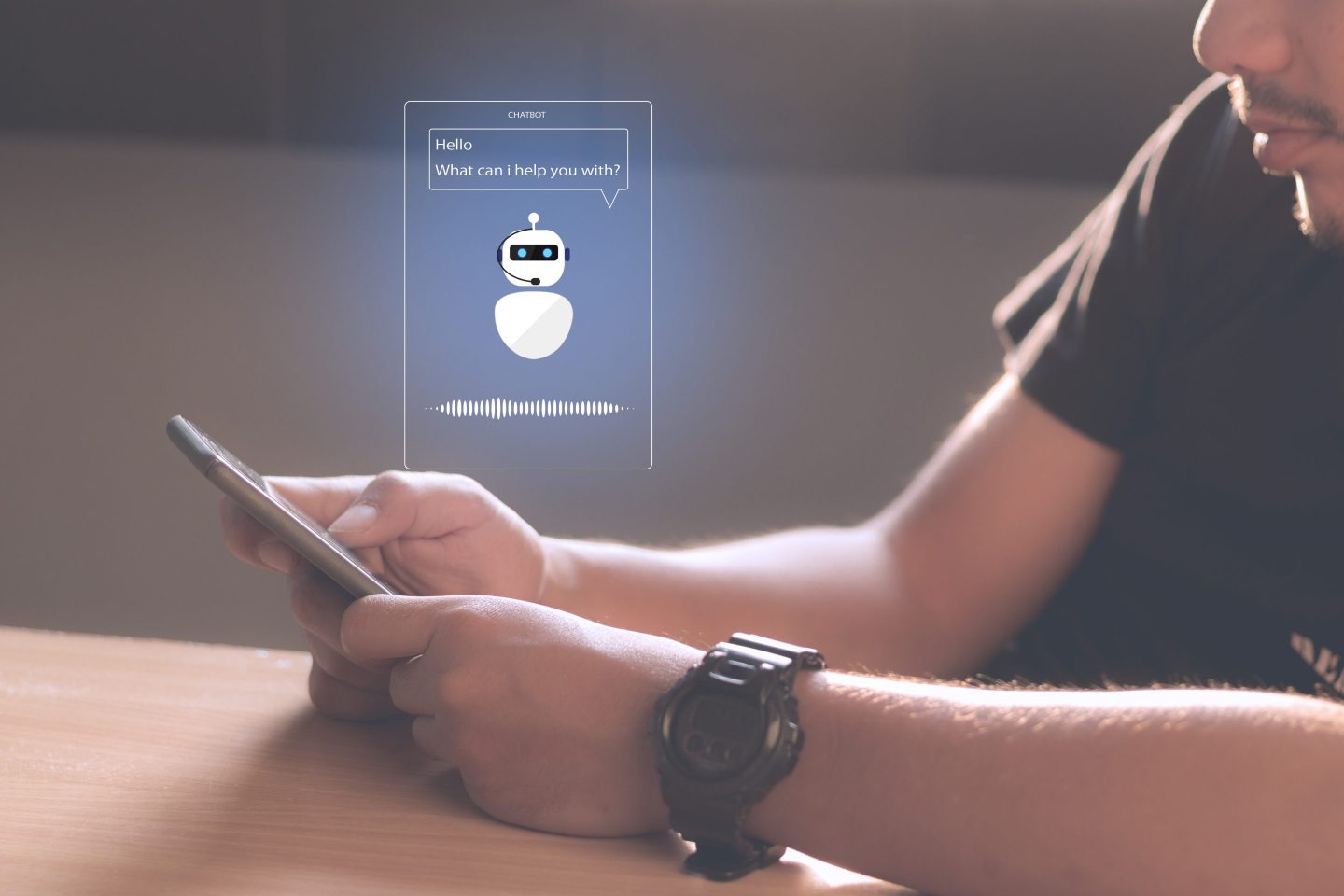
On a Sunday afternoon, I was going through chat transcripts produced by our chatbot, which sits on our company’s website, greeting visitors and answering their questions.
One transcript caught my eye and made me laugh.
Juji (the chatbot): What is the top pain point or challenge in your line of work or personal life?
User A: Are you a boy?
Juji: I’m not a person
User A: My job is to tame tigers without being eaten
Juji: Got it. Once I become more powerful, I’d love to help you out.
After the laughs wore off, I suddenly realized that good A.I. chatbots could perhaps teach us humans, especially leaders, important lessons. Exploring this thought further, I observed five things that good A.I. chatbots, especially those with cognitive intelligence (human soft skills) can teach leaders about empathy and more.
Humility
Due to their imperfections, good A.I. chatbots are often designed with a humble tone: They apologize for their mistakes or admit a lack of certain knowledge. In our human world, everyone is unique, but no one is perfect.
If leaders can shed a little ego and carry a sense of humility, acknowledging their shortcomings or mistakes, it would help set examples for team members, promoting a more collaborative, empathetic, and harmonious workplace culture.
Transparency
We always advocate not to disguise A.I. as a real person. Doing so will only hurt your brand and make your audience feel cheated because humans will quickly discover the flaws in A.I. and realize it is not human after all. Moreover, scientific research shows A.I. self-disclosures promote authentic conversations. Thus, good AI chatbots are trained to be transparent with users and always disclose their capabilities and limitations.
Analogously, if leaders are always truthful about their abilities and limitations, and share honest opinions and feelings with their teams, it will help build trustworthy and authentic work relationships. As a result, employees will feel safe, secure, and comfortable being their genuine selves and foster a more connected, inclusive work culture.
Active listening
People are more willing to open themselves up to machines (when it comes to disclosing sensitive information or ideas generation) because they feel that machines do not judge them.
Cognitive A.I. chatbots take a step further by actively listening to their users, for example, repeating what their users have said and acknowledging users’ feelings empathetically to make users feel heard. More importantly, cognitive A.I. chatbots never place judgments on what users have expressed. Likewise, if organization leaders can practice active listening, remove egos and judgments from the room, and pay attention to their employees instead of their own thoughts, they could better connect with, understand, and lead their teams.
Reading between the lines
Like a psychologist, another important skill of cognitive A.I. chatbots is to read between the lines by dynamically analyzing a user’s conversation text and automatically inferring the user’s unspoken needs, implicit interests, and personality traits.
Cicero said more than 2000 years ago, “If you wish to persuade me, you must think my thoughts, feel my feelings, and speak my words.” Effective leaders should learn how to read between the lines from conversations with employees, empathizing with their feelings and thoughts and using those insights to best help them in the workplace.
Chatbots are now powered with advanced human soft skills, such as active listening and reading between the lines, which are also the most important leadership competencies, according to leaders around the world.
As humans continuously advance A.I. technologies, cognitive A.I. could also serve as a mirror for our own behavior–and help build more productive and inclusive relationships among humans. Leaders who embrace similar soft skills and lead with empathy, active listening, and transparency will build a much happier, more productive, and more inclusive workplace.
Michelle Zhou, Ph.D. is co-founder and CEO of Juji, Inc., the maker of accessible, cognitive artificial intelligence (A.I). assistants, and editor-in-chief for ACM Transactions on Interactive Intelligent Systems (TiiS). Prior to starting Juji, Michelle led and managed the research and development of cutting-edge technologies at IBM Research/Watson, including IBM RealHunter and Watson Personality Insights. Michelle received a Ph.D. in Computer Science from Columbia University and is an ACM Distinguished Scientist.
The opinions expressed in Fortune.com commentary pieces are solely the views of their authors and do not reflect the opinions and beliefs of Fortune.
More must-read commentary published by Fortune:
- Amazon and Walmart want the FAA to let them use part of your property. Here’s how drone delivery companies are coming for your airspace
- How Germany’s regulators beat the SEC in the race for crypto regulation–and convinced me to establish my business there
- Why India could single-handedly shape the future of e-commerce this summer
- Here’s how the pandemic-fueled surge in gaming is reshaping our understanding of its effects on mental health
- Stop calling them ‘job creators’
Source: fortune.com