Current directory: /home3/bjinbymy/public_html/indianext/wp-content/mu-plugins Explained: Solar Power Plants Are Good. Here's Why Floating Ones May Be Even Better - Clean Energy
Indianext
No Result
View All Result
Subscribe
  • News
    • Project Watch
    • Policy
  • AI Next
  • People
    • Interviews
    • Profiles
  • Companies
  • Make In India
    • Solutions
    • State News
  • About Us
    • Editors Corner
    • Mission
    • Contact Us
    • Work Culture
  • Events
  • Guest post
  • News
    • Project Watch
    • Policy
  • AI Next
  • People
    • Interviews
    • Profiles
  • Companies
  • Make In India
    • Solutions
    • State News
  • About Us
    • Editors Corner
    • Mission
    • Contact Us
    • Work Culture
  • Events
  • Guest post
No Result
View All Result
Latest News on AI, Healthcare & Energy updates in India
No Result
View All Result
Home Energynext Clean Energy

Explained: Solar Power Plants Are Good. Here’s Why Floating Ones May Be Even Better

August 24, 2021
solar power plant

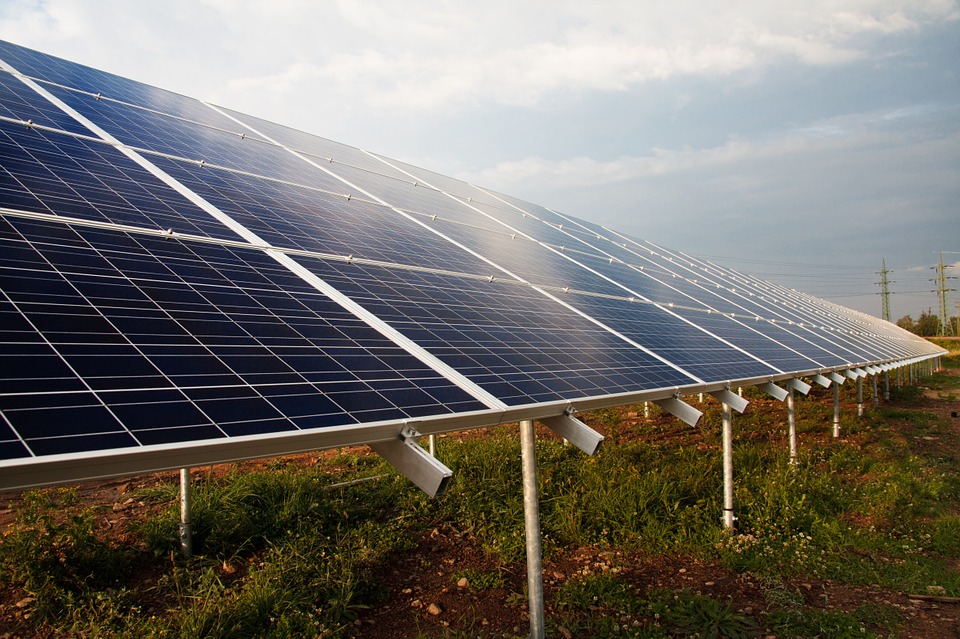
Andhra Pradesh is now home to India’s largest floating solar power plant after the commissioning of 25 megawatt (MW) project by NTPC at its Simhadri coal-powered station. Standing on a reservoir inside the facility, the plant can provide electricity to close to 7,000 homes. Though they may be costlier to install than solar plants on rooftops and on land, floating plants can represent a smarter approach to clean energy.

WHAT HAS NTPC DONE?

The government-owned NTPC Ltd has operationalised the first solar project in India under the ‘Flexibilisation Scheme’ brought in by the Centre in 2018, which allows power generation companies to meet their supply obligations via renewable power instead of only thermal power. According to the Union Power Ministry, “any generating company having coal/lignite/gas-based thermal generating stations, may establish or procure renewable energy generating capacity anywhere in the country either at existing stations or at new locations”.

The scheme was brought in with a view to India’s climate commitment that requires the country to ensure that 40 per cent of its installed power generation capacity comes from non-fossil fuel sources by 2030. Renewables account for more than 37 per cent of the total installed capacity at present.

The NTPC floating solar plant stands on 75 acres on the surface of its Simhadri reservoir and is made up of more than 1 lakh solar photovoltaic (PV) modules. The project will every year save 46,000 tonnes equivalent of CO2 emissions as also 1.3 billion litres of water, which amounts to what 6,700 households use annually. NTPC, which has a total installed capacity of almost 67 gigawatts, said that it “has set a target to install 60GW of renewable energy capacity by 2032″.

WHAT ARE THE ADVANTAGES OF FLOATING POWER PLANTS?

According to the World Bank, floating solar plants represent “new opportunities for scaling up solar generating capacity, especially in countries with high population density and competing uses for available land”, conditions that are not uncommon in India.

Such plants have advantages over land-based systems and also promise “improved energy yield thanks to the cooling

effects of water and the decreased presence of dust”. Experts list several benefits of floating solar plants: the water saving comes from reduced evaporation as solar panels cover the surface of a reservoir and absorb the rays of the sun while at the same time limiting “the evaporative effects of wind”.

The World Bank said that they also ensure “improvements in water quality, through decreased algae growth” and remove the “need for major site preparation, such as levelling or the laying of foundations, which must be done for land-based installations”.

Especially significant is said to be the utility such plants hold for existing hydropower stations. “The possibility of adding floating solar capacity to existing hydropower plants is of particular interest, especially in the case of large hydropower sites that can be flexibly operated. The solar capacity can be used to boost the energy yield of such assets and may also help to manage periods of low water availability,” World Bank said.

But experts also note that it can be more expensive to set up floating solar plants than land-based systems “owing chiefly to the need for floats, moorings, and more resilient electrical components” although the costs are expected to drop over time owing to better economies of scale. There is, however, also the “risk of degradation and corrosion due to moisture, especially in more aggressive coastal environments”.

WHO ARE THE WORLD LEADERS IN FLOATING POWER PLANTS?

The World Bank said in a 2018 report that from only 10MW at the end of 2014, total global installed floating solar capacity had touched 1.1GW by September 2018, a more than 100-fold growth. It said that the global potential of floating solar could be as high as “400GW… roughly the total capacity of all solar photovoltaic installations worldwide at the end of 2017″.

While the first floating solar plant was launched in 2007 in Japan’s Aichi, China is now the world leader in deploying the tech with several countries around the world now exploring the scope of purusing such projects.

“Plants with capacity of tens and even hundreds of megawatts have been installed in China; more are planned in India and Southeast Asia,” World Bank said. Interestingly, China has set up floating solar plants at flooded coal mines, thus giving a new lease of life to the disused sites, which now support most of the largest installations.

Reports in January this year had said that Madhya Pradesh is looking to build the world’s largest floating solar plant at the Omkareshwar dam on Narmada river in Khandwa district. Set to be completed by year 2022-23, the project would cost Rs 3,000 crore and provide 600MW of electricity.

Source: news18.com

Leave a Reply Cancel reply

Your email address will not be published. Required fields are marked *

Editors Corner

How can Artificial Intelligence tools be a blessing for recruiters?

Will Artificial Intelligence ever match human intelligence?

Artificial Intelligence: Features of peer-to-peer networking

What not to share or ask on Chatgpt?

How can Machine Learning help in detecting and eliminating poverty?

How can Artificial Intelligence help in treating Autism?

Speech Recognition and its Wonders in your corporate life

Most groundbreaking Artificial Intelligence-based gadgets to vouch for in 2023

Recommended News

AI Next

Google: AI From All Perspectives

Alphabet subsidiary Google may have been slower than OpenAI to make its AI capabilities publicly available in the past, but...

by India Next
May 31, 2024
AI Next

US And UK Doctors Think Pfizer Is Setting The Standard For AI And Machine Learning In Drug Discovery

New research from Bryter, which involved over 200 doctors from the US and the UK, including neurologists, hematologists, and oncologists,...

by India Next
May 31, 2024
Solutions

An Agreement Is Signed By MEA, MeitY, And CSC To Offer E-Migration Services Via Shared Service Centers

Three government agencies joined forces to form a synergy in order to deliver eMigrate services through Common Services Centers (CSCs)...

by India Next
May 31, 2024
AI Next

PR Handbook For AI Startups: How To Avoid Traps And Succeed In A Crowded Field

The advent of artificial intelligence has significantly changed the landscape of entrepreneurship. The figures say it all. Global AI startups...

by India Next
May 31, 2024

Related Posts

clean energy
Clean Energy

Coal India, NTPC, Railways Can Help Meet Clean Energy Goals By 2050: Report

September 14, 2022
coal based capacity
Coal Gassifications

Need 28 GW More Coal-Based Capacity By FY32: Draft National Electricity Plan

September 13, 2022
green Hydrogen
Clean Energy

India Plans To Become Green Hydrogen Giant To Cut Energy Imports

September 3, 2022
wind energy
Clean Energy

Policy Support ‘Could Help India Add 23.7GW Of Wind Energy By 2026’

August 26, 2022
Load More
Next Post
ev

Delhi-Chandigarh Highway First EV-Friendly Highway In India

IndiaNext Logo
IndiaNext Brings you latest news on artificial intelligence, Healthcare & Energy sector from all top sources in India and across the world.

Recent Posts

Google: AI From All Perspectives

US And UK Doctors Think Pfizer Is Setting The Standard For AI And Machine Learning In Drug Discovery

An Agreement Is Signed By MEA, MeitY, And CSC To Offer E-Migration Services Via Shared Service Centers

PR Handbook For AI Startups: How To Avoid Traps And Succeed In A Crowded Field

OpenAI Creates An AI Safety Committee Following Significant Departures

Tags

  • AI
  • EV
  • Mental WellBeing
  • Clean Energy
  • TeleMedicine
  • Healthcare
  • Electric Vehicles
  • Artificial Intelligence
  • Chatbots
  • Data Science
  • Electric Vehicles
  • Energy Storage
  • Machine Learning
  • Renewable Energy
  • Green Energy
  • Solar Energy
  • Solar Power

Follow us

  • Facebook
  • Linkedin
  • Twitter
© India Next. All Rights Reserved.     |     Privacy Policy      |      Web Design & Digital Marketing by Heeren Tanna
No Result
View All Result
  • About Us
  • Activate
  • Activity
  • Advisory Council
  • Archive
  • Career Page
  • Companies
  • Contact Us
  • cryptodemo
  • Energy next
  • Energy Next Archive
  • Home
  • Interviews
  • Make in India
  • Market
  • Members
  • Mission
  • News
  • News Update
  • People
  • Policy
  • Privacy Policy
  • Register
  • Reports
  • Subscription Page
  • Technology
  • Top 10
  • Videos
  • White Papers
  • Work Culture
  • Write For Us

Welcome Back!

Login to your account below

Forgotten Password?

Retrieve your password

Please enter your username or email address to reset your password.

Log In

Add New Playlist

IndiaNext Logo

Join Our Newsletter

Get daily access to news updates

no spam, we hate it more than you!