
Current directory: /home3/bjinbymy/public_html/indianext/wp-content/mu-plugins Deep Learning Can Outsmart Even The Biggest Cybercriminals In History - AI Next
Indianext
No Result
View All Result
Subscribe
  • News
    • Project Watch
    • Policy
  • AI Next
  • People
    • Interviews
    • Profiles
  • Companies
  • Make In India
    • Solutions
    • State News
  • About Us
    • Editors Corner
    • Mission
    • Contact Us
    • Work Culture
  • Events
  • Guest post
  • News
    • Project Watch
    • Policy
  • AI Next
  • People
    • Interviews
    • Profiles
  • Companies
  • Make In India
    • Solutions
    • State News
  • About Us
    • Editors Corner
    • Mission
    • Contact Us
    • Work Culture
  • Events
  • Guest post
No Result
View All Result
Latest News on AI, Healthcare & Energy updates in India
No Result
View All Result
Home AI Next

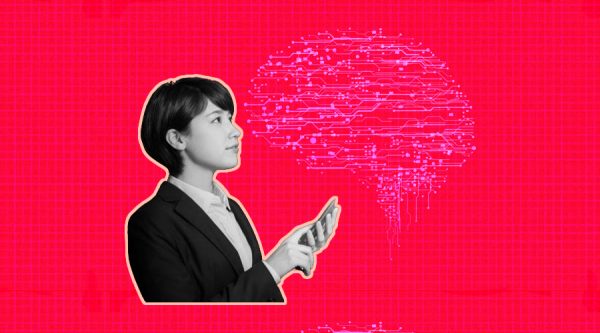
Deep Learning Can Outsmart Even The Biggest Cybercriminals In History

September 2, 2022
Deep-Learning-can-Outsmart-Even-the-Biggest-Cybercriminals-in-History

Here’s How Proactive cyber defense is provided by deep learning using cybersecurity technology

Cybersecurity professionals are constantly looking for new and innovative ways to keep attackers at bay. According to the Identity Theft Resource Center, there were 404 publicly reported data breaches in the United States in the first quarter of 2022 alone, a 14% increase over the first quarter of 2021. According to the 2022 Verizon Data Breach Investigations Report, the alarming rise in ransomware breaches increased by 13% in a single year, representing a jump greater than the previous five years combined (DBIR). No surprise, an increasing number of organizations are investigating how deep learning, and its ability to mimic the human brain, can outwit and outpace the world’s fastest and most dangerous cyber threats. Deep learning, the most advanced form of AI technology and a type of machine learning, employs neural networks to instinctively and autonomously anticipate and prevent unknown malware and zero-day attacks before they wreak havoc on an IT environment.

The majority of cybersecurity technologies, such as endpoint detection and response (EDR) solutions, simply identify, track, record, and contain a threat after it has entered an environment. Machine learning-based cybersecurity solutions, which use pre-labeled data classified as either benign or malicious, are also essential components of any security strategy. However, neither set of cybersecurity solutions can proactively defend against sophisticated attacks without constant human intervention. On the other hand, deep learning can mimic the functionality and connectivity of neurons in the human brain, allowing neural networks to independently learn from raw and un-curated data and recognize unknown threats. Deep learning is the only family of algorithms that works on raw data to identify cybersecurity threats with unrivaled speed and accuracy.

As a result, a powerful solution that can accurately identify highly sophisticated attack patterns at breakneck speeds has been created. It’s time for a new line of defense. Although deep learning has been around since the 1940s, the high cost and complexity of graphics processing units (GPUs) have kept the technology out of many organizations’ reach. However, this is changing as processing power increases and graphics chip prices fall. The timing couldn’t be more perfect. The growing availability of ransomware-as-a-service offerings, such as ransomware kits and target lists, makes it easier than ever for bad actors—even those with limited experience to launch a ransomware attack and cause crippling damage in the first moments of infection. Other sophisticated attackers employ targeted attacks in which ransomware is placed inside the network and activated on command.

Another source of concern is the shrinking of an IT environment’s perimeter as cloud computing storage and resources migrate to the edge. According to Michael Suby, research vice president, of security and trust at IDC, today’s organizations must secure endpoints or entry points of end-user devices, such as desktops, laptops, and mobile devices, from being exploited by malicious hackers. “Attacks continue to evolve, as do endpoints and the end users who use their devices,” he says. These dynamic circumstances create a trifecta for bad actors to enter and establish a presence on any endpoint before staging an attack sequence.” High-profile threats (such as ransomware) are growing at a double-digit (15.8%) rate. As a result, organizations that are victims of a cyberattack are on a dangerous path that is likely to result in continued losses without any gains in defensive capabilities. Indeed, according to IBM and the Ponemon Institute’s 2021 data breach report, the average cost of a data breach is $4.24 million.

Aside from the costs, a cyberattack can irreparably harm a company’s brand, share price, and day-to-day operations. According to a recent Deloitte survey, 32% of respondents said the operational disruption was the most significant impact of a cyber incident or breach. Other consequences mentioned by companies in the survey include intellectual property theft (22%), a drop in share price (19%), reputational loss (17%), and a loss of customer trust (17%).

Fortunately, deep learning overcomes machine learning’s limitations by eliminating the need for highly skilled and experienced data scientists to manually feed a solution data set. Rather, a deep learning model designed specifically for cybersecurity can absorb and process massive amounts of raw data to fully train  the system. Once trained, these neural networks become self-sufficient and do not require constant human intervention. Because of the combination of a raw data-based learning methodology and larger data sets, deep learning will eventually be able to identify much more complex patterns than machine learning at much faster speeds.

Source: analyticsinsight.net

Leave a Reply Cancel reply

Your email address will not be published. Required fields are marked *

Editors Corner

How can Artificial Intelligence tools be a blessing for recruiters?

Will Artificial Intelligence ever match human intelligence?

Artificial Intelligence: Features of peer-to-peer networking

What not to share or ask on Chatgpt?

How can Machine Learning help in detecting and eliminating poverty?

How can Artificial Intelligence help in treating Autism?

Speech Recognition and its Wonders in your corporate life

Most groundbreaking Artificial Intelligence-based gadgets to vouch for in 2023

Recommended News

AI Next

Google: AI From All Perspectives

Alphabet subsidiary Google may have been slower than OpenAI to make its AI capabilities publicly available in the past, but...

by India Next
May 31, 2024
AI Next

US And UK Doctors Think Pfizer Is Setting The Standard For AI And Machine Learning In Drug Discovery

New research from Bryter, which involved over 200 doctors from the US and the UK, including neurologists, hematologists, and oncologists,...

by India Next
May 31, 2024
Solutions

An Agreement Is Signed By MEA, MeitY, And CSC To Offer E-Migration Services Via Shared Service Centers

Three government agencies joined forces to form a synergy in order to deliver eMigrate services through Common Services Centers (CSCs)...

by India Next
May 31, 2024
AI Next

PR Handbook For AI Startups: How To Avoid Traps And Succeed In A Crowded Field

The advent of artificial intelligence has significantly changed the landscape of entrepreneurship. The figures say it all. Global AI startups...

by India Next
May 31, 2024

Related Posts

Google
AI Next

Google: AI From All Perspectives

May 31, 2024
Pfizer
AI Next

US And UK Doctors Think Pfizer Is Setting The Standard For AI And Machine Learning In Drug Discovery

May 31, 2024
Artificial-Intelligence
AI Next

PR Handbook For AI Startups: How To Avoid Traps And Succeed In A Crowded Field

May 31, 2024
openai
AI Next

OpenAI Creates An AI Safety Committee Following Significant Departures

May 31, 2024
Load More
Next Post
start -up

75 Start-Ups That Are Firming Up India’s Position In The Global Digital Economy

IndiaNext Logo
IndiaNext Brings you latest news on artificial intelligence, Healthcare & Energy sector from all top sources in India and across the world.

Recent Posts

Google: AI From All Perspectives

US And UK Doctors Think Pfizer Is Setting The Standard For AI And Machine Learning In Drug Discovery

An Agreement Is Signed By MEA, MeitY, And CSC To Offer E-Migration Services Via Shared Service Centers

PR Handbook For AI Startups: How To Avoid Traps And Succeed In A Crowded Field

OpenAI Creates An AI Safety Committee Following Significant Departures

Tags

  • AI
  • EV
  • Mental WellBeing
  • Clean Energy
  • TeleMedicine
  • Healthcare
  • Electric Vehicles
  • Artificial Intelligence
  • Chatbots
  • Data Science
  • Electric Vehicles
  • Energy Storage
  • Machine Learning
  • Renewable Energy
  • Green Energy
  • Solar Energy
  • Solar Power

Follow us

  • Facebook
  • Linkedin
  • Twitter
© India Next. All Rights Reserved.     |     Privacy Policy      |      Web Design & Digital Marketing by Heeren Tanna
No Result
View All Result
  • About Us
  • Activate
  • Activity
  • Advisory Council
  • Archive
  • Career Page
  • Companies
  • Contact Us
  • cryptodemo
  • Energy next
  • Energy Next Archive
  • Home
  • Interviews
  • Make in India
  • Market
  • Members
  • Mission
  • News
  • News Update
  • People
  • Policy
  • Privacy Policy
  • Register
  • Reports
  • Subscription Page
  • Technology
  • Top 10
  • Videos
  • White Papers
  • Work Culture
  • Write For Us

Welcome Back!

Login to your account below

Forgotten Password?

Retrieve your password

Please enter your username or email address to reset your password.

Log In

Add New Playlist

IndiaNext Logo

Join Our Newsletter

Get daily access to news updates

no spam, we hate it more than you!