Prime Minister Narendra Modi reinforced the ambitious One Sun, One World, One Grid (OSOWOG) project proposed by the International Solar Alliance (ISA) on 15th August last year. To kickstart the same, the power transfer between India, Bangladesh, Nepal, and Bhutan will be boosted in the first phase of the $1 trillion ‘Solar Investment Roadmap’ for 2030. While this project is ambitious and welcome in an era of renewable energy promotion, it may require some homework and corrections before we can execute it.
Funding is one of the key aspects for any project execution, and renewables, including solar, are no different. In a time when the private sector has a share in almost all government projects, realising the government’s ambitious aim cannot be achived without matching investment in rapidly scaling up the solar development. Fortunately, indications are in the right direction. A report by clean energy consultancy, Mercom Capital, said that financing activity in the solar grid was up across the board, including venture capital, equity, debt, and public market finance.

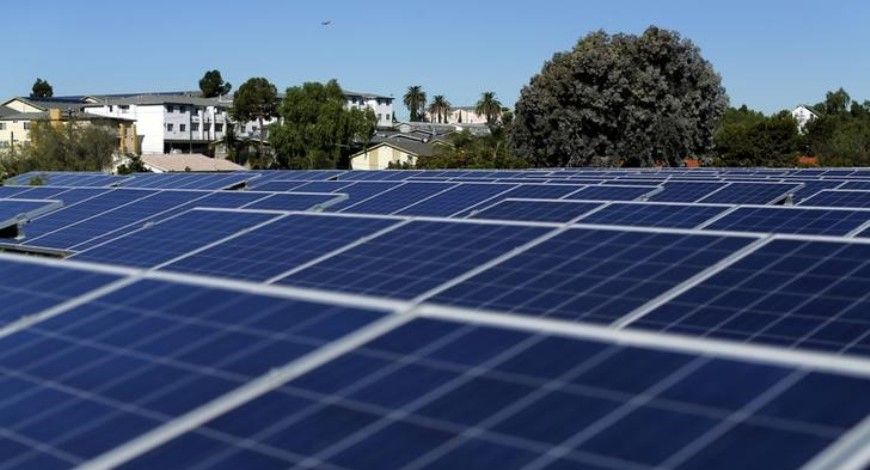
Given the fact that solar panels are 60% of the project cost, these statistics look hopeful. However, we should not celebrate yet, as India does not produce its own solar hardware but imports from China, which is one of the key reasons why corporate funding in solar is needed. This is a necessity given that we need 10 to 15 GW of installed capacity per year. Domestic cost of panels is higher than imported Chinese panels. This despite of the fact that importation includes shipping cost, containerisation, insurance, and inland transport. Chinese panels delivered at site are still turning out to be cheaper than locally produced panels by the leading manufacturers in India such as Waaree, Vikram Solar, Tata etc. India imports wafers in a big way, wafers require silicon that is practically a monopoly of China. Some production of silicon wafers takes place in Europe and US, but it is expensive compared to Chinese supplies. On the other hand, solar Tariffs have dramatically dropped and return on investment has also dropped, making solar projects unattractive to several corporates at project level. The success in this sector is now confined to the big players who can rustle up financing at competitive rates.
Further, distribution companies, which we popularly call Discoms, often delay payments for projects from which they receive solar energy. This leads to uncertainty and discourages corporates to invest in solar business. The risks from government policies also impact solar projects in India. “There is hesitation due to imposition of custom duties and other taxes which can push up the cost of the projects. Or sometimes, the Discoms are trying to renegotiate the Purchase Power Agreements (PPAs) after they are in place for several years. There is also a concern around policy and offtake risk in the renewable sector, due to which debt financing can be challenging.” says, Vinay Rustagi, Managing Director, Bridge to India Energy Private Limited.
Several developers in the past have had to reach out to appellate tribunals, compelling Discoms to pay. While large corporates may have the capacity to sustain themselves and still succeed to generate profits, it is not of any help to small and medium-size companies. “For large consumers, financing solar projects makes a lot of sense. For many people even if they know it is profitable, they are not able to invest given the financial constraints and are subsequently dependent on banks. This problem applies typically to companies which have stressed balance sheets, are poorly rated or are small companies.”. adds Rustagi. These technologies also do not get cheaper due to the lack of research, development, and innovation done in this sector. Even if the government is introducing a 40% import duty on solar panels by 2022, it does not address issues back home which corporates face while funding.
Another key issue is the lack of demand in investing in battery storage, even though the government is making a hard push to promote solar manufacturing capacity and energy storage in the country. The corporate funding will be useful only when there is remuneration for the products they have funded. Energy storage to date has no remuneration prescribed by the Electricity Regulators in the country. Contrast this with the solar projects that have PPAs signed up for 10-15 years at least.
What About Production Linked Incentive Schemes?
In November 2020, the Indian Government announced PLI schemes for 10 key sectors to scale up domestic manufacturing, employment generation, and the like. Presently, the government is encouraging panel production by Birla, Adani, Waaree, and Vikram Solar. However, how successful is it? The government has proposed PLI for two sectors, the first is manufacturing, second is battery storage. India is not very competitive in manufacturing as we know due to productivity challenges of labor especially when compared to China, Vietnam, etc., in addition to experiencing difficulties in permits and approvals from state and central governments. The objective of the scheme is to create a germinate and nourish complete logistics value chain in India, from manufacturing to deployment, and operations, etc. However, unless the Achilles heel of solar, that is, domestic manufacturing of silicon and wafers are not addressed, no amount of PLI, even those backed by corporates can be of help. Adding to this is the dismal size of the PLI scheme. The government has itself said it will finance 10,000 MW solar capacity while the needs of the country are much larger at 35,000 MW. One may keep in view that Reliance has announced big plans to build factories for the production of silicon and wafers in India. The questions are, will it be accessible to other solar players in India, and by when?
What can be done?
“To encourage small companies to invest in solar, the government can come up with some schemes, subsidies and other favourable mechanisms. Also, the policy risk in this sector needs to be minimised.” adds Rustagi. The government must make sure that the policy landscape is linear, clear, stable and predictable, the off-take risk is reduced, and Discoms make payments to the project developers on time. This will bring certainty to investors that when they are investing in or executing a project, they will receive their payment on time. If these things can be addressed, some of the major corporate financing issues can be resolved.
Investment in fossil fuels and conventional power sources are declining because of concerns around carbon emissions and climate change are heightened. The lending agencies and banks are moving away from this sector, freeing up huge investment capacities worldwide. However, for this sector to fully realise its potential, it should succeed with banks and lenders. Lenders in turn want certainty in investment policies and rules and the ball totally lies in the government court.
Source: businessworld.in