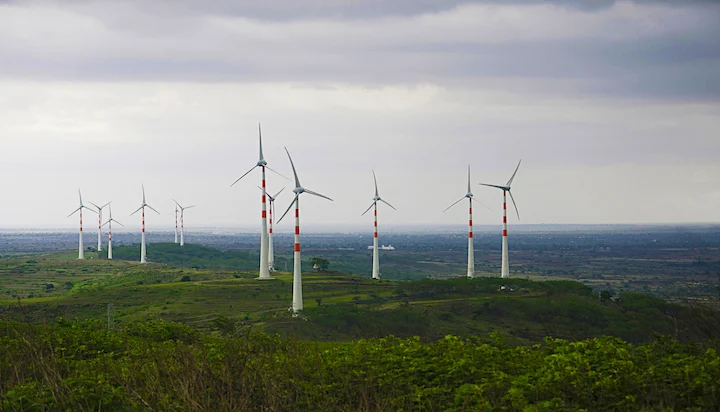
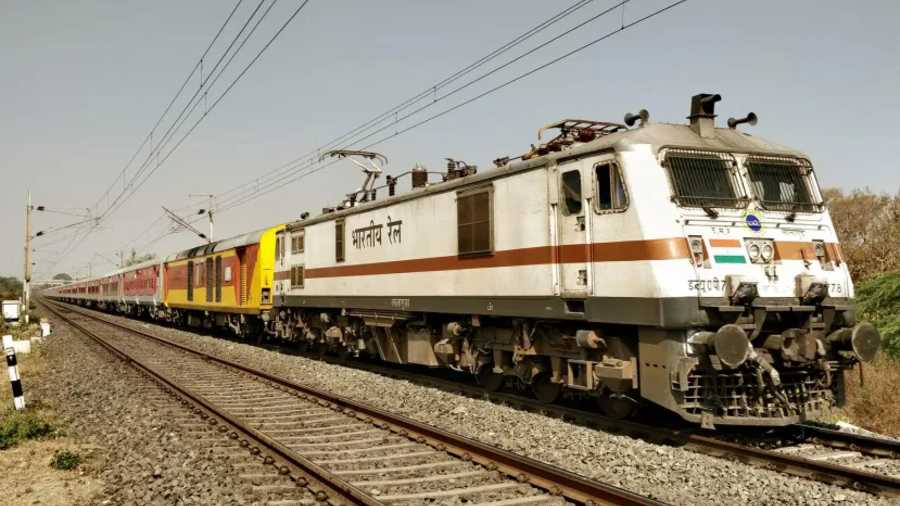
The Indian Railways can offset around 7 million tonnes of carbon every year if it harnesses the energy from the sun. Not only that but it can also run one in four trains on the national network powered by solar energy and save in fuel costs to the tune of ₹17,000 crore.
The latest findings lend credence to Union minister Piyush Goyal’s ambitious target of turning the Indian Railways into the world’s first net-zero carbon emitter by 2030. The minister had issued directives to railways to identify huge areas of unproductive land for setting up solar power plants to generate electricity for the national transporter.
About 51,000 hectares of unused railway land has been identified for the purpose and the Indian Railways and the Union ministry of railways have formed a joint venture — Railway Energy Management Company — to support the development of solar photovoltaics and wind energy projects to supply the railway’s energy needs. Plans are already underway to deliver 20GW of solar-powered electricity to match the demand for energy to move trains.
During his speech on the India’s 75th Independence Day this year, Prime Minister Narendra Modi had also announced the country’s plan to become a net-zero carbon emitter by 2050 and highlighted that work was underway for 100% electrification of Indian Railways.
On the track of net-zero emissions
If the Indian Railways can achieve this target, it would lead to an annual emissions reduction of at least 15 million tonnes of carbon dioxide, which could help meet 5% of India’s targeted nationally determined contributions (NDC) to mitigate the effects of climate change. Together, these will help India reach its renewable energy target of 450GW by 2030.
The analysis, part of a joint study by Delhi-based Climate Trends and the UK-based green-tech start-up Riding Sunbeams, highlights that around a quarter of the 20GW solar capacity —up to 5,272 MW — could be fed directly into the overhead power lines of the railways instead of being procured over the electricity networks, reducing transmission and distribution losses and saving money.
“India is leading the world on two vital climate frontiers, including electrification of the railway network and solar power deployment. Connecting two of these keystone low-carbon technologies in Indian Railways can drive both India’s economic recovery from the Covid-19 pandemic and its efforts to transition off fossil fuels to tackle the climate crisis,” Leo Murray, the founder of Riding Sunbeams said.
The researchers found that substituting energy supplied from the coal-dominated grid for private-wire supply from solar could also rapidly cut emissions by as much as a 6.8million tonnes of carbon dioxide every year.
Power of 100% electrification
The national transporter chose World Environment Day — celebrated every June 5 — this year to announce its plan to complete the electrification of the entire railway network by 2023 to reduce pollution, and leapfrog into its path of net-zero carbon emitter by 2030.
“Head-On-Generation systems, bio-toilets, and LED lights recreate the train itself into a travel mode that’s kinder to the environment while maintaining comparable passenger comfort,” the officials of the world’s second-largest railway network said in a statement on June 5.
As per the Paris Agreement on climate change, India has pledged to reduce the intensity of emissions by 33-35% by 2030 from 2005-levels. One of the ways India can achieve its goal of shifting to non-fossil-fuel-based energy for 40% of its cumulative electricity generation capacity by 2030 is by transitioning the Indian Railways into a green transport medium.
Indian Railways is the single largest consumer of electricity in India and is heavily dependent on coal-based power generation. The railways consume 20 TWh of electricity per year, which is roughly 2% of the country’s total power generation. In 2019-20, the locomotives in the national network consumed 23,79,865 kilolitres of diesel and around 1,000 tonnes of coal to run.
Cost of transition to clean energy
Converting all current diesel traction to electric modes would initially cause a 32% increase in emissions due to India’s reliance on coal to produce electricity. The emissions intensity of the Indian electricity grid is 825 tonnes carbon dioxide equivalents (CO2e)/ GWh, over three times higher than the emissions intensity from the UK, for example. To mitigate this, the Indian Railways would need either to procure its supply of clean electricity from solar and wind generators connected directly into the rail network, or develop new grid-connected renewable projects to match the traction energy supplied via the electricity grid.
“There has been analysis that converting all diesel locomotives to electric will indeed increase the emissions in the short term, however, this report shows the tremendous opportunity of doing it right the first time, by creating a direct connection of the locomotive system to solar PV installations, meeting more than a quarter of the total demand,” Aarti Khosla, the director at Climate Trends, who co-authored the study, said.
As per the Niti Aayog data, the Indian Railway contributed to around 6.84 million tonnes of carbon dioxide emission in 2014.
The researchers, however, warned that achieving the target of 100% electrification in all routes by 2023 could be accompanied by an increase in carbon dioxide emissions in the short term because of India’s current reliance on coal to produce electricity.
Decarbonisation of the power sector
Becoming 100% electric means shifting emissions to the power sector, which is 76% powered by coal as of December 2020. The net-zero target means the railways will be pushing the power sector to provide renewable energy instead of coal-based electricity. Since the national transporter is already the second-largest electricity consumer, its switch to fully electric will mean it can leverage its procurement power to accelerate power sector decarbonisation in the coming decade.
Source: hindustantimes.com