
Prashant Warier, CEO and Founder, Qure.ai, explains beating lung cancer with the AI edge
10 million. That’s the number of people who lost their lives to cancer in 2020, making it the leading cause of death worldwide. Of this, 1.8 million fatalities were caused by lung cancer, making it the leading cause of cancer-related deaths and the second most common form of the disease overall. And the future makes for grim reading – Lung cancer incidents are projected to rise by 38%, and mortality is projected to increase by 39% by 2030.
70% of lung cancer diagnoses are late-stage
Research from Europe suggests that almost 70% of lung cancer diagnoses are late-stage – the main reason behind low survival rates. Although five-year survival rates have improved recently in the United Kingdom, they remain low, with approximately 30% of patients dying within 90 days after diagnosis. The importance of early diagnosis can be gauged from the fact that the five-year survival rate for those diagnosed in the early stages is 57% vis-à-vis 3% when made in the later stages.
It is evident that accurately and rapidly identifying physiological signs indicative of lung cancer can significantly impact treatment and survival. In this regard, artificial intelligence (AI) can be used to augment the expertise of physicians and impact the cancer care pathway, especially the identification of signs of lung cancer. However, if we pause and take a more macroscopic view of the overall cancer landscape, technology and machine learning can also contribute to drug treatment, chemo & radiotherapy, and management.
Deep learning tools can change the future of treatment
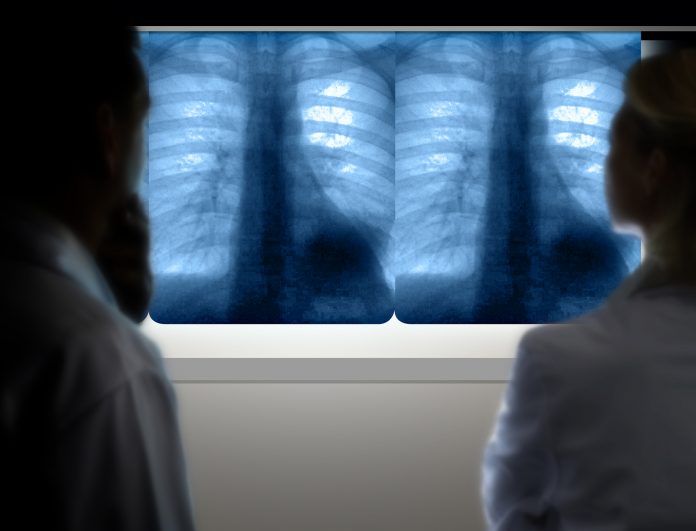
Deep learning tools have been created and trained to be capable of mining for specific characteristics from vast data sets. It is also possible for these tools to identify information in images that are beyond the scope of the ordinary human eye. These features and abilities of AI have enormous implications for lung cancer diagnosis based on images – from being able to examine chest X-rays rapidly and CT scans to triage cases for follow-ups with physicians.
AI also has a role to play in the development of drugs to treat cancer and predict the sensitivity of the drug. Depending on the type of cancer and the stage at which it is being treated, the same anti-cancer drug could have different reactions. Machine learning models have also successfully predicted the sensitivity of patients to anti-cancer drugs as well as resistance to certain types of drugs. And that’s not all. AI can learn and analyse data related to drug-resistant cancers to highlight how cancer cells develop resistance to drugs and implications for development and use.
The three ways that AI can be used in cancer care
When it comes to chemotherapy for cancer, AI can be used in three distinct aspects: managing drug use, predicting the body’s tolerance to chemotherapy drugs, and optimising the treatment schedule. In addition, studies have shown that AI can optimise the combined chemotherapy process – that is, rapidly assessing the ideal drug dosage to ensure that the treatment regimen is effective.
AI can also assist radiologists in accurately planning targeted radiotherapy and scheduling radiation treatment regimens. In combination with automation, deep learning technology has helped considerably reduce the time taken to map out radiation treatment calendars and suggested therapy plans that are comparable to those developed by human experts.
Deep learning technology can assist physicians across the clinical decision support system in making more accurate choices on managing cancer, suggesting apt treatment plans, and reducing the chances of both overtreatment and superfluous surgical options.
Beating lung cancer via Artificial Intelligence
Perhaps one of the most critical areas for AI to contribute is developing anti-cancer drugs. The average drug takes anywhere between six to 12 years to develop from discovery to approval. Effective new drugs prolong survival rates. Research also suggests that improving new drug development efficacy impacts patient lives. Developing new drugs leads to enormous volumes of data being generated, and AI tools can be taught to read and process data, reverse-engineer molecule synthesis pathways, help accelerate drug discovery, and make knowledgeable decisions.
AI is primed to make significant contributions to cancer-related medicine, treatment, and management. When it comes to cancer, the earlier it is identified, the better. So, the fact that AI solutions are already making a mark in identifying signs of the disease is a tremendous step forward. Technology can also help fast-track the discovery of new drug materials and development. However, AI must receive support to ensure that it continues to augment the role of physicians and scientists and drive significant cross- domain evolution in healthcare.
AI-driven diagnostic software
When it comes to what AI can do for Breast Cancer Screening, a study run by King’s College London is evaluating an AI-driven diagnostic software. Professor Sarah Pinder, lead specialist breast pathologist at Guy’s and St Thomas’, said: “This has the potential to improve the accuracy and the speed of assessment, with benefits both to the NHS and to patients.”
Paige Lymph Node, created by a digital diagnostics software company, is an AI software system that can actually help pathologists to decide whether breast cancer has spread to the lymphatic system.
Healthcare experts believe this technology can change the future.
Source: openaccessgovernment.org