
Current directory: /home3/bjinbymy/public_html/indianext/wp-content/mu-plugins AI Used To Accelerate COVID Antiviral Discovery - AI Next
Indianext
No Result
View All Result
Subscribe
  • News
    • Project Watch
    • Policy
  • AI Next
  • People
    • Interviews
    • Profiles
  • Companies
  • Make In India
    • Solutions
    • State News
  • About Us
    • Editors Corner
    • Mission
    • Contact Us
    • Work Culture
  • Events
  • Guest post
  • News
    • Project Watch
    • Policy
  • AI Next
  • People
    • Interviews
    • Profiles
  • Companies
  • Make In India
    • Solutions
    • State News
  • About Us
    • Editors Corner
    • Mission
    • Contact Us
    • Work Culture
  • Events
  • Guest post
No Result
View All Result
Latest News on AI, Healthcare & Energy updates in India
No Result
View All Result
Home AI Next

AI Used To Accelerate COVID Antiviral Discovery

November 24, 2021
argonne-accelerates

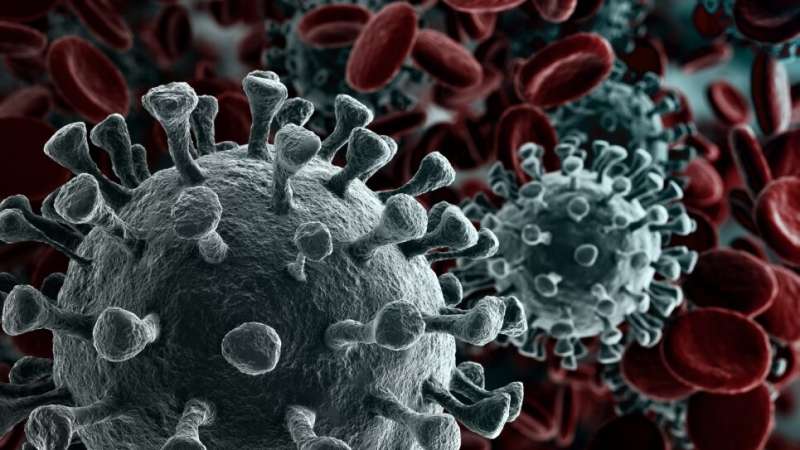
Using the Groq platform at the ALCF AI Testbed, researchers were able to speed the process of searching through a vast number of small molecules to find promising drug candidates.

As soon as the COVID-19 pandemic erupted in early 2020, scientists found themselves racing against time to find an antiviral medication that could treat the disease. With billions upon billions of potential drug candidates to sort through, researchers needed a way to dramatically speed their search. The answer, they found, lay in artificial intelligence (AI).

Since the beginning of the pandemic, researchers at the U.S. Department of Energy’s (DOE) Argonne National Laboratory have been using AI to search through a vast number of small molecules to find usable drug candidates. Recently, they have used a new computing hardware to speed the process, reducing searches that might have originally taken years to mere minutes.

To determine whether a small molecule can form the basis of a useful antiviral medication, researchers need to compute how well it binds to different pockets on one of the viral proteins of SARS-CoV-2, which causes COVID-19. “You can kind of think of a viral protein as looking like a wad of chewed-up bubblegum,” said Argonne computational scientist Tom Brettin. “We want to see how well different molecules attach to the different nooks and crannies in the ‘bubblegum.'”

The binding energy of a small molecule into a protein depends on multiple factors, including both the molecule’s geometry and the electronic interactions between the molecule and the protein, Brettin said.

Computing the binding energy of small molecules starts by analyzing them one-at-a-time with physics-based codes on leadership-class supercomputers, including Argonne’s Theta, which is part of the Argonne Leadership Computing Facility (ALCF). These binding scores are then used to train an AI algorithm to look for the molecules with the lowest binding energies.

“With AI, we went from doing one compound per second to 1,000 compounds per second and ultimately to 50,000 compounds per second,” said Argonne computational scientist Hyunseung (Harry) Yoo.

The advantage of using AI, according to Brettin, is that it can quickly adapt to and accommodate chemical structures that it has never seen and that have never been synthesized and do not exist in nature. “Artificial intelligence gives us both the speed and flexibility that pure physics-based computation would have a very hard time achieving,” he said.

Another benefit of AI lies in the fact that it generates the minimum possible binding energy for each candidate immediately, rather than needing to perform a large number of trial-and-error computations for different configurations of molecules as they attach to a protein site.

Although 50,000 predictions a second may seem like a rapid rate, Brettin and Yoo were still interested in speeding up the computations even more. They turned to the ALCF AI testbed, a growing collection of some of the world’s most advanced AI platforms, including the GroqChip accelerator.

In tests on a large dataset of small molecules, the researchers found they could achieve 20 million predictions, or inferences, a second, vastly reducing the time needed for each search.

Once the best candidates were found, the researchers identified which ones could be obtained commercially and had them tested on human cells at the Howard T. Ricketts Laboratory, a bioresearch facility located on Argonne’s campus. “Without AI, we never would have been able to do an exhaustive search on the computer and bring it into the lab,” Yoo said. “It shows the power of computing to do real biology.”

Source: medicalxpress.com

Leave a Reply Cancel reply

Your email address will not be published. Required fields are marked *

Editors Corner

How can Artificial Intelligence tools be a blessing for recruiters?

Will Artificial Intelligence ever match human intelligence?

Artificial Intelligence: Features of peer-to-peer networking

What not to share or ask on Chatgpt?

How can Machine Learning help in detecting and eliminating poverty?

How can Artificial Intelligence help in treating Autism?

Speech Recognition and its Wonders in your corporate life

Most groundbreaking Artificial Intelligence-based gadgets to vouch for in 2023

Recommended News

AI Next

Google: AI From All Perspectives

Alphabet subsidiary Google may have been slower than OpenAI to make its AI capabilities publicly available in the past, but...

by India Next
May 31, 2024
AI Next

US And UK Doctors Think Pfizer Is Setting The Standard For AI And Machine Learning In Drug Discovery

New research from Bryter, which involved over 200 doctors from the US and the UK, including neurologists, hematologists, and oncologists,...

by India Next
May 31, 2024
Solutions

An Agreement Is Signed By MEA, MeitY, And CSC To Offer E-Migration Services Via Shared Service Centers

Three government agencies joined forces to form a synergy in order to deliver eMigrate services through Common Services Centers (CSCs)...

by India Next
May 31, 2024
AI Next

PR Handbook For AI Startups: How To Avoid Traps And Succeed In A Crowded Field

The advent of artificial intelligence has significantly changed the landscape of entrepreneurship. The figures say it all. Global AI startups...

by India Next
May 31, 2024

Related Posts

Google
AI Next

Google: AI From All Perspectives

May 31, 2024
Pfizer
AI Next

US And UK Doctors Think Pfizer Is Setting The Standard For AI And Machine Learning In Drug Discovery

May 31, 2024
Artificial-Intelligence
AI Next

PR Handbook For AI Startups: How To Avoid Traps And Succeed In A Crowded Field

May 31, 2024
openai
AI Next

OpenAI Creates An AI Safety Committee Following Significant Departures

May 31, 2024
Load More
Next Post
HIPI

Leading Indian Short Video App Hipi Introduces Its Latest Avatar Offering the World’s 1st AI-based In-Video Discovery Feature

IndiaNext Logo
IndiaNext Brings you latest news on artificial intelligence, Healthcare & Energy sector from all top sources in India and across the world.

Recent Posts

Google: AI From All Perspectives

US And UK Doctors Think Pfizer Is Setting The Standard For AI And Machine Learning In Drug Discovery

An Agreement Is Signed By MEA, MeitY, And CSC To Offer E-Migration Services Via Shared Service Centers

PR Handbook For AI Startups: How To Avoid Traps And Succeed In A Crowded Field

OpenAI Creates An AI Safety Committee Following Significant Departures

Tags

  • AI
  • EV
  • Mental WellBeing
  • Clean Energy
  • TeleMedicine
  • Healthcare
  • Electric Vehicles
  • Artificial Intelligence
  • Chatbots
  • Data Science
  • Electric Vehicles
  • Energy Storage
  • Machine Learning
  • Renewable Energy
  • Green Energy
  • Solar Energy
  • Solar Power

Follow us

  • Facebook
  • Linkedin
  • Twitter
© India Next. All Rights Reserved.     |     Privacy Policy      |      Web Design & Digital Marketing by Heeren Tanna
No Result
View All Result
  • About Us
  • Activate
  • Activity
  • Advisory Council
  • Archive
  • Career Page
  • Companies
  • Contact Us
  • cryptodemo
  • Energy next
  • Energy Next Archive
  • Home
  • Interviews
  • Make in India
  • Market
  • Members
  • Mission
  • News
  • News Update
  • People
  • Policy
  • Privacy Policy
  • Register
  • Reports
  • Subscription Page
  • Technology
  • Top 10
  • Videos
  • White Papers
  • Work Culture
  • Write For Us

Welcome Back!

Login to your account below

Forgotten Password?

Retrieve your password

Please enter your username or email address to reset your password.

Log In

Add New Playlist

IndiaNext Logo

Join Our Newsletter

Get daily access to news updates

no spam, we hate it more than you!