
The world is perilously near to exceeding the internationally agreed-upon global warming threshold of 1.5 degrees Celsius above pre-industrial levels, according to UN Secretary-General António Guterres, said in context to the recent IPCC report. It is ‘Time Now’ to take prompt, decisive and collective actions to reduce CO2 and other GHGs.
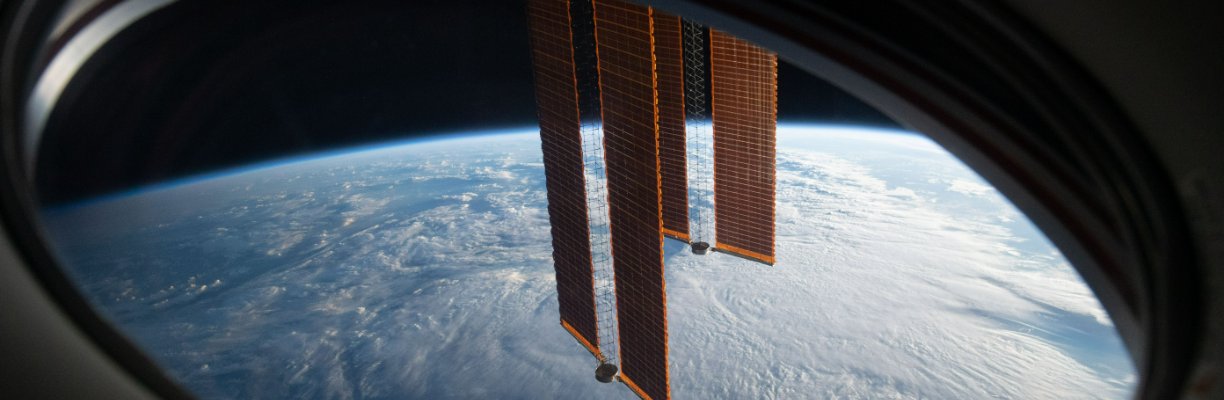
Take, for instance, scientists are battling to continue the Global Ecosystem Dynamics Investigation (GEDI), slated to be decommissioned in March 2023. GEDI is not merely a lidar system that lies aboard the International Space Station (ISS), but its lasers have the unique ability to penetrate the canopy and offer data on vegetation height and structure.
According to remote sensing scientists, the system provides them with an unprecedented opportunity to estimate how much carbon forests store, a capability that could be essential for mitigating climate change. This might give a glimpse of how space-based technology can be one of the tools to augment humanity’s efforts toward mitigating climate change.
However, a more pertinent question that needs to be answered is why? The cost of developing traditional monitoring infrastructure using IoT and forest guards is neither monetarily sound nor time-effective. Additionally, both governments and businesses require real-time, accurate and detailed information to rely on.
Geospatial data provides just that and overcomes these limitations. They are precise, reliable data that can be used to track climate change and track the impact of mitigation measures. As a consequence of technological improvements and an increase in the number of satellites in orbit, monitoring large areas in real-time and at a low cost is now possible. Hence, it’s an ideal tool for establishing a standard monitoring infrastructure that will provide decision-making data to enterprises in a variety of industries.
Space-based tech to rescue
All of the data is analysed using Machine Learning. In one study funded by ESA’s Basic Activities, previous mission data was fed into machine learning algorithms to look for novel features that could be beneficial for future telemetry checking, command verification, and procedure development.
Unsupervised learning or reinforcement learning are the two methods used by deep learning algorithms to learn. Some of the viable use cases include automatic landing, intelligent decision-making, and completely automated systems for the future. Take, for instance, the Advanced Concepts Team of the European Space Agency is very actively looking into this area with multiple projects.
The emergence of cutting-edge technology like Space 2.0 systems and other developments like artificial intelligence (AI), the IoT, 5G, and robotics adds to the fight against climate change’s potential. As per Frontier Technologies to Protect the Environment and Combat Climate Change, a joint report from the United Nations and International Telecommunication Union, information and communication technologies could play a critical role in meeting the Paris Agreement’s goal of limiting global warming to 1.5 degrees Celsius.
Space technologies have led to new inventions that benefit our environment. Satellite-based technologies are cutting carbon dioxide emissions from vehicles, remote-sensing technology is increasing the efficiency of wind turbines, and weather satellite data is assisting solar cells in producing more electricity. It further provides,
- Better monitoring: Under the joint mission, NISAR – both ISRO and NASA are working to co-develop and launch a satellite that would monitor groundwater supplies and provide early warning indications of volcanic eruptions. It will also monitor ice sheet melting rates and their impact on sea-level rise. The Earth satellite will be the first radar imaging satellite to use dual frequencies and keep track of vegetation distribution changes across countries.
- Track weather patterns: Ice, Cloud, and Land Elevation Satellite-2 (ICESat-2) was launched by NASA in 2018. It depicted sea ice thinning and the disappearance of ice cover along the coasts of Greenland and Antarctica. NASA’s newest satellite was created to offer additional data on how ice cover fluctuates throughout the year.
- Assisting farmers: Sectors including agriculture and industry can benefit from satellite imagery and climate data and the communities they serve. Such data can be utilised to assist farmers in increasing agricultural yields, hence reducing hunger, combating unregulated mining and its consequences, and uncovering new economic growth potential.
Wrapping up
According to the World Economic Forum, more than 160 satellites are currently monitoring various global warming indicators, with more than half of critical climate factors only being observable from space. Last year, ESA and the German Research Center for Artificial Intelligence (DFKI) established a technology transfer lab with an aim to work on AI systems for satellite autonomy, collision avoidance capabilities and more.
To improve people’s quality of life, many satellites and sensors give real-time data and information to service providers, governmental authorities, and organisations. Climate change is one of the most critical applications of this data that must be utilised rapidly.
Source: indiaai.gov.in