
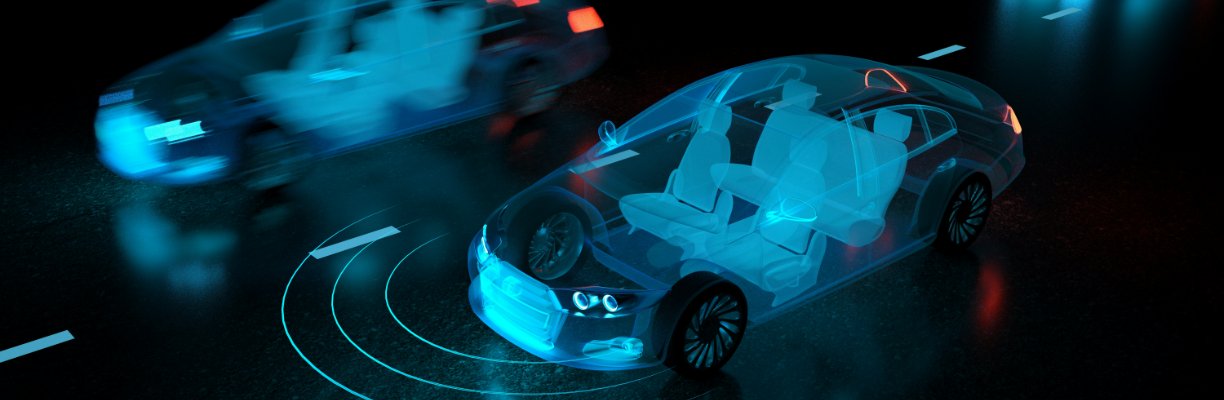
It was Michael J Fox who showed us the impossible in the Back to the Future franchise – getting transported in a driverless car. Obviously, this was science fiction at its best in the 1980s. But Nearly 35 years later and we’re inches away from this reality. Right from General Motors to Google, the quest to build a driverless car is well and truly on. Autonomous cars (or cars that are almost completely self sustained) is an engineering marvel that has caught the fancy of major tech and automotive companies world over. The idea is to empower the vehicle with technologies and gadgets that will enable the car to react to any stimulus, like a driver behind the wheel would. Autonomous cars will be able to seamlessly communicate with one another, and provide content streaming abilities for passengers.
In the past decade, Artificial Intelligence has grown exponentially, specifically areas like machine learning, computer vision, deep learning and object recognition are now witnessing rapid commercial adoption. Now, countries like India are preparing for the advent of a wider, faster communication spectrum like 5G – and this combination is a shot in the arm for autonomous vehicles. AI, not too long ago, thrived in labs as scientists endeavoured to make machines more intelligent with whatever infrastructure they had. With the increase in high performance computing, maturity in storage abilities, cloud processing capabilities and availability of large datasets, AI has grown by leaps and bounds, with applications extending well into industries like healthcare, mobility and retail. Specifically pertaining to autonomous vehicles, some key technologies that vehicles need to communicate with one another include LiDAR, Radar and Camera – which capture information about the environment. The next leg of technologies include Direct Vehicle to Everything (V2X) communication, which simply means vehicles must communicate with one another and their immediate roadside infrastructure. Currently, two V2X approaches are being explored with a 5G network – dedicated short range communications (DSRC) in the USA and Intelligent Transport System G5 (ITS-G5) in Europe. The final leg of technologies, which can only be envisioned after networks gain ample maturity, is carrier-based V2X communication, where vehicles can communicate across long ranges and involves collecting data from vehicles to provide aggregated information.
Today, technology companies are honing edge computing capabilities even further, so as to ensure endpoints can function as mini datacentres – bringing a new paradigm to machine intelligence. 5G is a crucial part of this trifecta for a variety of reasons: speed, lower latency, reliability.
One of the hallmarks of 5G is its speed. 5G is nearly 100 times faster than the currently used 4G – so a piece of data that could be downloaded once in a stipulated span of time on 4G could be downloaded nearly 100 times in that same time span on 5G. Connected cars can practically thrive within such a high speed network. According to Dr. Joy Laskar, CTO of Maja Systems, future autonomous cars will generate nearly 2 petabits of data, which is equivalent of 2 million gigabits. “With an advanced Wi-Fi connection, it will take 230 days to transfer a week-worth of data from a self-driving car,” Laskar said. With 5G, that time would go from 230 days to just over 2 days. Low latency is another standout feature offered by 5G. Latency refers to the amount of time taken to send information from one point to another, so higher the speed, lower the latency and faster the information reaches the receiver. For cars travelling on the roads, 5G’s low latency effectively addresses any lags in information dissemination, and allows the cars to communicate with one another in realtime with little to no gaps in communication. With 4G, the latency is about 20 milliseconds, but with 5G, it could be less than 2 milliseconds. Human reaction speed is an average 200 milliseconds – so in this case, it would appear autonomous cars are actually faster to respond to stimuli. These cooperative Advanced Driver Assistance Systems (ADAS) will help the driver to drive safely and avoid accidents. And finally, 5G is highly reliable. Provided adoption is uniform across geographies, its true benefits can be reaped.
High speeds, reliable networks and lower latency are all key ingredients to bolster a strong AI system. However, many endpoints lack 5G due to cost, power constraint and regulatory obstacles for a unified rollout. So, they connect to intelligent 5G edge devices, which collect endpoint data, filter and process this data. This can eventually lead to 5G IoT gateways acting as edge servers loaded with AI capabilities, to facilitate real time data processing in vehicles, drones and industrial robots.
While the opportunities for autonomous cars appear endless, Industry 4.0 follows closely behind. 5G can not only power up the cars of the future on the road, but also aid greatly with manufacturing and assembly. Mercedes-Benz teamed up with Telefónica Germany to enable 5G car production via a private 5G network for Mercedes-Benz at the company’s Sindelfingen plant in southern Germany. Jörg Burzer, Member of the Divisional Board of Management of Mercedes-Benz Cars, Production and Supply Chain, said: “With the installation of a local 5G network, the networking of all production systems and machines in the Mercedes-Benz Cars factories will become even smarter and more efficient in the future. This opens up completely new production opportunities.”
The Indian government has enabled telecom providers like Jio and Airtel to run trials of 5G, in a bid to collect local datasets and enable innovators to build solutions using these local datasets. Automobile companies are better suited to work with local datasets to get a granular understanding of how traffic in India truly works. Already, AI solutions have gained a modicum of reliability and versatility. With the impending rollout of 5G, automobile companies can truly start thinking of mature direct V2X technologies and carrier V2X technologies to power the growth of the autonomous vehicle market even further.
Source: indiaai.gov.in